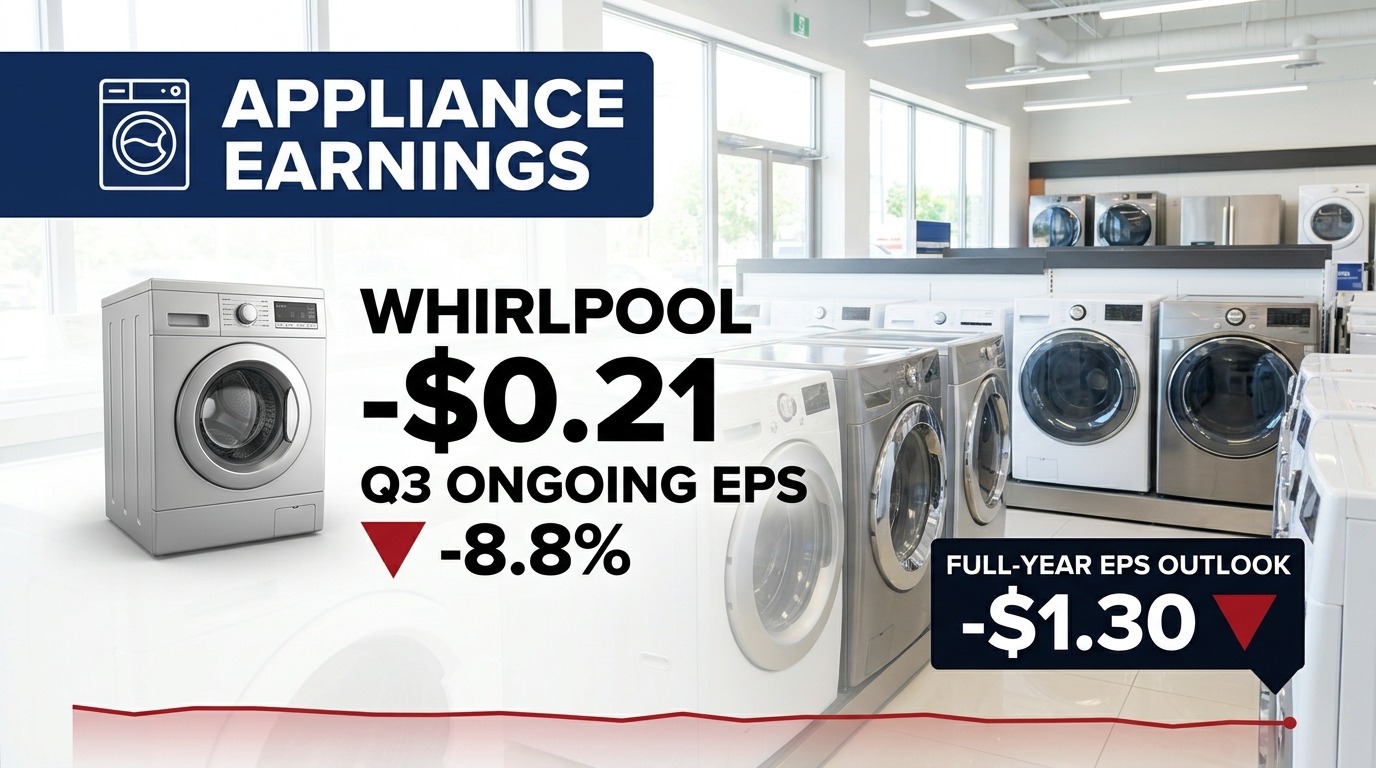
Whirlpool reported a deeper-than-expected third-quarter loss and sharply lowered its 2026 earnings outlook, sending the appliance maker’s shares down about 8.8% in premarket trading on Tuesday. The company reported a GAAP loss of $3.80 per diluted share and an ongoing, non-GAAP loss of $0.21 per share, against analyst expectations of a profit of roughly $0.93 on revenue of $3.96 billion, according to MarketBeat.
GAAP net earnings margin was negative 6.8%, while ongoing EBIT margin was 2.6%. For the full year, Whirlpool now expects a GAAP loss of $4.95 per diluted share and an ongoing loss of $1.30 per share. Its prior guidance had called for ongoing EPS of $2.50 to $3.00, so the revision represents a swing of several dollars per share.
Not every metric deteriorated. The company said it executed price increases and structural cost actions that delivered sequential operational progress against a tough macroeconomic backdrop, announced further price increases in North America and Latin America for the fourth quarter, and held to its free cash flow target. Whirlpool now expects operating cash flow of about $700 million and free cash flow of about $300 million for 2026, and it improved its year-end net debt expectation to under $4.5 billion from under $5 billion.
The report is the latest in a long run of negative surprises. Whirlpool cut its 2026 outlook and suspended its dividend in May, sending shares to a 14-year low. CEO Marc Bitzer pointed at the time to high interest rates, sluggish housing turnover, cautious consumer spending and persistent inflation, and said the Middle East conflict had tightened household budgets through higher energy prices. The company again missed estimates and lowered guidance in early August.
Shares of Whirlpool opened Monday at about $27.91, close to a 52-week low, so a premarket decline of roughly 8.8% would put the stock in fresh low territory. The shares had already fallen about 55% over the six months to early August, reflecting how deeply investors have discounted the earnings power of the business.
For investors the central issue is whether a depressed valuation compensates for deteriorating fundamentals. Appliance demand is tied to housing turnover and consumer confidence, both pressured by high rates and elevated energy costs. Whirlpool’s own commentary in May called for North American industry volumes to fall about 5%, and the third-quarter outcome suggests pricing and cost actions have not yet offset volume and mix headwinds.
With oil near $115, the Federal Reserve meeting under way and tariff and raw-material costs previously cited by management, traders are likely to treat rallies in household durables skeptically until there is evidence of stabilization. Debt reduction is the one clear positive, but it takes priority over shareholder returns while the dividend remains suspended, leaving the stock dependent on a recovery in housing activity that has yet to arrive.