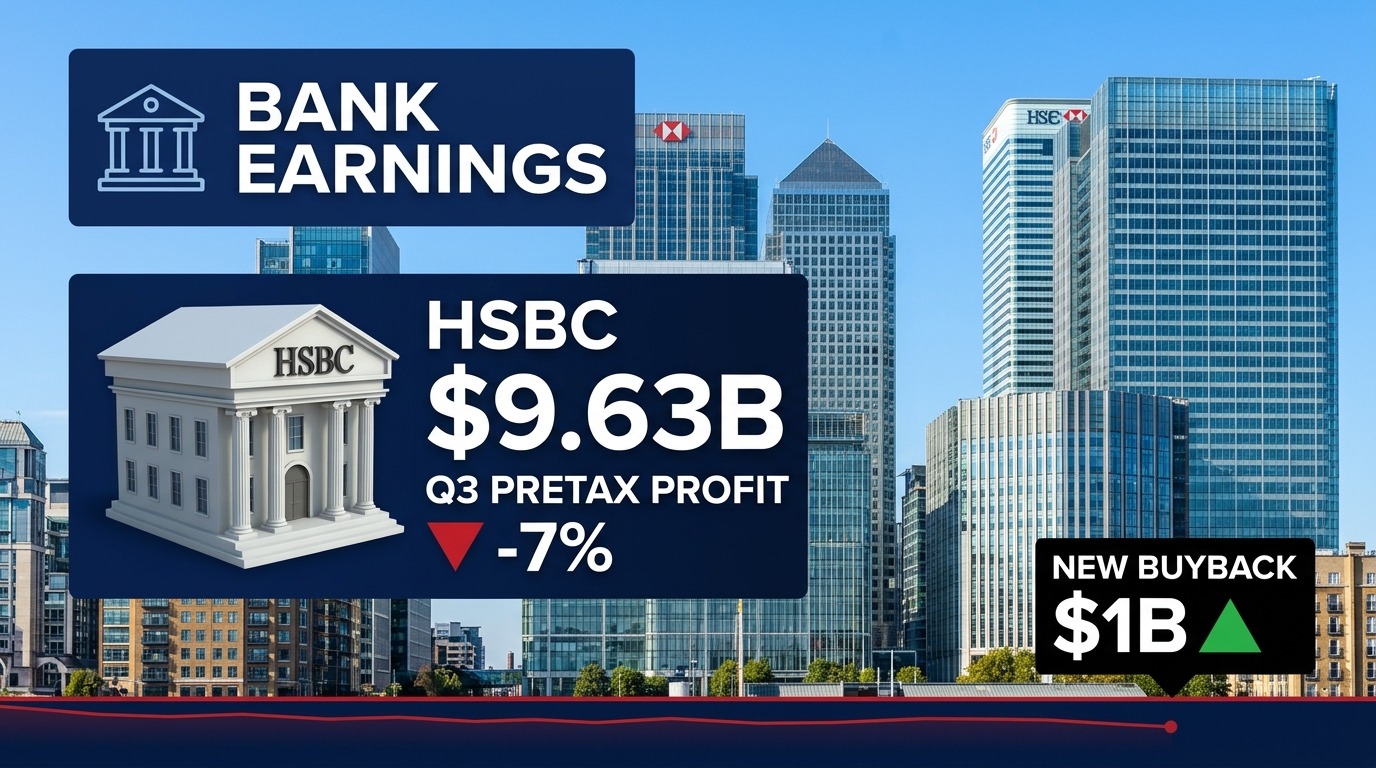
HSBC Holdings reported third-quarter 2026 results before the U.S. open on Tuesday, and investors did not like what they saw. Pretax profit of $9.63 billion fell short of analyst expectations, overshadowing the announcement of a new $1 billion share buyback. HSBC shares slid nearly 7% in early U.S. trading, with market data providers showing declines of roughly 6.9% to 7.3% depending on the timing of the snapshot.
The London line told a similar story. HSBC shares in the United Kingdom were down about 6.5% at 1,276.20 pence during the morning session, among the largest decliners on the UK market. The FTSE 100 itself was down about 0.6% at 10,705 in later trading, according to Stockopedia’s live market report.
Market commentary pointed to two worries. The first is narrowing margins: banks earn a spread between lending and deposit rates, and when that spread compresses, profit can disappoint even when the headline buyback is generous. The second is political risk. Investors flagged the potential for windfall taxes in the upcoming UK budget, a threat that could weigh on earnings power for banks with large domestic operations regardless of how well they execute globally.
A $1 billion buyback is a relatively small return of capital for a bank of this scale, and the market’s reaction suggests it was not enough to offset the earnings shortfall. Buybacks support per-share earnings and signal confidence, but they cannot substitute for revenue growth when margins are under pressure.
The decline contributed to a split premarket tape in which banking weakness offset strength in semiconductors. U.S. index futures were mixed ahead of the Federal Reserve’s two-day meeting, which began Tuesday and concludes with a decision on Wednesday. Rate expectations matter for banks: futures pricing shows roughly 10% odds of a hike, and any surprise in either direction could shift net interest margin forecasts across the sector.
For U.S. investors, HSBC trades as an American depositary receipt and tends to be treated as a gauge of global banking sentiment, particularly across Asia and the United Kingdom. A sharp one-day drop on a miss can attract bargain hunters if the buyback and capital position remain solid, but traders often wait for the first hour of cash trading and the earnings call to gauge whether management offers clearer guidance on margins and the tax backdrop.
The key question for portfolio positioning is whether the market is repricing HSBC’s earnings power or overreacting to one quarter. Without further detail on the drivers of the miss, a cautious stance is reasonable: sizing should reflect event risk from the UK budget and Wednesday’s Fed decision, and conviction should wait for management commentary and subsequent analyst revisions to clarify the earnings trajectory.