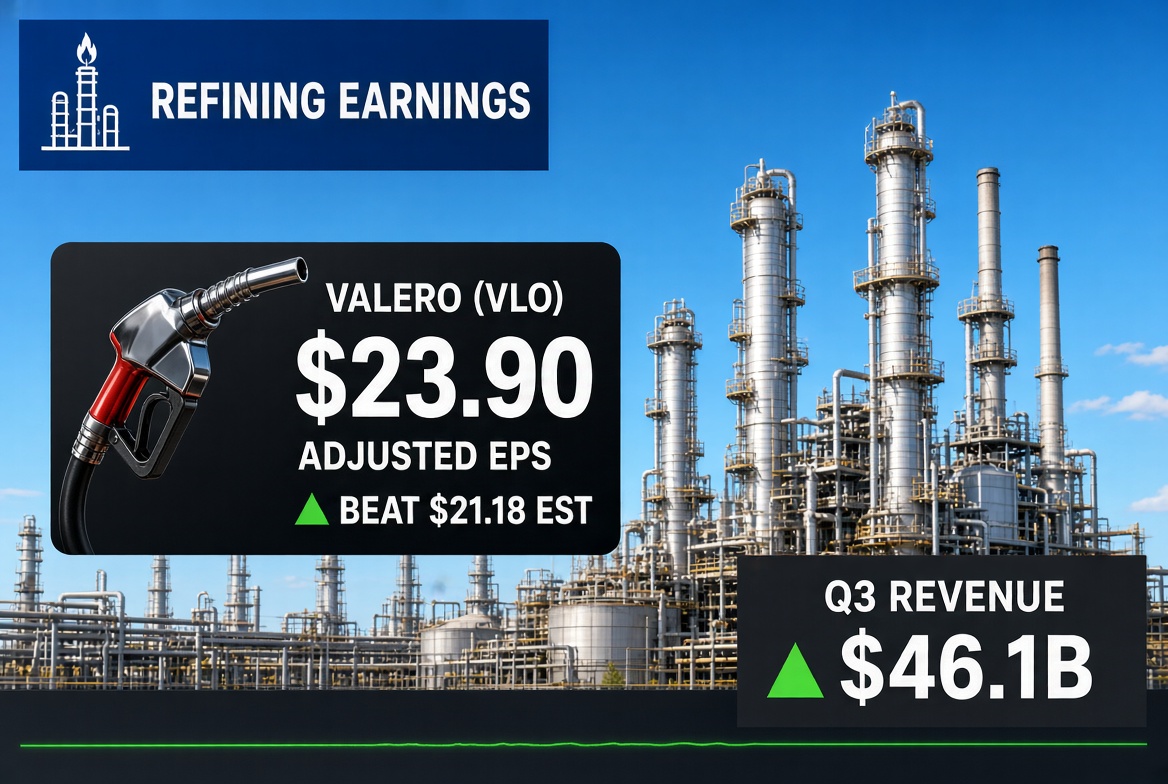
Valero Energy reported the strongest quarterly profit in its history for the third quarter of 2026, as disruptions linked to the Middle East conflict sent refining margins soaring. Adjusted earnings came in at $23.90 per share, ahead of the $21.18 consensus estimate, while revenue of $46.1 billion exceeded the $41.74 billion analysts had forecast by a wide margin. The results were released before the opening bell on Thursday.
The beat is notable for its size. Adjusted earnings per share topped expectations by about 13%, and revenue came in roughly 10% above consensus, a gap that reflects both higher product prices and wider spreads between crude costs and the value of gasoline, diesel and other refined fuels. Coverage of the report characterized it as the highest quarterly profit the company has ever posted.
The timing matters for the broader market. Crude oil prices have climbed sharply, with Brent futures up about 2.8% to $111.88 a barrel on Thursday and West Texas Intermediate near $99.50, after more Houthi attacks in Saudi Arabia. Higher energy costs have pressured equity futures, with Nasdaq-100 contracts down roughly 1.7%. Refiners, however, sit in a different part of the value chain from consumers of fuel. When supply disruptions tighten global product markets, margins can widen faster than crude costs rise, producing earnings that look very different from the rest of the market.
Investors will focus on whether such margins are durable. Refining profits are famously cyclical, and a de-escalation in the Gulf could compress spreads quickly. Conversely, continued attacks on energy infrastructure and the reduced flow of crude through key shipping routes could keep product markets tight into the winter heating season. Analysts will also watch refinery utilization, inventories of gasoline and distillates, and any commentary on capital returns.
Other energy-linked reports on Thursday pointed in a similar direction. Kinder Morgan beat third-quarter estimates with adjusted earnings of $0.35 per share against $0.32 expected, and revenue of $4.531 billion topped the $4.377 billion consensus, although its full-year outlook came in below analyst expectations.
The contrast with the rest of the tape was stark. The S&P 500 had closed Wednesday at 7,757.17, up 0.58%, but futures pointed to a decline of roughly 1% as oil and Treasury yields rose, with the 10-year yield above 5%. For a portfolio analyst, the Valero report is a reminder that energy shocks redistribute earnings rather than simply destroying them. Higher fuel costs weigh on airlines, chemicals and consumer spending, while refiners and pipeline operators can capture some of the windfall. Position sizing and exit discipline remain essential, because the same geopolitical headlines that lift energy shares can reverse within hours.
Market participants should also note that a single strong quarter does not guarantee a similar fourth quarter. Margins reflect conditions during the period, and today’s report offers little guidance on the cost of crude supply going forward. Traders typically look for confirmation from weekly Energy Information Administration inventory data and refinery run rates before concluding that elevated margins will persist.