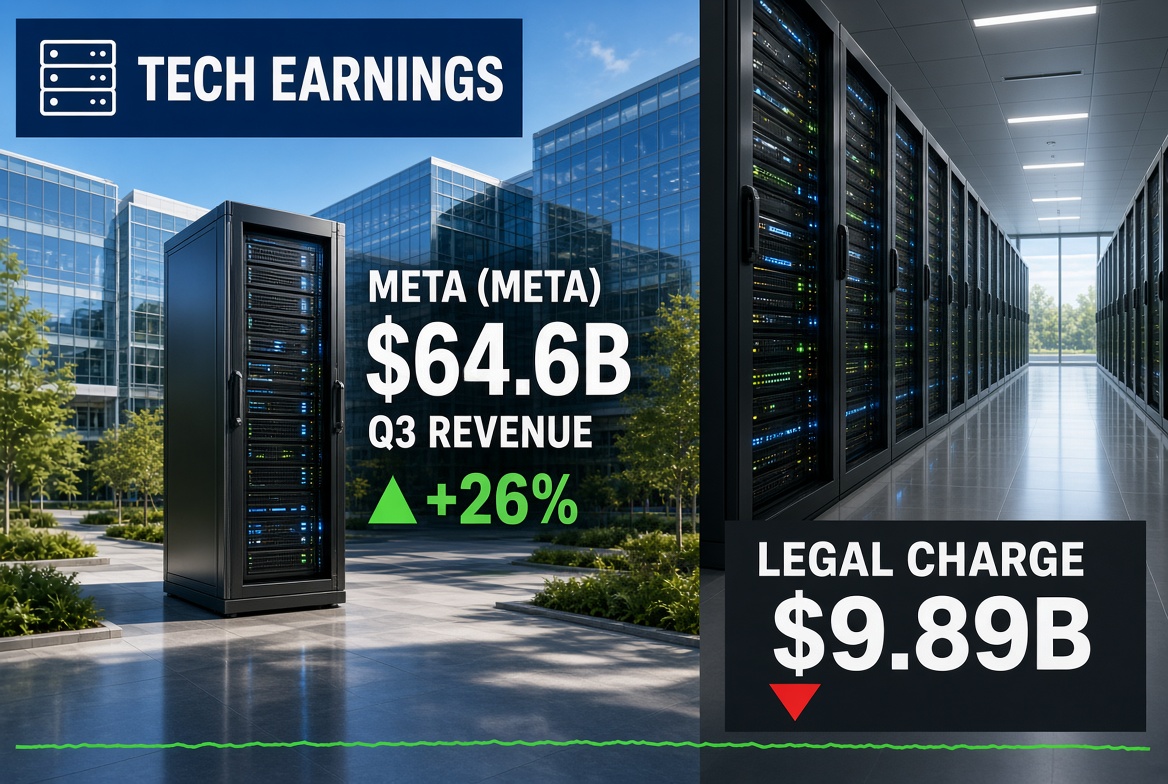
Meta Platforms posted third-quarter 2026 revenue of $64.601 billion, a 26% increase that topped the $63.368 billion analyst estimate, but a $9.89 billion legal charge pulled reported earnings to $3.83 per share, well short of the $6.54 consensus. Net income was reported to have jumped 264% from a year earlier, though the comparison is distorted by one-off items. The results and a restructuring of the company’s share classes drew heavy attention from investors on Thursday.
Advertising revenue was $63.06 billion, and the Family daily active people metric reached 3.64 billion. Operating income was $13 billion, a 20% operating margin, with expenses including the legal charge. Capital expenditures for the quarter were $34.91 billion, and free cash flow was negative $2.12 billion, underscoring how heavily the company is investing in artificial intelligence infrastructure.
Guidance was mixed in tone. Meta forecast fourth-quarter revenue of $73 billion to $76 billion, with a midpoint above the $73.729 billion consensus. Full-year capital expenditures were guided to $135 billion to $145 billion, raising the low end from the prior $130 billion to $145 billion range. Total 2026 expenses are expected at $175 billion to $179 billion including the legal charge. Reality Labs losses are projected at $18 billion to $19 billion this year, narrowing to about $15 billion next year.
The structural change drew the most debate. Meta’s board declared a one-time dividend of one non-voting Class C share for each outstanding Class A and Class B share, contingent on a restated charter that takes effect January 19, 2027. After payment, the company expects the market price of Class A stock to reflect a two-for-one split. The company said the dividend will not change the voting power of any shareholder, and that the Class C structure is intended to continue the founder-led model.
Market reaction was uneven. Shares rose in premarket trading after the report, according to Yahoo Finance, but broader futures turned lower as oil prices climbed, and Nasdaq-100 contracts were down roughly 1.7% ahead of the open. The pressure on technology stocks reflects rising Treasury yields near 5%, which weigh on the valuations of companies whose profits depend on spending that pays off years later.
For investors the key question is whether revenue growth of 26% justifies a capital budget of up to $145 billion. The legal charge is likely to be treated as a one-time item by many analysts, but the negative free cash flow in the quarter is harder to dismiss. A stock split has no effect on fundamentals, yet such moves have historically widened retail access and sometimes supported sentiment. Traders should also remember that the effective date is still months away.
Taken together, the report shows a business with accelerating sales, enormous investment needs and a governance structure designed to protect its founder’s control. In a session dominated by oil and geopolitics, that combination may leave the shares trading with the Nasdaq rather than on company-specific news. Position sizing should reflect the likelihood of continued volatility around macro headlines.