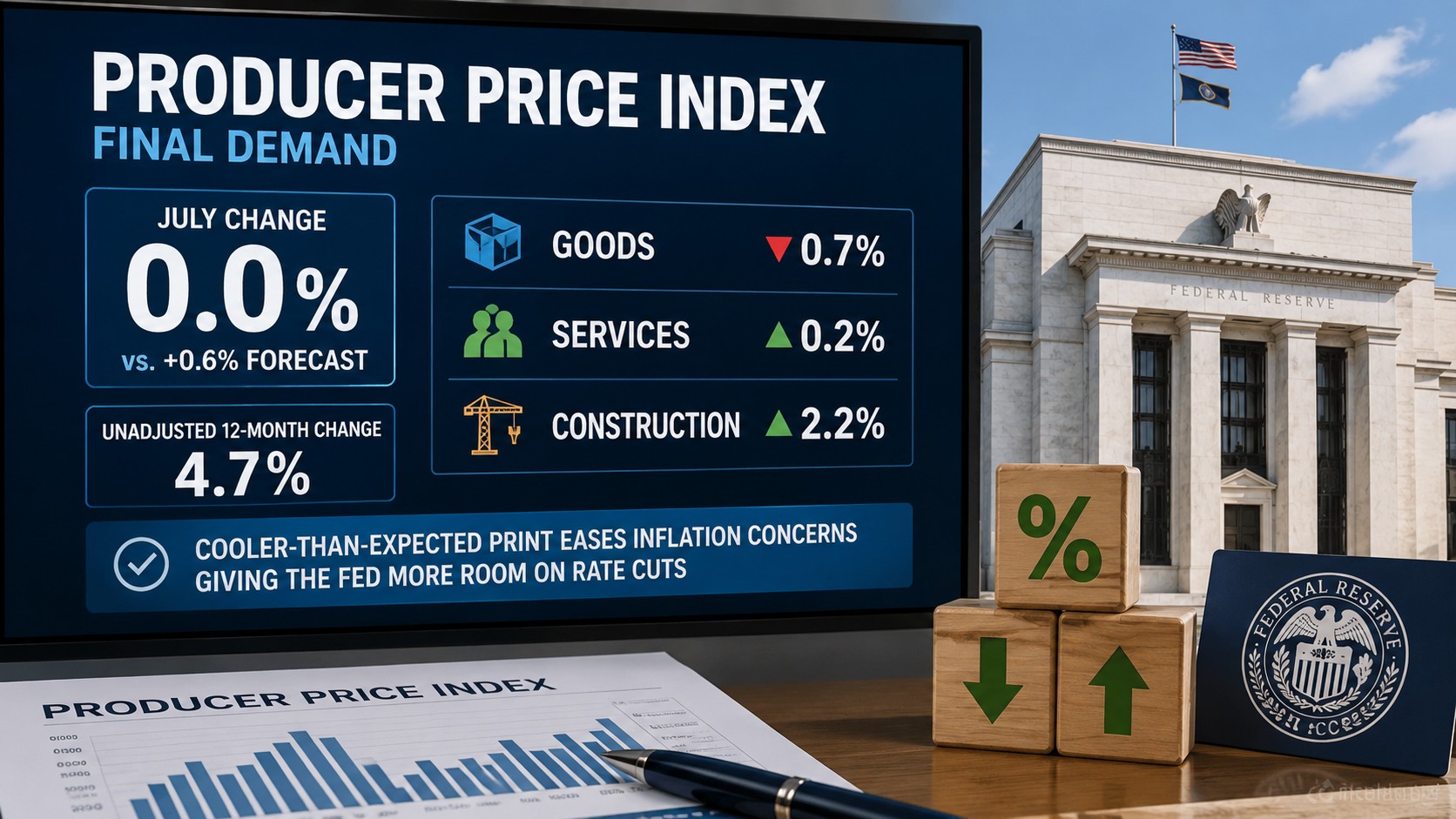
Producer prices for final demand were unchanged in July on a seasonally adjusted basis, the U.S. Bureau of Labor Statistics reported Thursday morning, well below the 0.6% monthly increase economists had forecast and a marked cooldown from recent months of elevated readings. On an unadjusted 12-month basis, producer prices rose 4.7% through July.
The flat headline print masked divergent moves beneath the surface. A 0.7% decline in prices for final demand goods offset a 0.2% increase in the index for final demand services, while construction costs jumped 2.2%. Core producer prices, which exclude food, energy, and trade services, rose 0.4% in July after a more modest 0.1% increase in June.
The report follows Wednesday's in-line consumer price index data, giving markets back-to-back inflation readings that came in softer than feared. Equity futures ticked higher following the release, with S&P 500 contracts pointing to a modestly positive open as investors weighed the data against a still-resilient labor market and an unresolved Middle East conflict weighing on energy prices.
Economists said the combination of easing tariff pass-through effects and more difficult year-over-year comparisons helped bring the headline number down from the elevated levels seen earlier in 2026, when producer prices rose as much as 0.7% in a single month. JPMorgan Asset Management's chief global strategist pointed to a broader disinflation trend taking hold in the U.S. economy, driven by lower tariff costs and the eventual normalization of oil flows out of the Strait of Hormuz.
The data carries added significance for Federal Reserve policymakers, who have been weighing the timing of potential interest rate cuts against a backdrop of persistent geopolitical risk and tariff-related cost pressures. A cooler-than-expected PPI reading, paired with Wednesday's in-line CPI, gives the central bank additional room to consider easing policy later this year should the trend continue into the fall.
Markets will next turn to Thursday's jobless claims data and natural gas storage figures for further signals on the health of the labor market and energy sector heading into the Federal Reserve's next policy meeting.