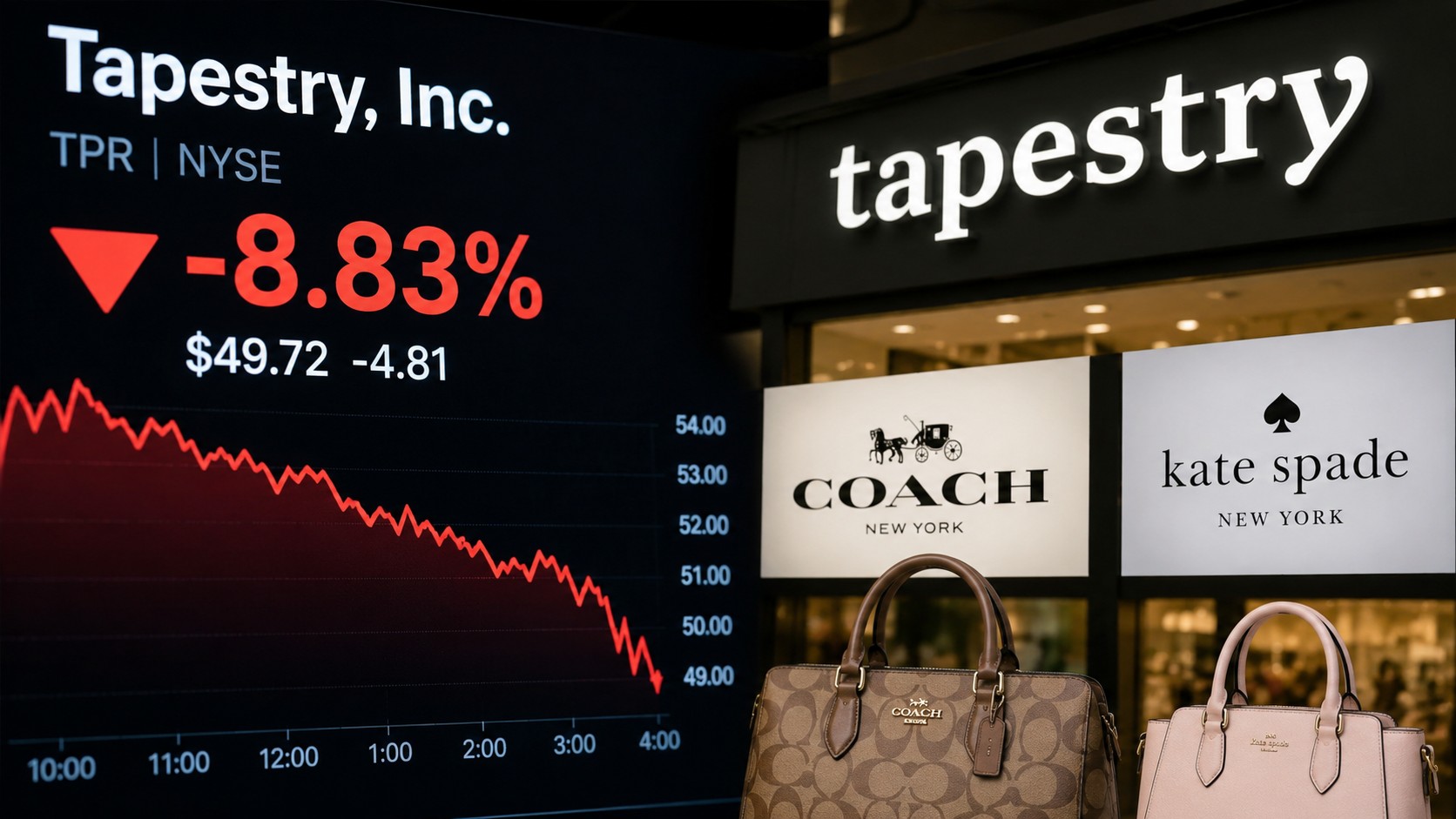
Shares of Tapestry, the luxury goods holding company behind Coach and Kate Spade, fell 8.8% after the company reported fiscal fourth-quarter earnings that beat Wall Street's expectations but paired the results with a forward outlook that failed to satisfy investors, according to reporting on Wednesday's trading session.
The selloff illustrates a pattern that has repeated across this earnings season: a headline beat is no longer enough to support a stock price when management's guidance signals caution. Investors have grown increasingly focused on forward commentary rather than backward-looking results, particularly in consumer discretionary categories exposed to tariff costs and shifting spending patterns among both value-conscious and affluent shoppers.
Tapestry's brands have benefited in recent quarters from a broader "affordable luxury" trend, as shoppers traded down from ultra-premium European houses toward accessible price points offered by Coach and Kate Spade. That dynamic had fueled a strong run in the stock over the past year, which made Wednesday's post-earnings guidance disappointment land harder with a market that had priced in continued acceleration.
Analysts noted that the magnitude of the decline — nearly 9% in a single session for a large-cap consumer name — reflects how thin the margin for error has become across retail and apparel names reporting this summer. Companies that beat on both revenue and earnings per share, but guide conservatively on the next quarter or fiscal year, have repeatedly been punished by traders rotating out of stretched valuations.
The move also comes as broader retail data remains mixed heading into the back-to-school and holiday planning season, with investors watching closely for signs of how tariff-related cost increases are being absorbed by margins versus passed on to consumers. Tapestry's results will likely be used by analysts as a read-through for other premium apparel and accessories names reporting in the coming weeks.
The stock remains one of the more closely watched names in the consumer discretionary sector this earnings season, given its exposure to both domestic and international luxury demand trends.