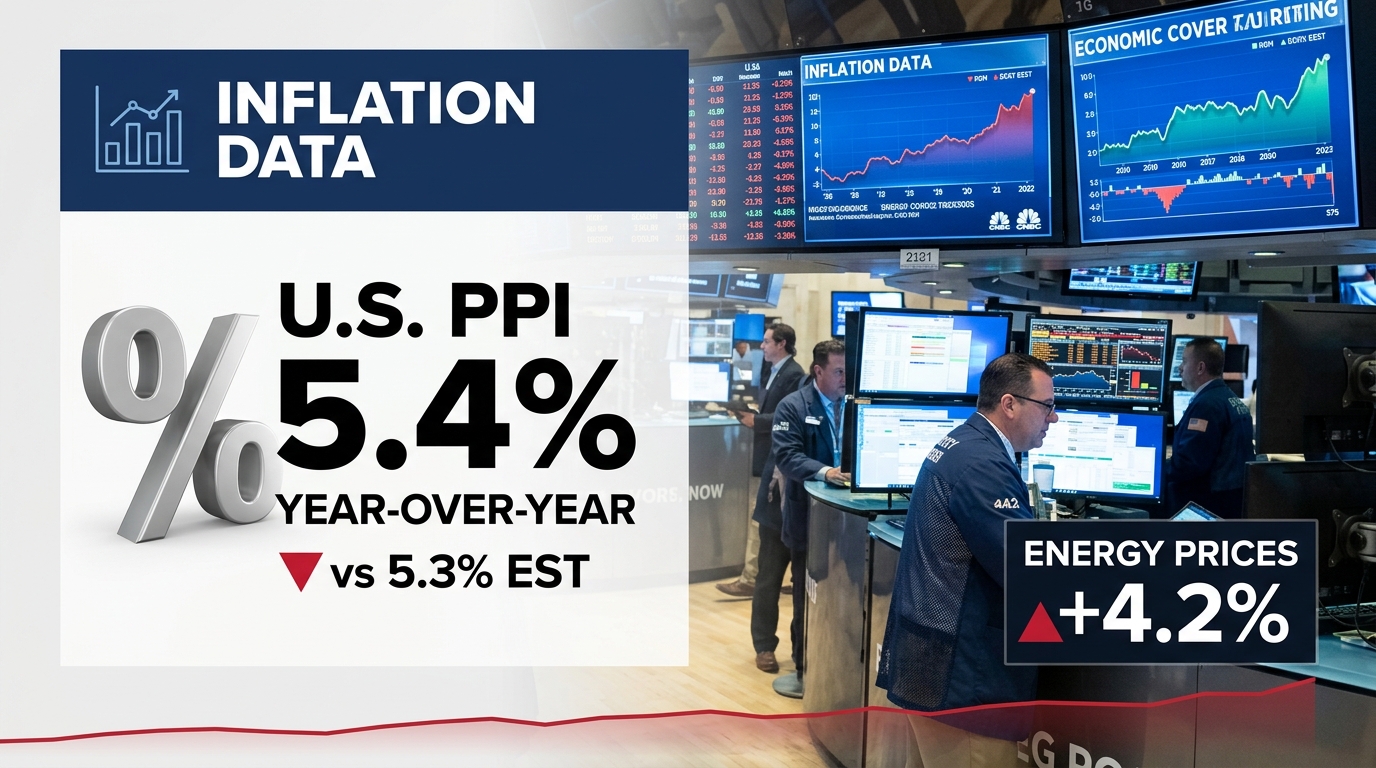
The U.S. Bureau of Labor Statistics reported that the Producer Price Index for final demand advanced 0.4% in August on a seasonally adjusted basis, lifting the 12-month increase to 5.4%. That annual reading exceeded economist forecasts of 5.3% and marked the strongest year-over-year gain so far in 2026. Goods prices climbed 1.1%, overwhelmingly driven by a 4.2% jump in energy costs. Diesel fuel prices alone skyrocketed 24.1%, contributing more than one-third of the goods advance, while gasoline and jet fuel also posted solid gains.
Services prices rose a more restrained 0.1%, supported by a 2.3% increase in transportation and warehousing. Trade services declined 0.2%. Stripping out food, energy and trade services, the index rose 0.3% for the month and 4.7% over the past year. Core PPI excluding food and energy increased 0.2% month-over-month and 4.6% year-over-year.
Earlier stages of production showed even sharper pressure. Processed goods for intermediate demand rose 1.8% and unprocessed goods climbed 1.1%. The combination of sticky wholesale inflation and oil prices that have now firmly crossed $100 a barrel has reinforced market expectations that the Federal Reserve may deliver a 25-basis-point rate increase at its September 16-17 meeting. CME FedWatch probabilities hovered near 60% after the release.
Treasury yields extended multiyear highs, with the 10-year note trading above 4.9% at points during the session. Equity futures, already under pressure from rising energy costs and geopolitical risk, turned mixed to lower. Energy equities outperformed while rate-sensitive technology and growth names lagged. Investors now turn to Friday’s Consumer Price Index for confirmation of whether the energy shock is feeding into broader consumer prices.
The data arrive against a backdrop of escalating U.S.-Iran hostilities that have disrupted shipping through the Strait of Hormuz and pushed Brent crude above $102 a barrel. Higher input costs also coincide with the European Central Bank’s own 25-basis-point rate hike earlier Thursday, underscoring a synchronized global tightening bias. For portfolio managers, the immediate implication is continued volatility around inflation-sensitive sectors and a higher bar for risk assets until clearer evidence emerges that price pressures are contained.