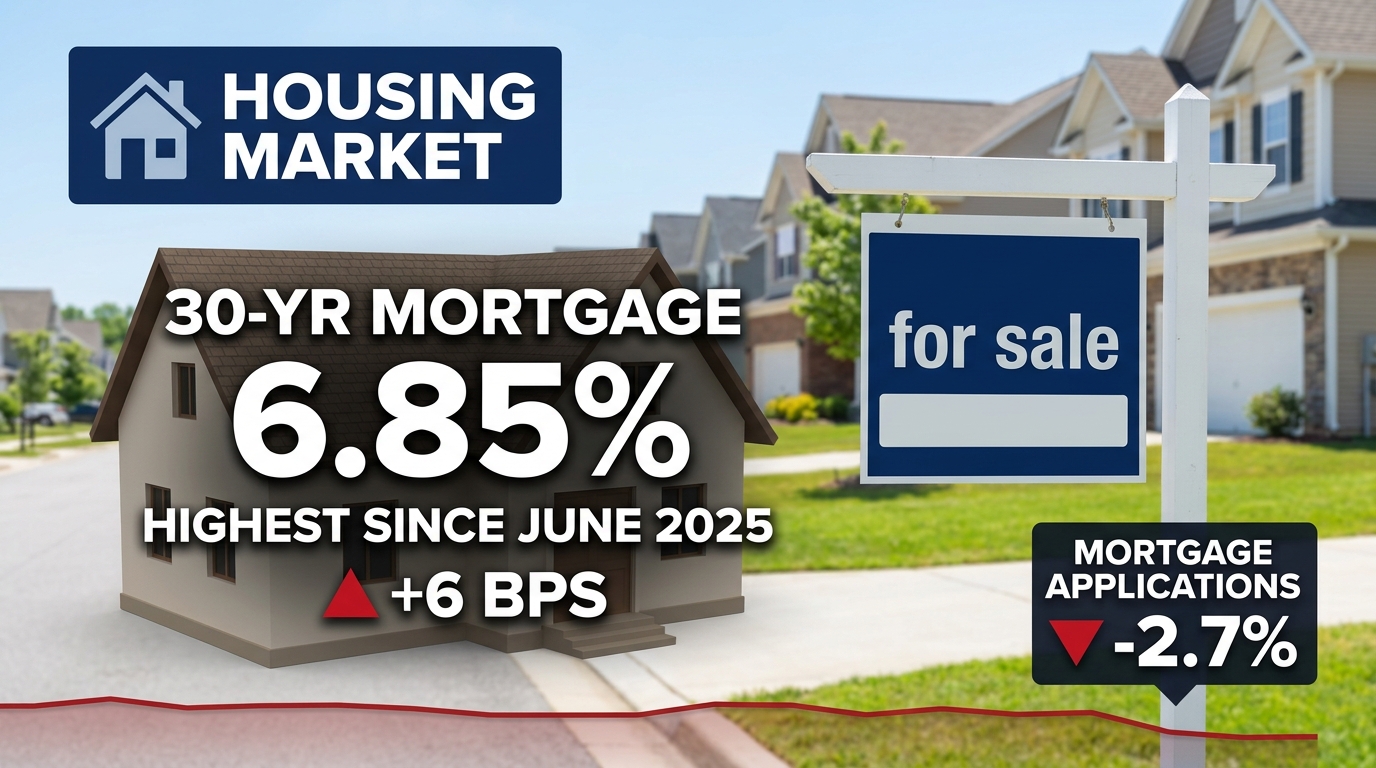
The average rate on the most popular U.S. home loan rose to its highest level since June 2025 last week, as escalating hostilities in the Middle East pushed oil prices higher, fueling inflation concerns and driving up the Treasury yields that underpin residential borrowing costs.
The average 30-year fixed-rate mortgage climbed 6 basis points to 6.85% in the week ended September 4, according to the Mortgage Bankers Association. It was the highest level for the benchmark rate since June 2025, marking a notable reversal after a period of relative stability earlier in the summer.
Mortgage rates closely track movements in U.S. Treasury yields, which have risen in recent weeks amid mounting concerns about the trajectory of federal debt, which topped $40 trillion in August, as well as intensifying competition for capital from companies financing massive artificial intelligence infrastructure buildouts. Investors are also increasingly worried that the widening U.S.-Iran conflict could worsen inflation, which has been running above the Federal Reserve's 2% target for five and a half consecutive years.
The rise in borrowing costs has already begun to choke off refinancing activity, which fell 6.2% from the prior week, according to the MBA's data. Broader mortgage applications, which capture both home-purchase and refinancing activity, dropped 2.7% over the same period, an early signal that higher rates are cooling housing-market activity just as the fall selling season gets underway.
The mortgage rate increase arrives alongside a sharp jump in oil prices following overnight U.S. military strikes on Iranian tankers and Iranian retaliation against shipping in the Strait of Hormuz. Brent crude surged toward $101 a barrel Wednesday, its highest level since late July, reinforcing fears among bond investors that an energy-driven inflation shock could keep the Federal Reserve on a more restrictive policy path than markets had previously priced in.
For homebuilders, mortgage lenders, and real estate investment trusts, a sustained move higher in borrowing costs represents a meaningful headwind, potentially dampening both new construction activity and existing-home turnover heading into the traditionally slower fall and winter selling seasons. Investors in rate-sensitive sectors will be watching upcoming inflation data and any further escalation in the Middle East conflict for signs of whether $100 oil marks a temporary spike or the start of a more durable repricing of borrowing costs across the economy.
The MBA's weekly survey has become an increasingly important data point for markets this year given the tight linkage between oil-driven inflation surprises and long-term Treasury yields. With federal debt levels and AI-infrastructure capital spending both adding structural upward pressure on yields independent of the current geopolitical shock, some economists warn that mortgage rates could remain elevated even if the Iran conflict de-escalates in the coming weeks, prolonging the affordability challenges facing prospective homebuyers.