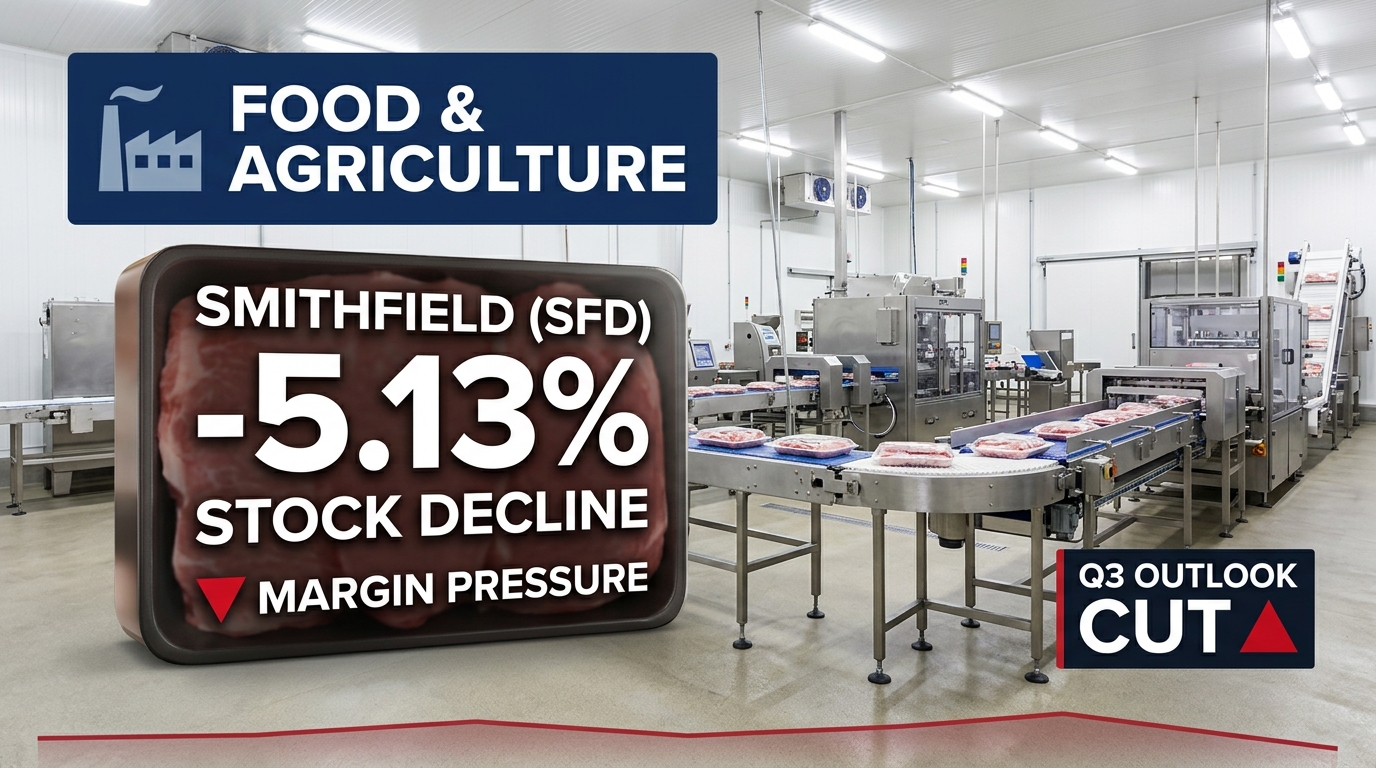
Smithfield Foods shares fell 5.13% Wednesday after the world's largest pork and hog producer lowered its third-quarter profit outlook and projected an operating loss in its fresh pork segment, citing squeezed margins and lower market prices for hogs across the industry.
The warning highlights ongoing oversupply pressures in the U.S. hog and pork markets, where elevated production levels in recent quarters have outpaced demand growth, pushing wholesale prices lower and compressing margins for processors across the supply chain. Smithfield's fresh pork segment, which handles the slaughtering and initial processing of hogs before products move to retail and food-service channels, is typically the most exposed part of the business to swings in live hog prices and wholesale pork values.
Smithfield's guidance cut adds to a mixed picture across the broader protein and consumer staples sector this week, with the company's warning coming even as other food and retail names posted stronger-than-expected results. The divergence underscores how commodity-driven businesses like pork processing remain vulnerable to supply-and-demand imbalances that can persist for multiple quarters, independent of broader consumer spending trends or overall food inflation, which has remained elevated across many other grocery categories.
Industry analysts have pointed to elevated hog herd sizes and strong pork production volumes as key drivers of the current margin pressure, suggesting that further supply discipline — including potential herd reductions by producers — may be necessary to restore pricing power in the fresh pork category. Until that rebalancing occurs, processors like Smithfield may continue to face a challenging pricing environment even if overall demand for pork products remains relatively stable.
The stock's decline Wednesday reflects investor concern that the third-quarter operating loss in fresh pork could extend into subsequent quarters if oversupply conditions persist. Smithfield's broader portfolio, which includes packaged and branded meat products with typically higher and more stable margins than fresh pork, may help offset some of the segment-specific weakness, but Wednesday's guidance cut suggests management does not expect a near-term resolution to the pricing pressure weighing on the commodity side of its business.
Investors in the broader agriculture and protein complex will be watching hog futures prices closely in the coming weeks for signs of whether the oversupply dynamic is beginning to correct. A meaningful reduction in herd sizes or slaughter volumes would typically be needed to restore pricing power, a process that can take multiple quarters to play out given the biological lead times involved in hog production. Until then, Smithfield and its processing peers may continue to face margin headwinds on the fresh pork side of their businesses. Wednesday's warning may also prompt renewed scrutiny of export demand trends, since international buyers of U.S. pork have historically played a significant role in absorbing domestic oversupply, and any slowdown in trade flows tied to the current geopolitical environment could further complicate the sector's path back to healthier pricing.