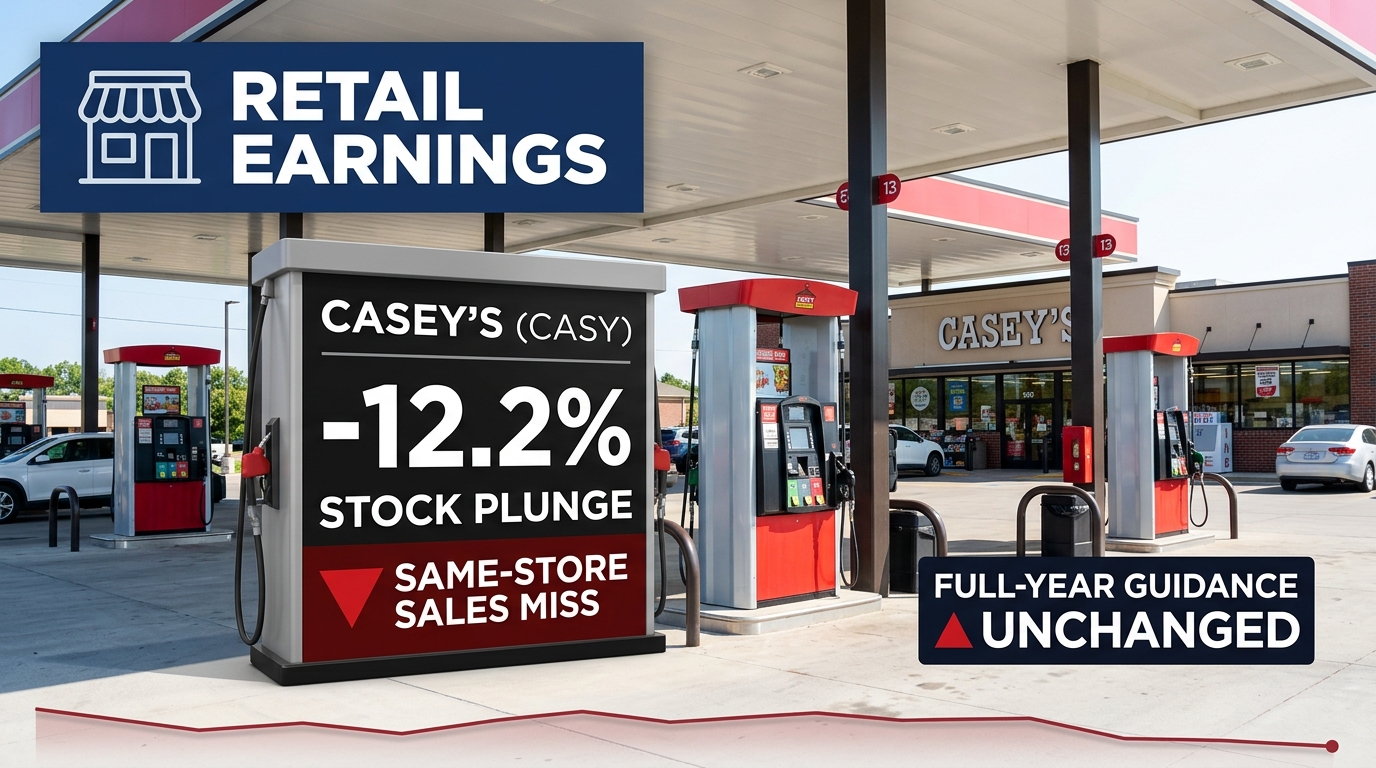
Casey's General Stores shares tumbled 12.2% Wednesday after the convenience store operator reported disappointing same-store sales growth for the quarter and left its full-year outlook unchanged, disappointing investors who had been positioned for an upward guidance revision following a string of strong quarters from the chain.
The miss stands in sharp contrast to several other retail and consumer names that reported this week, including Signet Jewelers, which raised guidance alongside its earnings beat. Casey's soft same-store sales figure raises questions about whether fuel margins and in-store traffic trends are beginning to soften heading into the fall, a period that typically sees reduced travel and discretionary convenience spending compared with the summer driving season.
Convenience store operators like Casey's generate revenue from both fuel sales, which tend to carry thin margins, and in-store merchandise, including prepared food, which typically carries higher margins and drives a larger share of profitability. A same-store sales miss can reflect softness in either category, and investors will be looking for additional detail from management on which segment underperformed most significantly relative to expectations.
The timing of Wednesday's decline is notable given the broader macro backdrop. Gasoline prices are likely to face upward pressure in the coming weeks following the sharp rise in crude oil prices tied to the escalating conflict between the United States and Iran, with Brent crude surging past $100 a barrel and West Texas Intermediate climbing toward $95. Higher pump prices could provide a near-term offset to fuel-margin softness for convenience retailers, though they may simultaneously weigh further on discretionary in-store spending if consumers pull back to compensate for higher costs at the pump.
Casey's decision to leave its full-year guidance unchanged, rather than lower it outright, suggests management believes the same-store sales softness is either temporary or will be offset by other factors over the balance of the fiscal year. Investors, however, appear to be taking a more skeptical view in the near term, with Wednesday's double-digit decline reflecting concern that consumer spending trends across the convenience and fuel retail sector may be entering a more challenging stretch than previously anticipated.
The magnitude of Wednesday's selloff also reflects how richly convenience-store stocks have traded in recent years amid steady expansion and consistent execution from operators like Casey's. A same-store sales miss that might have drawn a modest reaction from a lower-multiple stock instead triggered an outsized decline, underscoring how little room for disappointment the market had priced into shares heading into the report. Analysts are likely to focus their follow-up questions on fuel-margin trends and prepared-food sales specifically when management hosts its earnings call, and any commentary on how rising crude prices are flowing through to retail gasoline margins will be closely scrutinized given this week's sharp move higher in oil following the escalation of the U.S.-Iran conflict.