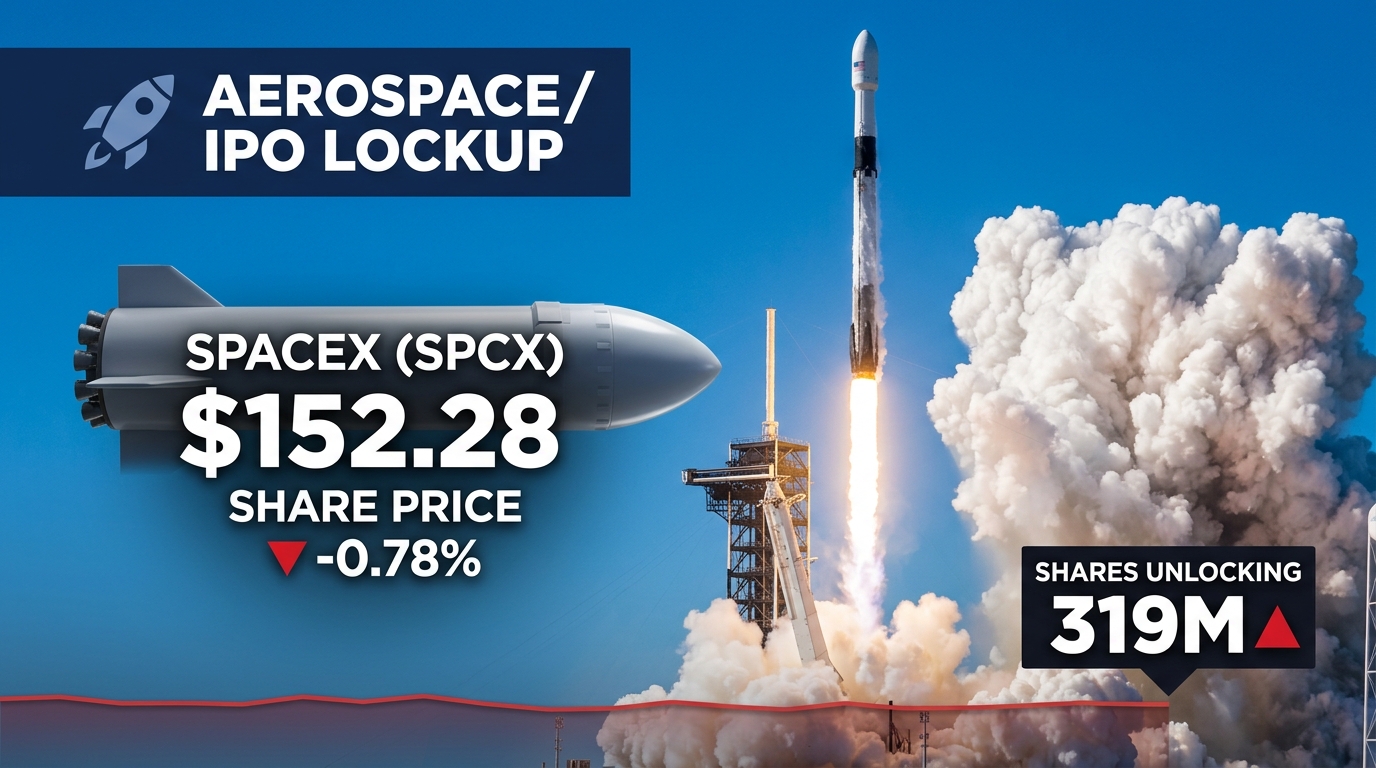
Shares of SpaceX slipped 0.78% to $152.28 Wednesday as roughly 319 million shares became eligible for sale on the public market, the first of a two-day lockup expiration tied to the company's June initial public offering. Another 59 million shares are set to unlock Thursday, together marking the 90th trading day since SpaceX's stock market debut.
SpaceX shares priced at $135 apiece when the company went public on June 12, and the stock subsequently climbed to a record $225.64 within days of its debut before pulling back alongside broader market volatility in recent months. Wednesday's modest decline suggests investors are treating the lockup expiration cautiously rather than reacting with the sharp selloffs sometimes seen when large blocks of insider and early-investor shares become tradable simultaneously.
Lockup expirations are closely watched events for recently public companies because they introduce a substantial increase in the available float, which can pressure share prices if early investors, employees, or venture backers choose to sell rather than hold. The scale of Wednesday's unlock — hundreds of millions of shares — represents a meaningful test of demand for one of the most closely followed IPOs of 2026, particularly given Elon Musk's high profile and the broader market's intense interest in space, satellite, and aerospace technology names.
The timing adds an additional layer of complexity, as the unlock coincides with a broader risk-off tone across equity markets driven by surging oil prices and escalating military conflict between the United States and Iran. Investors weighing whether to add to or trim SpaceX positions this week must balance company-specific supply dynamics against a macro backdrop that has already pressured major indexes and pushed Treasury yields and mortgage rates higher.
Analysts will be watching trading volumes and price action over the next several sessions to gauge how much of the newly unlocked supply actually reaches the market versus being held by long-term investors. A muted reaction, similar to Wednesday's sub-1% decline, would suggest confidence among existing shareholders in SpaceX's longer-term trajectory, while a more pronounced selloff in the days following Thursday's second unlock tranche could signal that some early backers are looking to lock in gains after the stock's strong run since its June debut.
SpaceX remains one of the most actively traded names among 2026's new listings, and its performance is often viewed as a bellwether for investor appetite toward high-growth, capital-intensive aerospace and satellite businesses more broadly. With shares still trading well above their $135 IPO price despite Wednesday's dip, the stock has delivered strong returns for early investors even before accounting for the potential impact of this week's lockup expirations on near-term supply and demand dynamics. Portfolio managers weighing new positions may prefer to wait until both tranches have fully cleared the market before adding exposure, given the historical tendency for newly public stocks to experience elevated volatility in the days immediately surrounding lockup expirations.