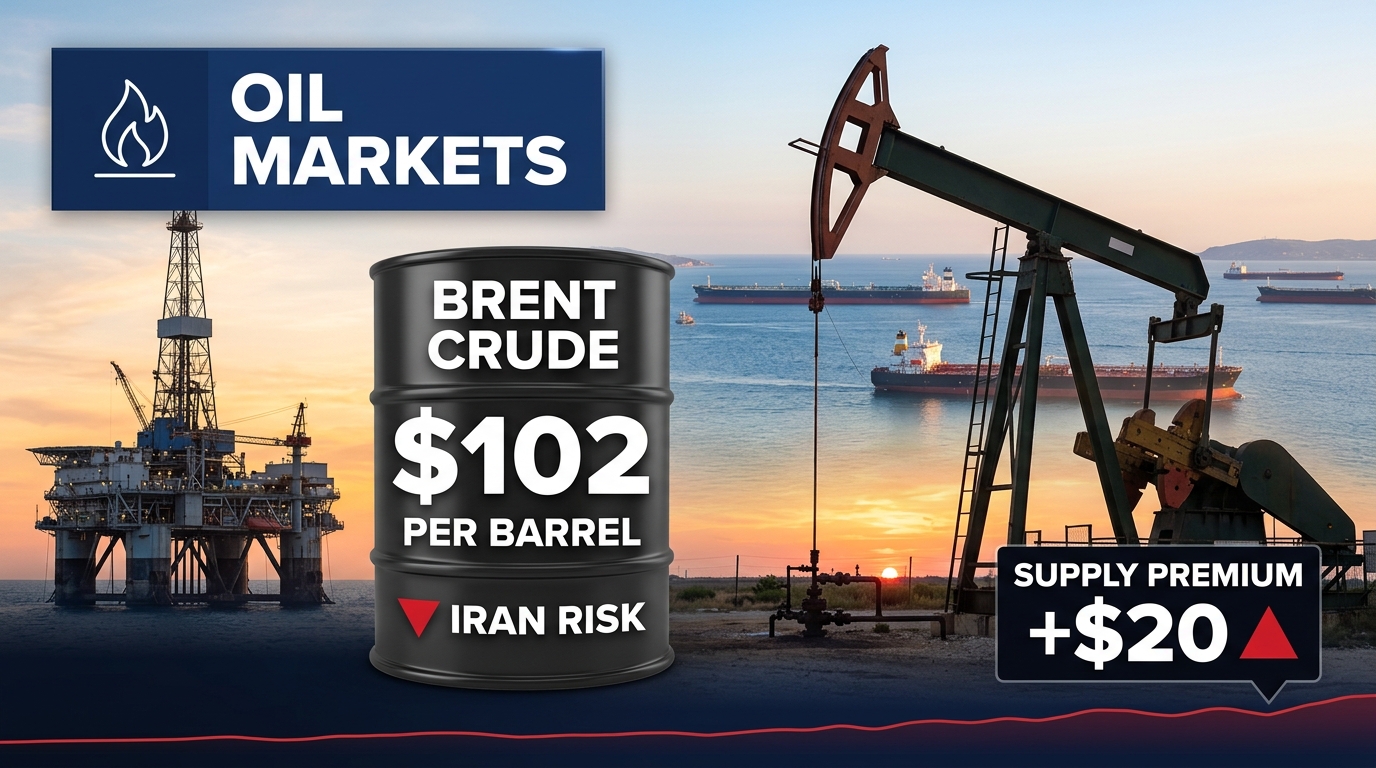
Brent crude futures hovered near $102–$105 a barrel on Thursday after crossing the psychologically important $100 threshold for the first time in more than six weeks. West Texas Intermediate traded near $97–$99. The rally followed a fresh escalation in U.S.-Iran hostilities, including reported strikes on tankers and threats to shipping lanes through the Strait of Hormuz.
White House advisers have privately briefed President Trump that the conflict could persist through the remainder of his term ending in 2029, according to reporting that circulated widely among market participants. That longer-duration risk has prompted analysts to reassess supply disruption scenarios. Goldman Sachs noted that intensified attacks on shipping could push prices above $120 a barrel.
Higher oil prices are already visible in the August Producer Price Index, where energy costs rose 4.2% and diesel surged 24.1%. The pass-through is supporting expectations of sticky inflation and keeping Federal Reserve rate-hike probabilities elevated. Energy equities were the sole S&P 500 sector to post gains in the prior session, while broader indexes declined for a third consecutive day amid rising Treasury yields.
The 10-year Treasury yield climbed above 4.9% intraday, its highest level since late 2023, as investors demanded greater compensation for inflation risk. European natural-gas prices also reached multiyear highs, amplifying global energy cost pressures that contributed to the European Central Bank’s decision to raise rates by 25 basis points.
For equity investors the immediate implication is continued rotation toward energy producers and away from rate-sensitive growth stocks. Downstream industries facing higher input costs, including transportation, chemicals and certain consumer-discretionary names, remain vulnerable until geopolitical tensions stabilize or alternative supply sources offset the disruption premium now embedded in prices.