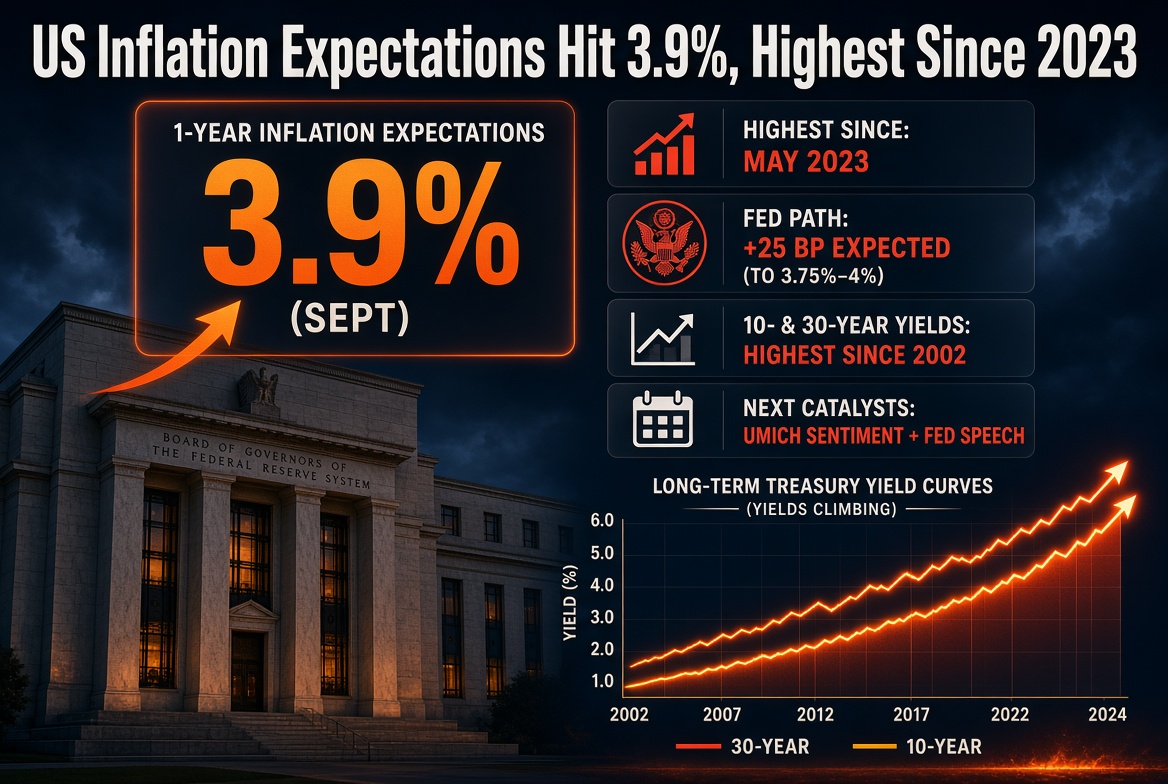
Median US inflation expectations for the year ahead rose to 3.9% in September 2026, the highest reading since May 2023, pushing interest rate worries back to the center of the market narrative on Friday. The data left US stock futures with a softer bias early in the session, even as they later swung toward modest gains.
The survey result arrives alongside minutes from the Federal Reserve showing that most officials see a likely need for another 25-basis-point rate increase, which would lift the policy range to 3.75% to 4% by the end of the year. That keeps the central bank's bias hawkish at a time when investors had hoped energy-driven price pressures would fade.
Officials have reinforced the message in public remarks. Fed Governor Christopher Wallace said this week that multiple rate increases might be needed to bring inflation under control within an acceptable period of time. His comments helped lift Treasury yields on Thursday, and a further speech from Fed official Susan Collins is scheduled for tonight.
Bond markets have been under strain. On Wednesday, yields on 10-year and 30-year Treasury notes reached their highest levels since 2002 before retreating after a 10-year auction drew strong demand. Elevated yields raise borrowing costs across the economy and increase the discount rate applied to future corporate earnings, a particular headwind for richly valued growth shares.
Energy prices remain a major driver of inflation expectations. Oil jumped about 5% on Thursday on signs of Middle East escalation before easing Friday, with Brent still above $103 a barrel. Because households tend to anchor their price expectations to visible costs such as fuel, sustained high crude prices can feed into survey measures and complicate the central bank's task.
Equity markets have so far been resilient. The S&P 500 closed at a record high on Tuesday, then fell Wednesday as seven of 11 sectors lost ground. Investors have shown a willingness to buy dips, but the combination of higher yields, elevated inflation expectations and concerns about the cost of funding AI investment has made the rally more fragile.
Two events could shape the near-term path. The University of Michigan's preliminary October consumer sentiment survey is due at 10 a.m. ET and will update both confidence and inflation expectations. The Collins speech tonight may clarify how much conviction officials have behind further tightening. A confirmation of higher-for-longer would likely favor shorter-duration positioning and quality balance sheets.
Some strategists point to history as a cushion, noting that midterm election years have often been followed by a year-end rally for stocks. But with the Fed leaning toward additional tightening, investors should weigh seasonal tendencies against the real possibility that bond yields, not equities, set the tone into the November 3 vote and the next policy meeting.