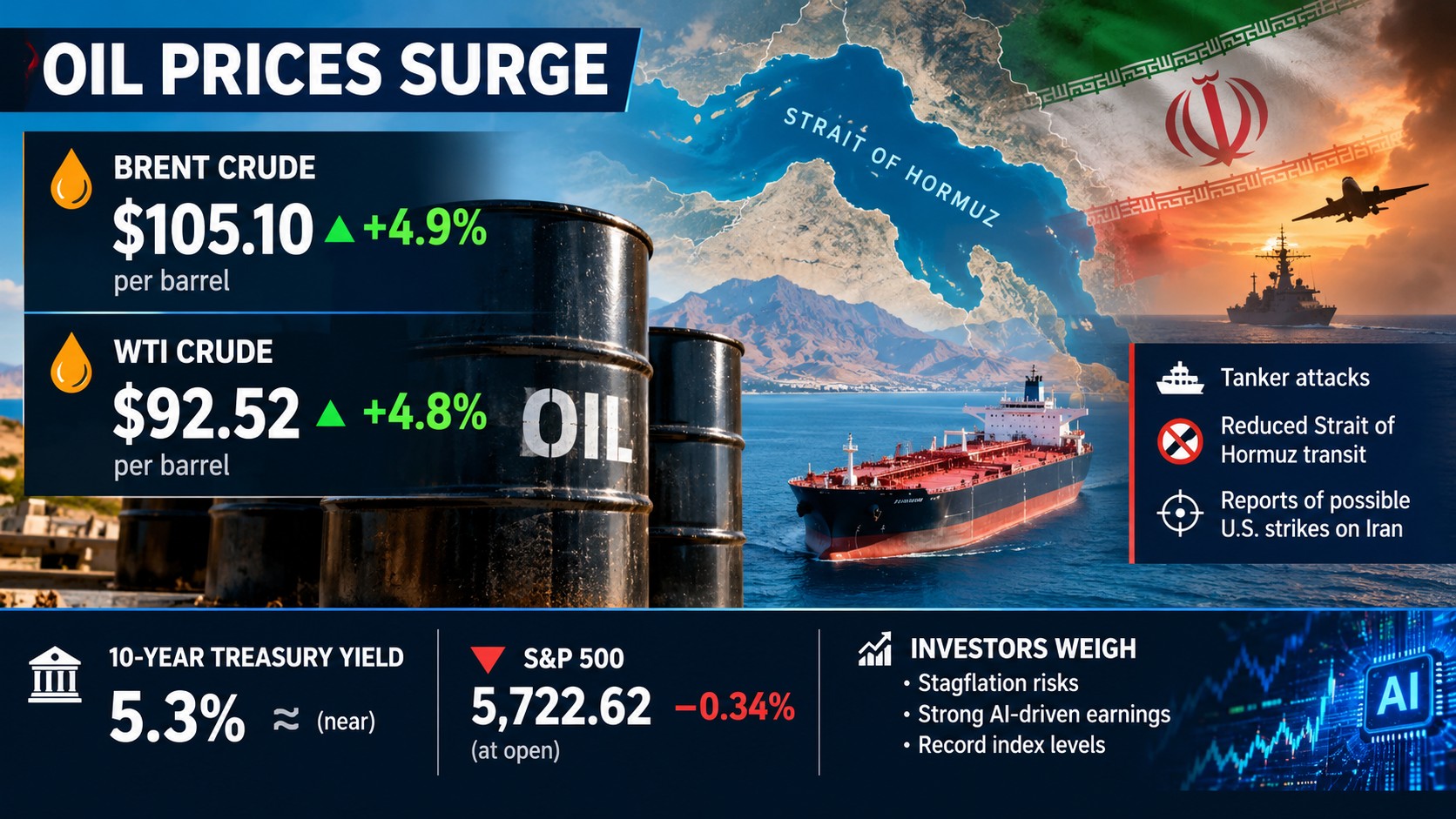
Crude oil climbed sharply early Thursday as a cluster of geopolitical and weather risks hit supply expectations at once. West Texas Intermediate surged 4.8% to $92.52 per barrel, while Brent jumped 4.9% to $105.10, according to early-session pricing.
Traders pointed to fresh tanker attacks in the Persian Gulf, a drop in transit through the Strait of Hormuz and reports that the White House has asked the Pentagon to prepare contingency options on Iran. President Donald Trump said Wednesday at a campaign rally that he no longer wants a deal with Tehran, and U.S. media reported that officials have discussed resuming large-scale operations in the coming weeks, potentially including strikes on energy, infrastructure and nuclear targets. Separately, Houthi attacks on Saudi airport infrastructure have raised fears that disruption is spreading beyond Hormuz to wider Gulf logistics, and an approaching Gulf Coast hurricane has led producers to curb output and evacuate offshore platforms.
Equities opened lower. The S&P 500 lost 0.34%, the Dow Jones Industrial Average fell 0.25%, the Nasdaq retreated 0.47% and the small-cap Russell 2000 gave up 1.31% in early trading, a sign that smaller, more rate-sensitive companies are bearing the brunt of higher borrowing costs. The slide follows a pullback Wednesday from record highs, when the Dow shed 341 points.
Rates are the second leg of the story. The 10-year Treasury yield is trading around 5.3%, reflecting resilient economic activity, persistent inflation, heavy government borrowing and growing competition for capital. Minutes from the Federal Reserve's Sept. 15-16 meeting, released Wednesday, reinforced a hawkish bias. One analyst said most policymakers still anticipate another rate hike before year-end, although the minutes suggest limited appetite for a prolonged tightening cycle.
Labor data offered a mixed picture. Initial jobless claims slipped 2,000 to a seasonally adjusted 197,000 for the week ended Oct. 3, below the 200,000 economists expected and near 57-year lows for a fourth straight week. Yet nonfarm payrolls rose by only 29,000 in September, consistent with a low-hire, low-fire labor market. Economists have blamed hiring caution on uncertainty from tariffs and the U.S.-Israeli war with Iran, which has pushed diesel prices to record highs.
Safe-haven assets were mixed. Gold futures edged up 0.17% to $4,147.60 an ounce, while silver futures fell 2.21% to $58.96. Analysts noted that leadership in the equity rally has narrowed around artificial intelligence spending, leaving indexes exposed to any shift in the rates outlook. A London-based strategist warned Thursday that an unwinding of AI spending could eventually trigger the worst S&P 500 drawdown since 2008, with a 2027 year-end target of 5,000 for the index. That call sits far outside the consensus among strategists tracked by Bloomberg, who on average see about 14% upside.
For investors, the setup favors caution. Energy exposure benefits directly from higher crude, while transportation, consumer discretionary and rate-sensitive small caps face margin and financing pressure. A de-escalation headline or a diplomatic breakthrough could reverse crude quickly, as could a hurricane that tracks away from production zones, so position sizing and risk limits matter more than conviction today. This is analysis, not investment advice.