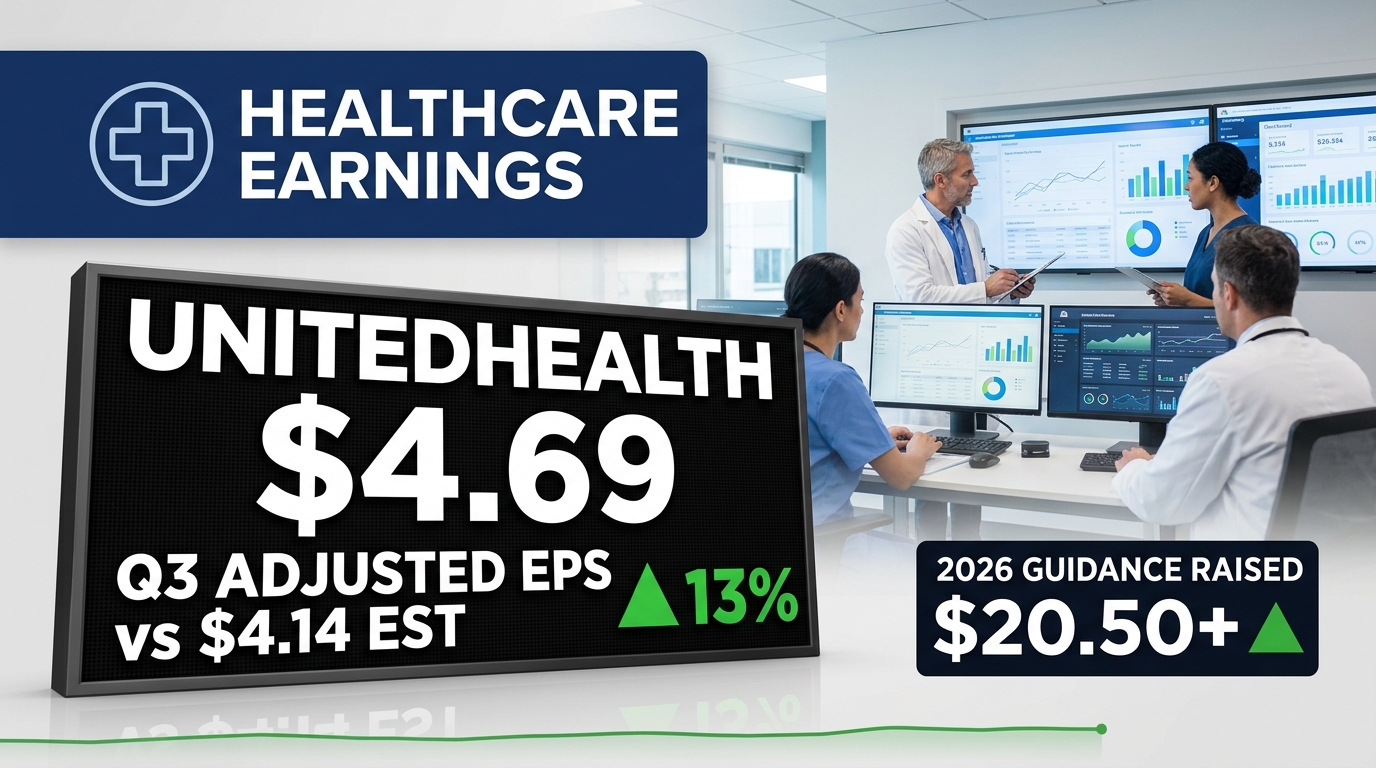
UnitedHealth Group, the nation's largest private health insurer, reported third-quarter adjusted earnings of $4.69 per share on Tuesday, comfortably above the $4.14 per share analysts had expected. The company also raised its full-year 2026 adjusted earnings outlook to at least $20.50 per share, up from a previous range of $19.50 to $20.00.
Earnings from operations rose to $6.6 billion from $4.3 billion in the year-ago quarter, a gain of more than 50%. The improvement came even as UnitedHealth covered about 1.8 million fewer people than a year earlier, a trade-off that investors will weigh against the margin recovery as they judge how much of the profit improvement reflects pricing and cost discipline rather than a smaller book of business.
The beat continues a pattern. In the second quarter, UnitedHealth reported adjusted earnings of $6.38 per share against expectations of $4.90 and lifted its outlook to $19.50 to $20.00. Ahead of Tuesday's print, analysts had noted that the last two quarters cleared estimates by wide margins, which raised the bar for the third-quarter report and for any further guidance increase.
Consensus had called for roughly $4.12 to $4.15 per share on revenue of about $111.5 billion. For managed-care stocks, the figures that tend to move shares are medical cost ratios, utilization trends and commentary on Medicare Advantage margins rather than headline earnings alone. Those details, along with the company's updated outlook, will shape how the sector trades through the rest of the earnings season.
Regulatory risk remains part of the picture. Coverage ahead of the report highlighted a widening Department of Justice antitrust probe as a source of uncertainty that management guidance would need to address. Policy decisions on Medicare Advantage payment rates and scrutiny of insurer practices continue to hang over the group even when quarterly numbers are strong.
The release landed on a busy morning. JPMorgan, Goldman Sachs, Wells Fargo and Citigroup reported results before the open, and Johnson & Johnson was also scheduled to report, with analysts expecting about $25.4 billion in revenue. With the 10-year Treasury yield near 5.2% and technology stocks under pressure, defensive healthcare names have drawn interest, though rising yields also make dividend-oriented sectors less attractive relative to bonds.
For investors, the raised outlook is a clear positive that reinforces the narrative of an earnings recovery. The main questions are quality and durability: whether membership declines stabilize, whether cost trends stay benign into 2027 and whether regulatory headlines escalate. Position sizing around legal and policy catalysts remains prudent, even after a quarter that gives bulls fresh evidence that the turnaround is working.