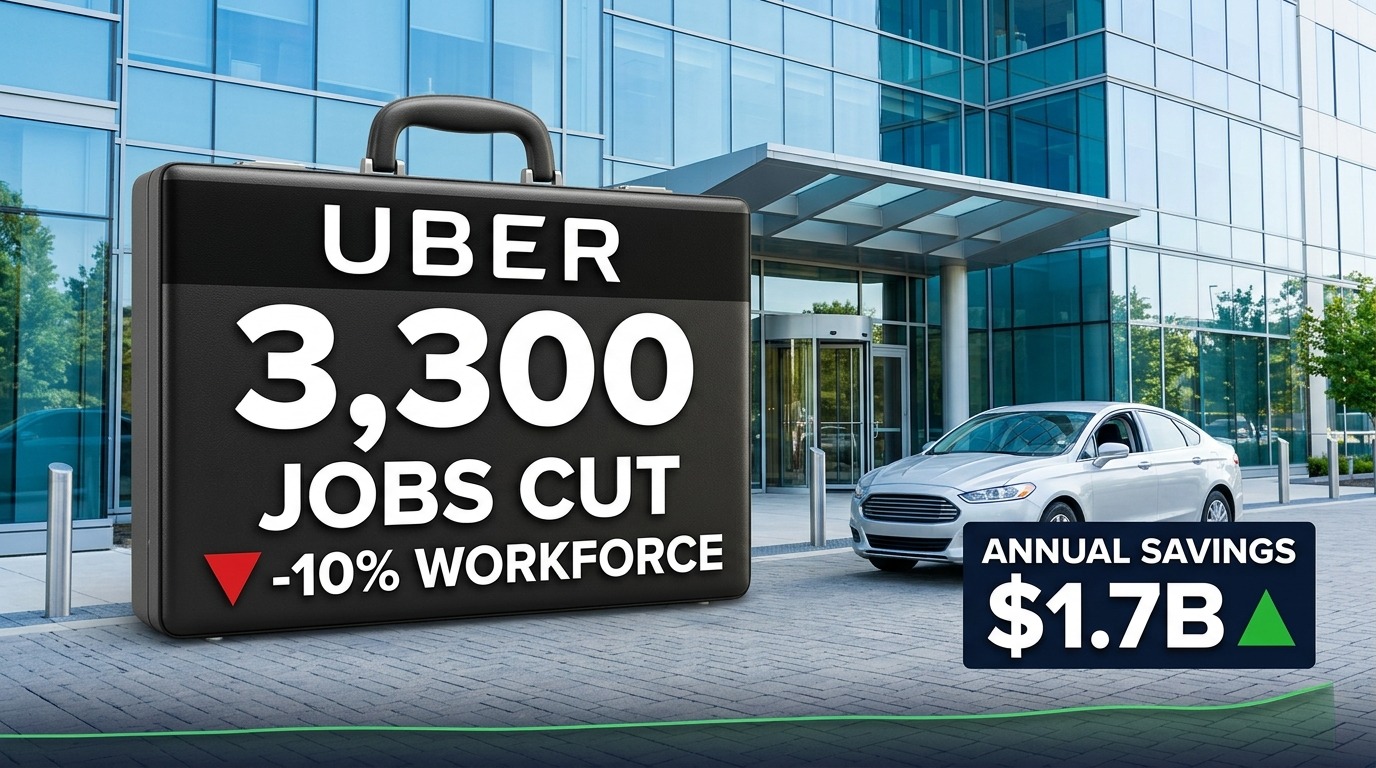
Uber Technologies is cutting about 3,300 jobs, roughly 10% of its global workforce, marking the ride-hailing company's largest round of layoffs since the pandemic-driven cuts of 2020. CEO Dara Khosrowshahi outlined the restructuring in a message to employees published Wednesday, framing the changes as an effort to strip out management layers and create a leaner, faster-moving organization.
Uber currently employs roughly 34,000 people across more than 70 countries, according to a recent regulatory filing, meaning the cuts will bring total headcount below 30,000. The reorganization will shrink the number of managers by about 20%, with many of those employees shifting into individual-contributor roles rather than leaving the company outright. Uber is also reducing the number of small teams with only one or two members by roughly half and eliminating positions it described as sitting more than seven layers removed from the CEO.
The delivery business is a particular focus of the reorganization. Uber plans to consolidate its restaurant, retail, and direct-delivery units into teams organized at the global, regional, and country level, a structural change aimed at reducing duplication across what has become a sprawling international operation. The company is also concentrating jobs in key hubs, primarily New York and San Francisco, and tightening its remote-work policy so that only about 1% of employees will be permitted to work remotely going forward, with the rest expected to work in-office at least three days a week.
Analysts at Wedbush Securities estimated the layoffs will generate roughly $1.7 billion in annual savings, funds the company said it intends to reinvest in drivers, couriers, and merchants, as well as in innovation initiatives including autonomous vehicles. Uber has earmarked more than $10 billion for robotaxi technology development, underscoring how central self-driving vehicles have become to the company's long-term strategy as competitive pressure from Waymo's independently operated robotaxi fleets continues to build in several markets.
Khosrowshahi did not attribute the layoffs directly to artificial intelligence, distinguishing the move from the wave of AI-linked job cuts that has swept through parts of the technology sector this year. Instead, the CEO characterized the cuts as a deliberate choice about where the company allocates its people, time, and capital going forward. Notably, Uber's rapid pace of AI-related technology spending has already strained internal budgets, with the company reportedly exhausting its full annual AI budget in just four months.
Uber shares rose modestly following the announcement, suggesting investors viewed the restructuring as a disciplined response to rising competitive threats rather than a signal of deteriorating core demand. Still, the scale of the cuts, the largest since the company slashed 6,700 jobs in May 2020 amid the pandemic-driven collapse in ride demand, highlights how seriously Uber's leadership is treating the long-term threat posed by autonomous ride-hailing rivals. For investors, the announcement reinforces that Uber's next growth chapter is likely to be defined as much by its investment in self-driving technology as by its traditional ride-hailing and delivery businesses.