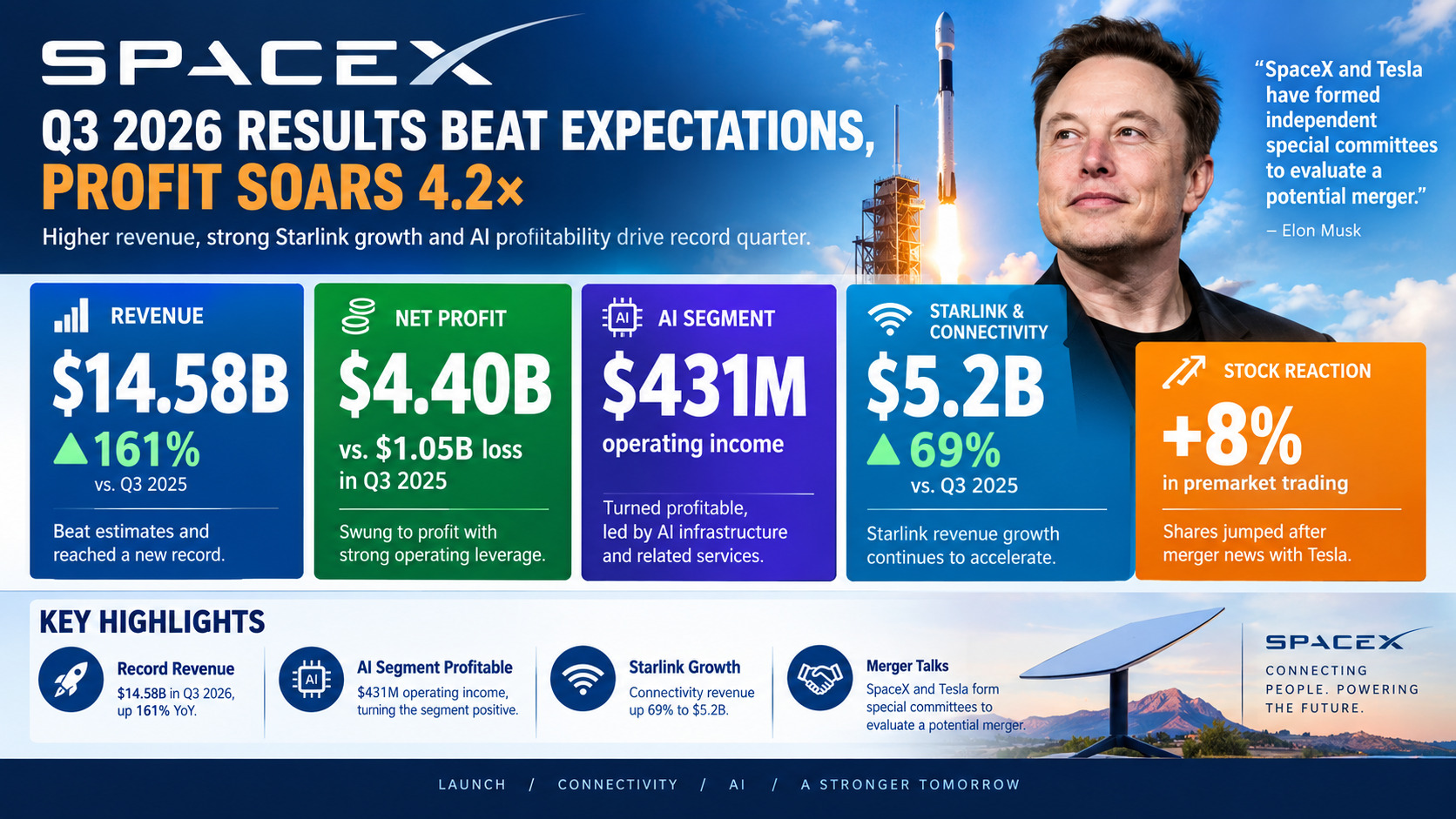
SpaceX (SPCX) delivered the strongest quarterly report of its short life as a public company, posting third-quarter 2026 revenue of $14.58 billion, a 161% increase from the same period a year earlier, according to its earnings release and coverage by CNBC and ABC News. The company reported a profit of $4.40 billion, reversing a loss of $1.05 billion in the year-ago quarter and a loss in the quarter that ended in June.
Shares rose roughly 4% in extended trading to about $153.30 on Tuesday evening and extended gains to around 8% in Wednesday premarket trading. The stock traded near $148 on Tuesday afternoon, and the company carries a valuation of nearly $1.95 trillion. The IPO priced at $135 per share in June, and the stock fell sharply after its first earnings report in August, when AI spending weighed on sentiment.
The mix of the business shifted toward artificial intelligence and connectivity. Connectivity revenue, which includes Starlink, reached $5.2 billion, up 69% from a year earlier. The AI segment recorded $431 million in operating income, a turnaround from an operating loss of $1.26 billion in the prior quarter, when AI spending more than doubled from the quarter before it. Investors had singled out AI capital spending after the second-quarter report, when the segment’s outlay reached $15.8 billion.
The bigger headline for the broader market came on the earnings call. Elon Musk said SpaceX and Tesla have each formed independent special committees to evaluate a potential merger. According to Investing.com, Musk said negotiations are at an early stage, that he does not serve on either committee, and that he sees synergies in AI software, chip design, robotics and connectivity. Tesla shares gained more than 2% in premarket trading.
Tesla is scheduled to report third-quarter results after the close on Wednesday. Wall Street is modeling earnings of 43 cents per share on $27.88 billion of revenue, and options markets are pricing in a move of about 6.24%, according to Benzinga Pro. A merger between two companies with a combined market value above $3 trillion would face shareholder, regulatory and governance hurdles, and no terms have been disclosed.
Musk also said on Monday he would give one SpaceX share to every child in the United States next year, a pledge that ABC News estimated at nearly $11 billion based on roughly 73 million Americans under 18. The announcement came as policymakers and investors continue to debate the economic effects of heavy AI investment.
For traders, the setup is one of high volatility. The shares remain above the $135 IPO price after Wednesday’s move, but the stock’s earlier slide shows how quickly sentiment can reverse when capital spending rises. Macro conditions add pressure: Brent crude is near $110 and the 10-year Treasury yield is around 5.1%, a backdrop that has weighed on richly valued AI-linked stocks. Analysts will watch whether profitability holds as AI infrastructure outlays continue, how quickly Starlink’s spectrum plans translate into revenue, and whether the Tesla committee process produces a formal proposal.
This article is for informational purposes only and does not constitute investment advice.