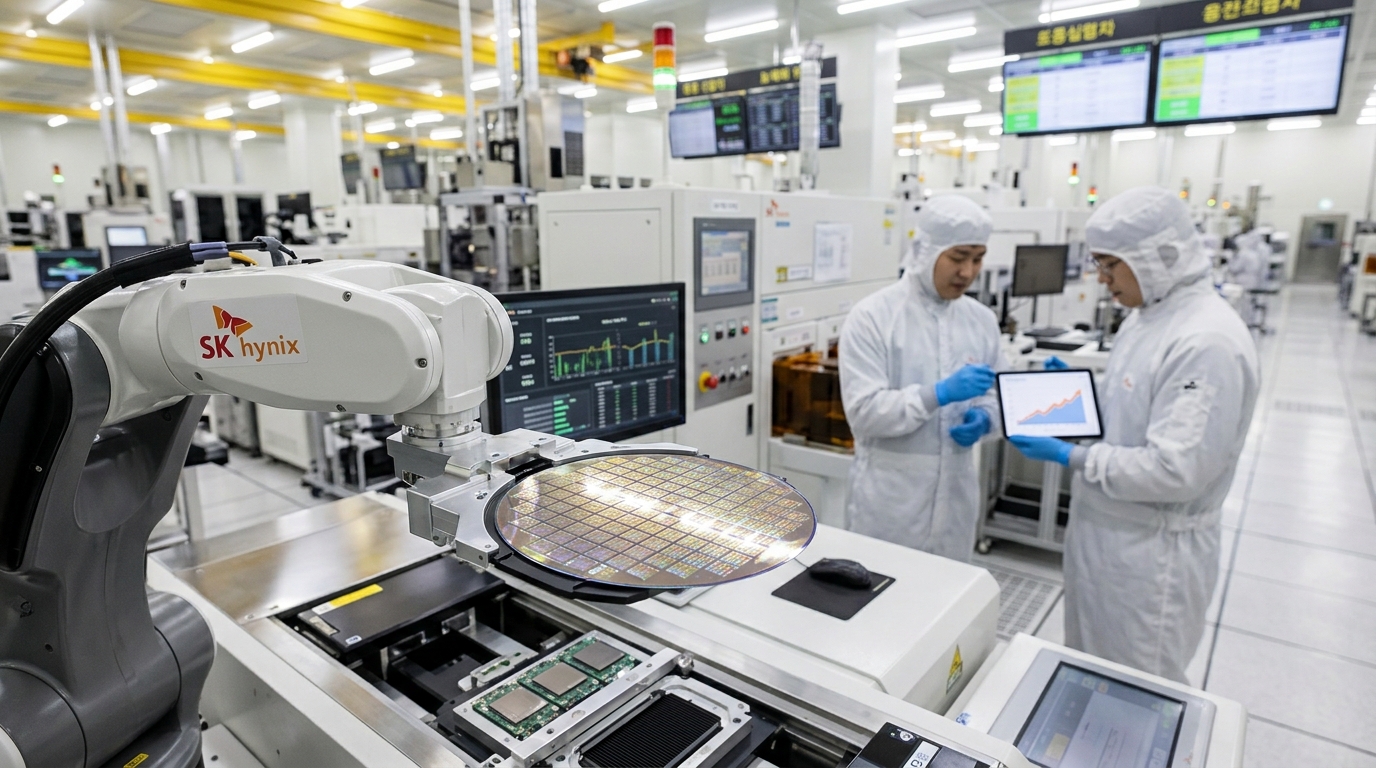
SK Hynix, the world's second-largest memory chipmaker, said it will buy back and cancel 40 trillion won ($28.61 billion) worth of treasury shares, marking one of the largest capital-return commitments in the company's history and underscoring the extraordinary cash generation fueled by the artificial intelligence boom.
The South Korean company also committed to spending at least 50% of free cash flow generated between 2025 and 2027 on shareholder returns, a pledge that formalizes an aggressive capital-allocation policy as profits from high-bandwidth memory chips used in AI accelerators continue to surge. SK Hynix said further details on the specific mix of share repurchases, cancellations and dividend payments would be disclosed alongside its third-quarter earnings results.
The buyback announcement reflects the scale of the windfall memory makers have captured as demand for high-bandwidth memory, a critical component in AI training and inference chips made by companies including Nvidia, has outstripped supply for much of the past two years. SK Hynix has emerged as one of the primary beneficiaries of that dynamic, competing closely with Samsung Electronics and Micron Technology for market share in the specialized memory segment.
Treasury share cancellations permanently reduce a company's outstanding share count, distinguishing the move from a standard buyback program in which repurchased shares can later be reissued. By committing to cancel the shares rather than simply hold them, SK Hynix is signaling a more durable form of capital return that directly benefits remaining shareholders through a permanent reduction in share count.
The announcement comes at a moment of heightened volatility across the broader semiconductor sector. Shares of regional peer Samsung Electronics fell sharply Wednesday amid a broader selloff in chip stocks tied to surging global bond yields, even as SK Hynix's buyback news offered a partial counterweight within the memory segment specifically.
Analysts have generally pointed to sustained AI infrastructure investment from major U.S. cloud providers and chipmakers as the primary driver behind the memory sector's unusually strong cash generation this cycle, a dynamic that has allowed companies like SK Hynix to fund record capital-expenditure programs while simultaneously returning substantial cash to shareholders.
The move also comes as global markets grapple with rising government bond yields, which have made income-generating capital returns such as buybacks and dividends more attractive relative to growth-oriented reinvestment in the eyes of some investors. SK Hynix's pledge to dedicate half of its multi-year free cash flow to shareholder returns positions the company among the more shareholder-friendly capital allocators in the global semiconductor industry heading into the back half of 2026.
Investors will be watching SK Hynix's upcoming quarterly results for confirmation that high-bandwidth memory pricing and shipment volumes remain strong enough to sustain both the buyback program and the company's ongoing capacity expansion plans.