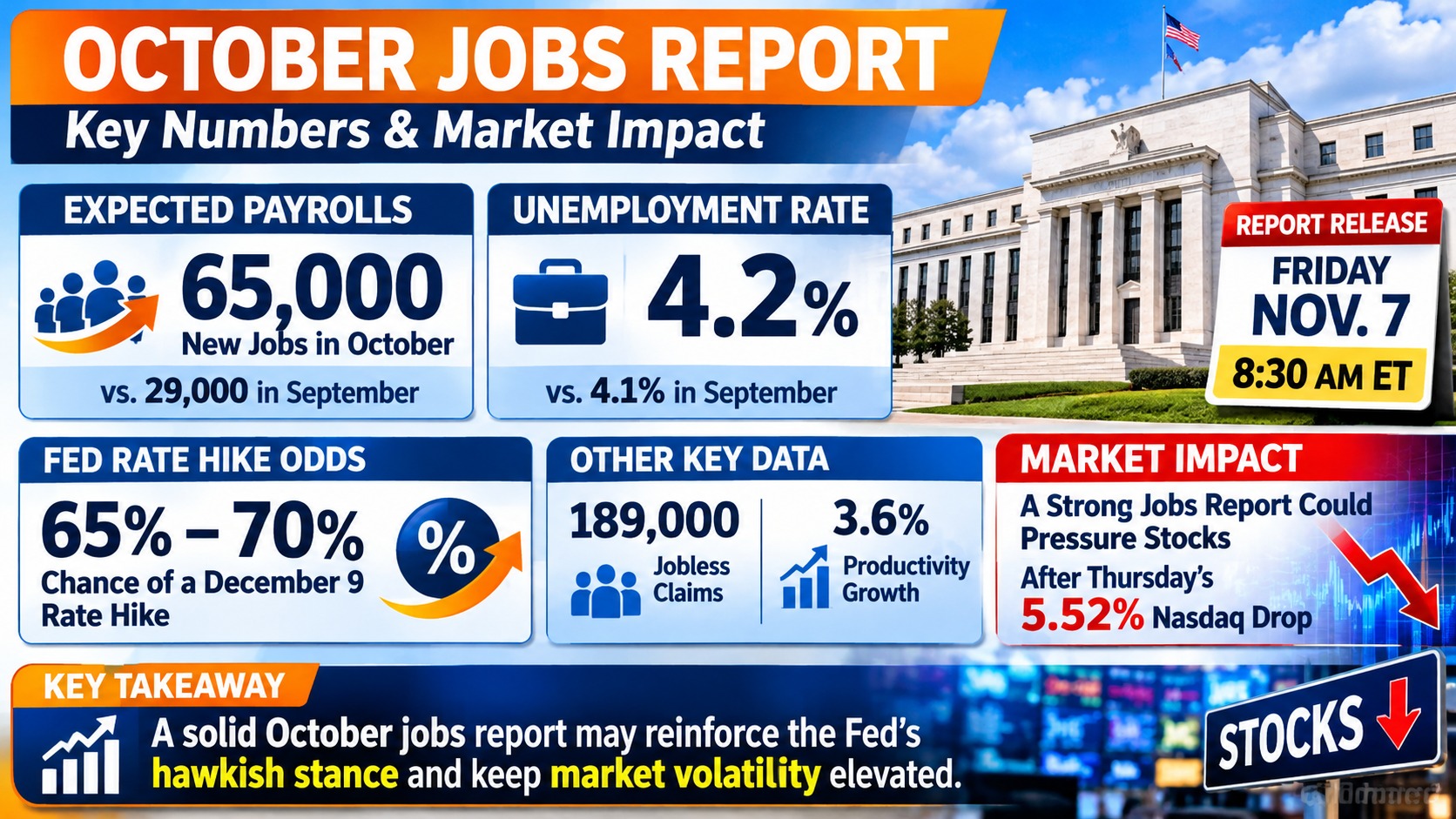
The Bureau of Labor Statistics releases the October jobs report at 8:30 a.m. ET on Friday, with economists forecasting nonfarm payroll growth of about 65,000 and an unemployment rate of 4.2%. The data arrives a day after the Nasdaq Composite fell 5.52% and could determine whether the premarket bounce in index futures holds or fades, while also shaping the odds of a Federal Reserve rate increase on December 9.
Estimates cluster between roughly 50,000 and 75,000, with some forecasters near 100,000 and others expecting the jobless rate to tick down to 4.1%. One widely cited consensus sits at 59,000. September payrolls rose just 29,000 and August gained 133,000, reflecting a low-hire, low-fire labor market. Average hourly earnings are expected to rise 0.3% month over month after a 0.1% gain.
Leading indicators have been firm. Initial jobless claims fell to 189,000 for the week ended October 31, below the 196,000 expected and near a multi-decade low. Private payroll processor data showed 86,000 jobs added in October versus 69,000 expected, and third-quarter productivity rose 3.6%. Employers also announced plans to hire almost 445,000 workers last month, the highest October total since 2009.
Fed policy is the transmission channel. Fed Chair Kevin Warsh has said the unemployment rate and job growth are consistent with the central bank's maximum-employment mandate and that labor market trends have been stable. With attention focused almost entirely on inflation, a report near forecast would likely keep a December rate hike in play, with futures markets implying roughly 65% to 70% odds.
Surprises cut both ways. A reading above 100,000 with unemployment at 4.1% could push expectations for 2027 rate hikes higher and pressure rate-sensitive stocks and bonds. A weak figure, particularly after Thursday's rout, would intensify growth fears and could revive questions about the durability of the AI-led expansion, even as lower yields might offer some support to equities.
Beyond the headline, traders will parse the details: wage growth, the household survey, revisions to prior months, hiring in healthcare and construction, and the effect of data center construction on manufacturing and building jobs. Manufacturing employment is up 72,000 since a low in December 2025, and some economists tie part of that rise to infrastructure spending tied to the AI buildout.
Early reactions to payrolls can reverse within hours, and thin early-session liquidity amplifies moves in futures. With volatility elevated after the worst one-day decline since April 2025, a data-driven swing of 1% in Nasdaq 100 futures would not be unusual. Traders often wait for the first hour of cash trading before committing capital to a direction.
The calendar stays busy. October consumer price inflation is due Tuesday, November 10, the U.S. bond market is closed Wednesday for Veterans Day while shares trade, and the Fed's December meeting follows. Oil near $97 a barrel adds to inflation uncertainty. For a paper portfolio, payrolls day argues for smaller positions into 8:30 a.m. and a wait for the first reaction before adding risk.