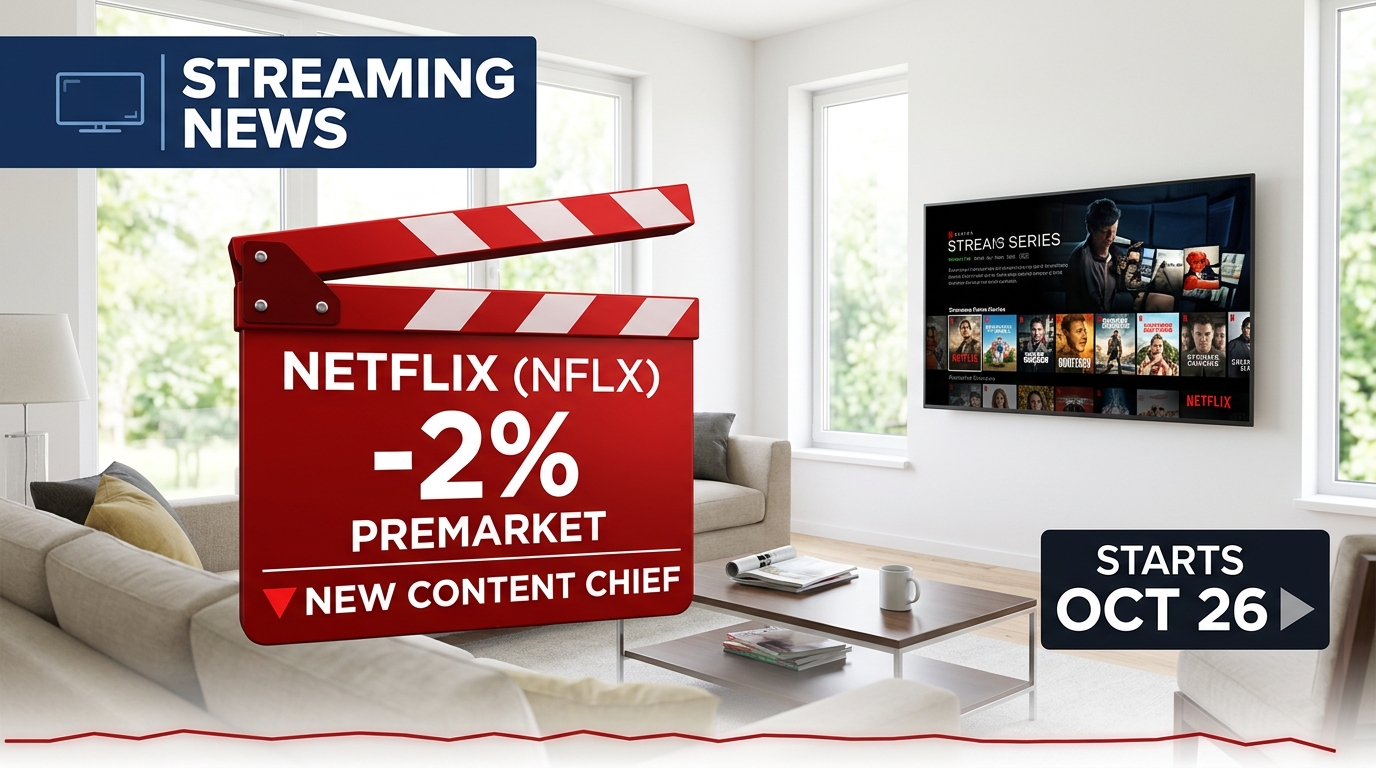
Netflix shares fell about 2% in premarket trading on Friday after the streaming company announced a leadership change in its content division.
Peter Rice, the former chairman of Walt Disney Television, will join Netflix as chief content officer on October 26. He replaces Bela Bajaria, who is leaving after nearly a decade at the company.
At Disney, Rice oversaw content operations for ABC, FX, Hulu and National Geographic, managing more than 300 shows annually. At Netflix he will be responsible for scripted and unscripted series, films and live events across all regions, a remit that covers the company's largest spending category and its main driver of subscriber engagement.
The announcement lands days before Netflix is scheduled to report quarterly results, when investors will focus on revenue trends, forward guidance and margins. Executive transitions in a core function can raise questions about the continuity of the content slate, creative relationships and spending priorities, which helps explain the modest premarket weakness.
At the same time, the appointment of a veteran television executive with experience across broadcast, cable and streaming brands may be read as a signal that Netflix wants to deepen its programming breadth, particularly in live events, a category where streamers are competing for audiences and advertisers. The company has not, in the information available, changed its financial outlook alongside the announcement.
Macro conditions add to the sensitivity of growth stocks. The 10-year Treasury yield is hovering near 5.09%, and a hotter-than-expected core inflation print earlier this week has pushed back expectations for easier policy. S&P 500 futures were up about 0.2% on Friday, but the Nasdaq Composite is headed for a weekly loss of more than 2%, leaving richly valued platform stocks vulnerable to rate-driven swings.
For traders, the key issue is whether the 2% decline is a one-day reaction or the start of a pre-earnings drift. Leadership changes often generate modest, short-lived moves unless they are accompanied by guidance changes or signs of strategic disruption. Options positioning and the implied move ahead of the report will likely matter more than the executive announcement itself.
Longer-term investors should consider what the change implies for content costs and slate quality. Rice's track record managing a large volume of programming across several networks and a streaming service could be an asset in balancing spending discipline with hit rates, but any benefits would take time to show up in reported results.
Key items to watch include management's commentary on the transition during the upcoming earnings call, any updates to content spending plans, engagement metrics and how the company positions its live-events strategy as competition for viewers intensifies.