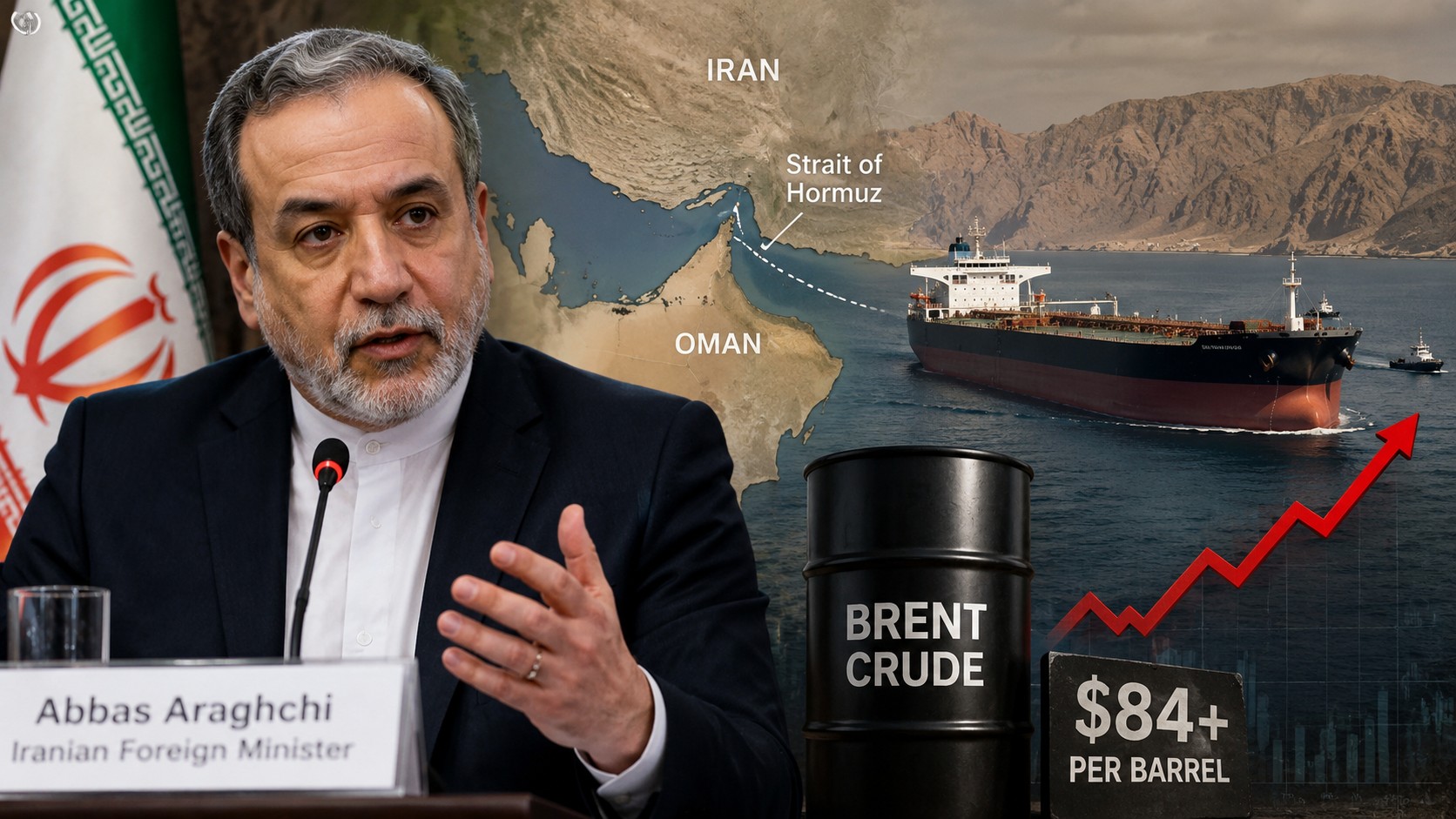
Oil markets opened the week in a cautious holding pattern Monday as the latest diplomatic signals from Iran confirmed that an Oman-brokered maritime transit deal for the Strait of Hormuz is advancing, but stopped well short of the clear reopening news that traders have been waiting for since the waterway was effectively closed in February. Brent crude futures gained 1.04% to $84.42 a barrel in early Monday trading, and WTI advanced 0.83% to $78.83, as the market weighed Iranian Foreign Minister Abbas Araghchi's weekend comments against the structural uncertainty Westpac summarized in a client note as follows: "Uncertainty remains high as we go into the sixth month of the Iran war."
Araghchi confirmed Saturday that negotiators from Iran and Oman were closing in on an agreement to establish temporary maritime transit lanes for vessels entering and exiting the Persian Gulf. Crucially, he attached two caveats that tempered the bullish oil market read. First, any deal on transit lanes would not result in an immediate reopening of the strait — signaling that even a completed Oman agreement may leave oil flows constrained for an extended additional period. Second, Araghchi ruled out direct talks with Washington for now, blaming what Iran characterizes as U.S. violations of the interim memorandum of understanding agreed in June, specifically accusing the United States of undermining Tehran's management of the waterway under Article Five of that agreement.
President Trump signaled patience Sunday, telling Axios that the U.S. was now "low-keying it" — a notable shift in tone from months of escalatory rhetoric and threats of "much higher" military strikes. Reuters separately reported that the U.S. has agreed to lift its naval blockade on Iranian ports once a final Oman-Iran transit deal is announced, citing a U.S. official who said such an announcement was expected soon. Houthi militants complicated the backdrop by claiming an attack on a Saudi refinery near the Red Sea over the weekend, adding a separate risk premium to energy markets.
The lack of a definitive reopening date continues to weigh on sectors most exposed to energy costs. Airlines, chemical producers, and consumer goods companies with significant fuel input exposure remain under margin pressure, even as Brent has declined from its 2026 peak above $166 per barrel in March to the current mid-$80s range — itself reflecting nearly six months of partial diplomatic progress. Refined product prices, including jet fuel and diesel, remain well above pre-war levels.
Equity markets are treating the Hormuz situation as incrementally improving but not resolved, allowing a risk-on bias to persist without triggering a full-scale rally in oil-sensitive names. Energy producers are modestly higher on the day as Brent ticks up, while airlines and consumer stocks are holding gains from Friday's post-jobs-report session. The next concrete catalyst will be the announcement of a finalized Oman-Iran transit agreement — or a breakdown of those talks — either of which would trigger a sharp repricing in crude, the dollar, and rate expectations simultaneously.