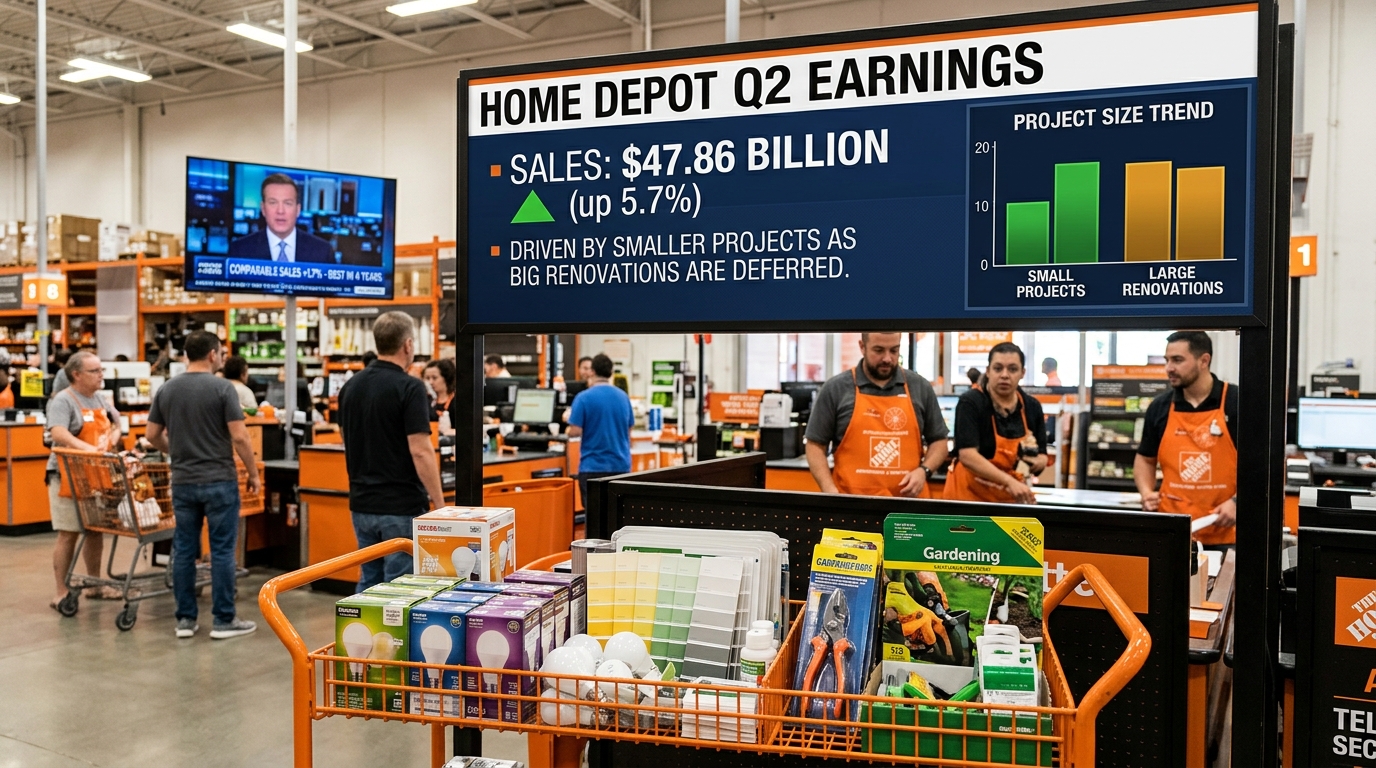
Home Depot posted fiscal second-quarter sales of $47.86 billion, a 5.7% increase from the prior year and ahead of the $47.27 billion Wall Street expected. Adjusted diluted earnings reached $4.92 per share, beating the $4.73 consensus, while GAAP earnings were $4.79 per share. Comparable sales climbed 1.7% overall and 1.3% in the United States, marking the strongest comps reading since fiscal third-quarter 2022.
Management attributed the beat to broad-based demand for smaller repair-and-maintenance projects such as painting and yard work, even as larger renovation activity remained constrained by elevated mortgage rates and a sluggish housing market. Comparable customer transactions declined 1%, but the average ticket rose 2.8%, indicating shoppers made fewer visits yet spent more per trip.
Chief Financial Officer Richard McPhail described conditions as a “frozen housing market” while noting that customers continue to engage in smaller projects. The company reaffirmed its fiscal 2026 outlook for total sales growth of approximately 2.5% to 4.5% and comparable sales ranging from flat to up 2%. Adjusted EPS is expected to be roughly flat to up 4% from the prior year’s $14.69. Guidance incorporates expected tariff refunds that should partially offset higher fuel, energy and input costs.
The results arrive against a backdrop of weaker July retail sales data and rising oil prices linked to renewed U.S.-Iran tensions. Investors had tempered expectations for big-ticket home-improvement demand, so the beat and four-year high in comps provided a constructive signal on the resilience of smaller-project spending. Shares initially traded higher in premarket before giving back some gains as the broader market faced pressure from higher yields and energy prices.
Home Depot remains a key barometer of U.S. consumer health in the housing-adjacent sector. The combination of a clear beat, improved comps and unchanged full-year targets leaves the stock positioned as a relative bright spot among retailers reporting this week, though sustained strength will depend on whether smaller-project momentum can offset continued weakness in larger renovations.