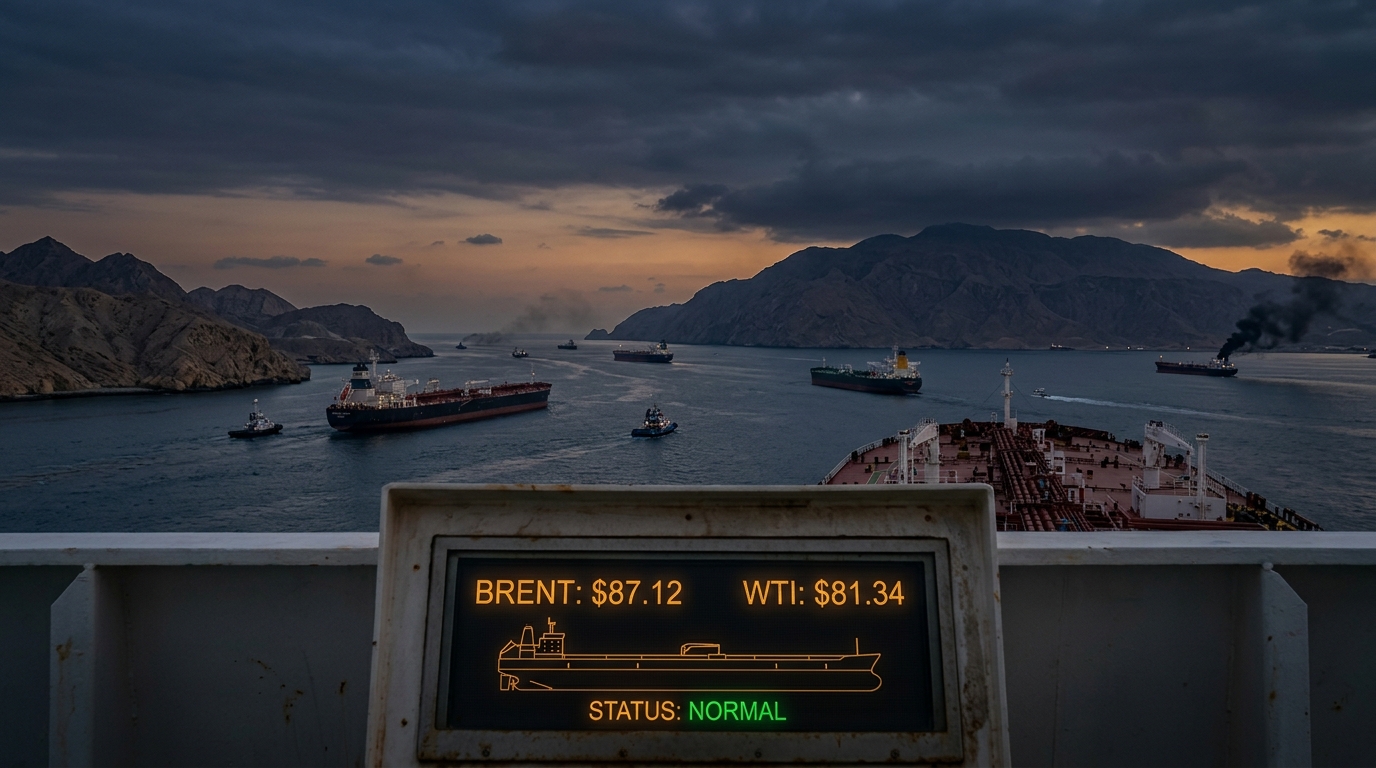
Oil prices were little changed Friday, with Brent crude holding near $87 a barrel and U.S. West Texas Intermediate trading around $81, as investors weighed escalating tensions between the United States and Iran against ongoing concerns about softening global demand.
The standoff centers on the Strait of Hormuz, a critical chokepoint through which a substantial share of the world's seaborne oil trade passes. Tensions have intensified following an earlier incident in which Iranian cruise missiles reportedly struck tankers transiting the strait, an episode that has kept shipping companies and energy traders on edge about the security of the corridor.
Treasury Secretary Scott Bessent said the United States would apply economic measures against Iran of a scale that has "never been seen," signaling the administration's intent to escalate financial pressure on Tehran. Defense Secretary Pete Hegseth reportedly indicated late Thursday that the U.S. military posture in the region would become more assertive, though specific operational details were not disclosed publicly.
The prospect of a prolonged naval presence or blockade activity around the strait has introduced a fresh risk premium into oil markets, even as prices have remained within a relatively narrow range in recent sessions. Energy traders have historically reacted sharply to any disruption risk in the Strait of Hormuz given its outsized role in global crude and liquefied natural gas shipments, with roughly a fifth of global oil consumption estimated to transit the waterway.
Despite the geopolitical backdrop, broader oil-demand concerns have kept a lid on more dramatic price moves. Slower economic growth in parts of the global economy, along with ample global supply from producers outside the Middle East, has left traders cautious about pricing in a sustained risk premium without clearer evidence of actual supply disruption.
The energy sector has nonetheless been one of the strongest-performing corners of the U.S. stock market this week, with the sector-tracking XLE fund rising more than 6% as investors positioned for the possibility of tighter supply conditions or elevated volatility tied to the Iran standoff. That performance has outpaced gains in other sectors including healthcare, technology and financials, each of which rose more than 1% over the same period.
Gold prices slipped modestly Friday even as geopolitical tensions simmered, a move that some strategists attributed to reduced near-term safe-haven demand following recent record highs in equity markets. Treasury yields held relatively steady, with the benchmark 10-year note yielding around 4.65%, suggesting bond markets have not yet meaningfully repriced for an escalation scenario.
Investors are likely to watch closely for any further developments out of Washington or Tehran over the coming days, given the potential for renewed volatility in energy markets should the standoff escalate beyond rhetoric into direct military action affecting shipping through the strait.