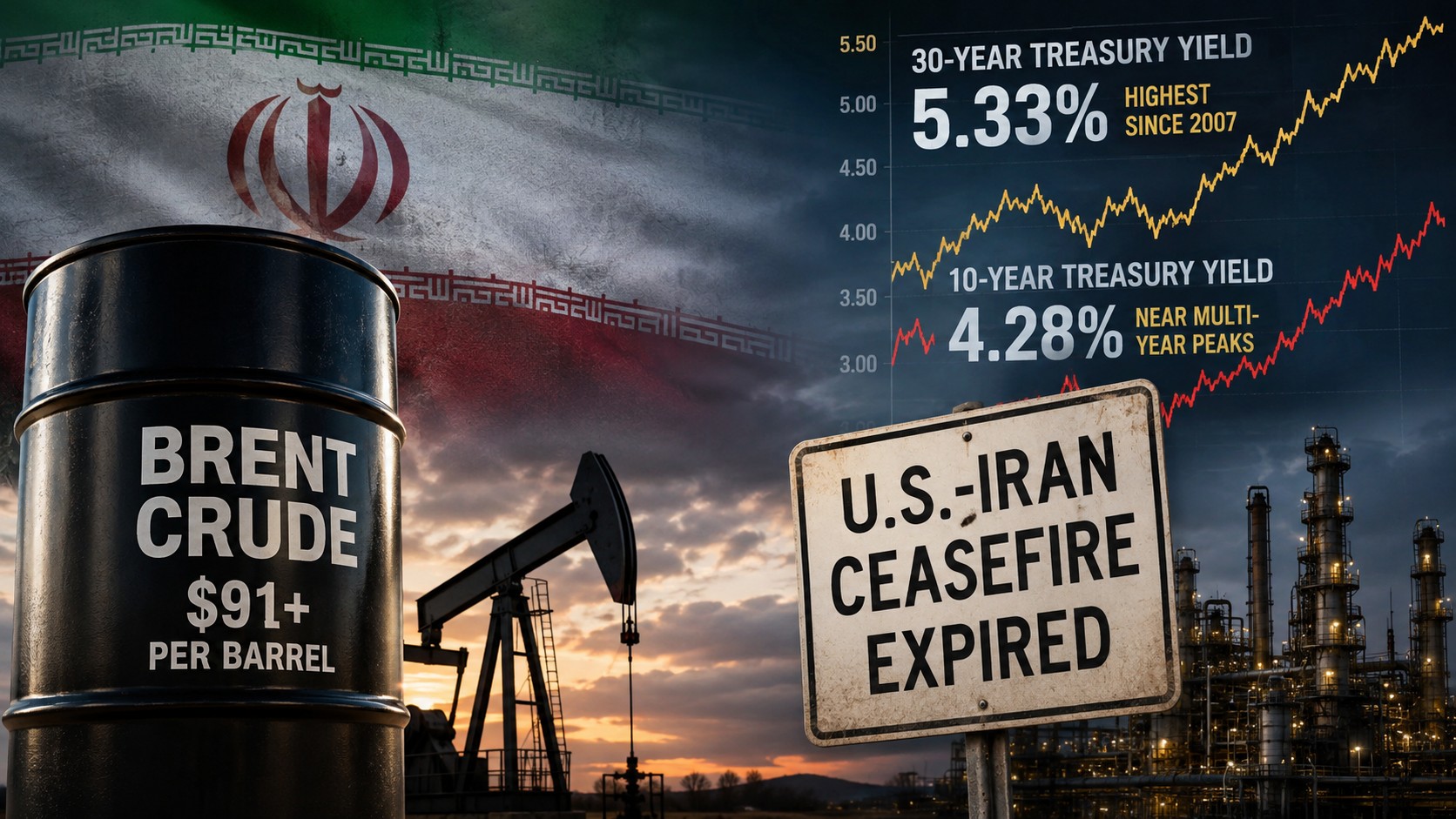
Brent crude futures advanced above $91 a barrel after the 60-day U.S.-Iran interim ceasefire expired without a lasting agreement, while West Texas Intermediate traded near $85. Iran indicated it would adopt a fully offensive military posture amid stalled talks, and U.S. officials ruled out an extension of the temporary arrangement.
The developments extended a multi-session climb in oil prices and pushed long-dated government bond yields to multi-year highs. The 30-year Treasury yield reached levels last seen in 2007 around 5.33%, and the 10-year yield hovered near its highest point since early 2025. Higher energy costs revived concerns that inflation could remain sticky, complicating the Federal Reserve’s path and weighing on equity valuations, particularly in technology and growth sectors.
Equity index futures pointed lower, with the Nasdaq 100 leading declines as chip and memory names came under pressure from the combination of rising yields and geopolitical uncertainty. A vessel transit through the Strait of Hormuz was reported hit by an unknown projectile, adding to supply-disruption fears even as overall tanker traffic remains constrained.
Energy equities found relative support from the higher crude price deck, while rate-sensitive and consumer-discretionary sectors faced headwinds. Market participants continue to monitor any diplomatic signals or further escalatory rhetoric for clues on whether the current premium in oil is temporary or structural. In the near term, the interplay between elevated energy prices, bond yields and equity multiples remains the dominant cross-asset theme.
The expiration of the ceasefire window removes a temporary floor under risk assets that had helped support the recent equity rally. Until clearer progress toward a durable settlement emerges, oil volatility and yield pressure are likely to keep equity markets range-bound and sector rotation active.