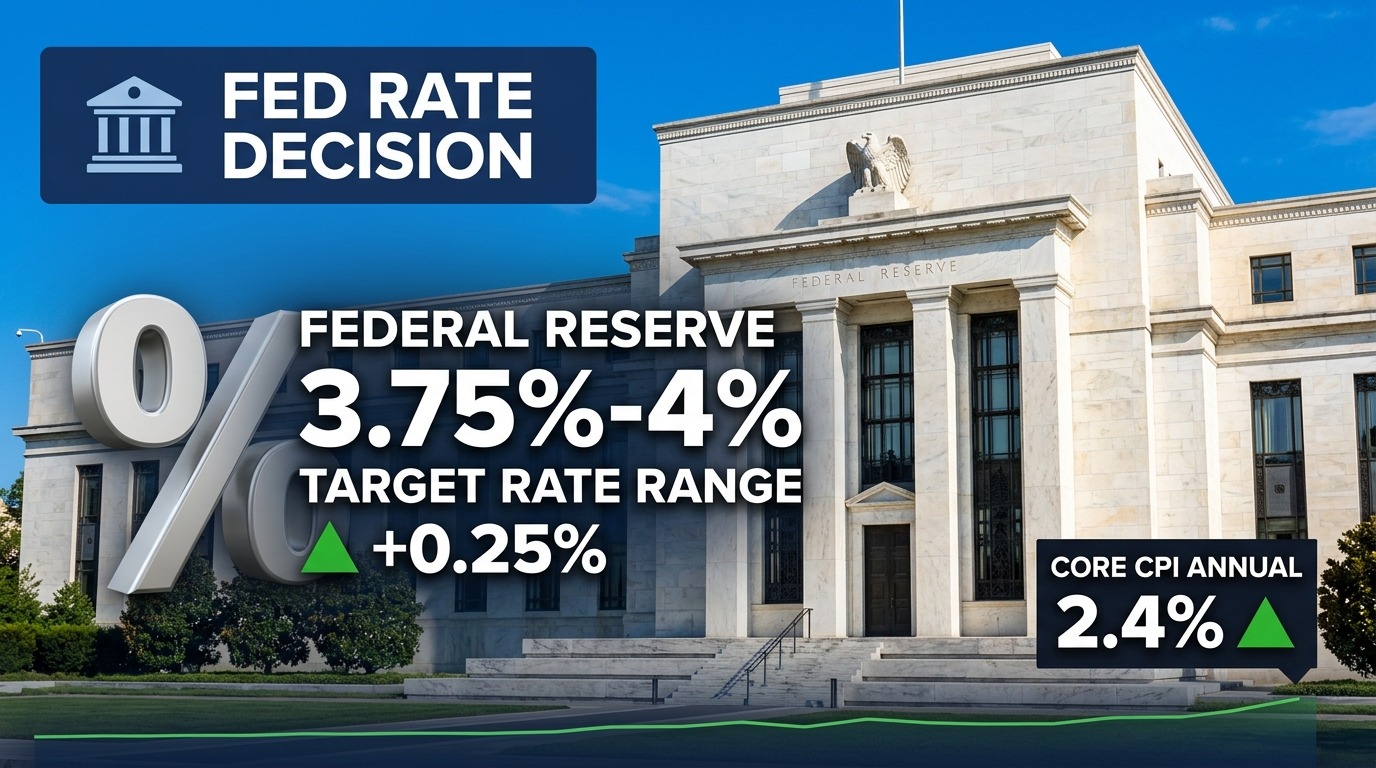
The Federal Reserve is widely expected to raise its benchmark interest rate by a quarter point at the conclusion of its policy meeting Wednesday, lifting the target range to between 3.75% and 4%, after fresh inflation data reinforced the case for continued tightening. The move would mark the latest step in Fed Chair Kevin Warsh's effort to reassert the central bank's inflation-fighting credibility following a period of mixed messaging earlier this year.
The August Consumer Price Index, released Friday, rose 0.4% month over month, matching the consensus estimate, while the annual headline inflation rate held at 3.4%, also in line with forecasts. Core CPI, which strips out volatile food and energy prices, climbed 0.3% for the month, slightly ahead of the 0.2% estimate, though the annual core rate eased to 2.4%, matching expectations. The data suggests inflation remains well above the Fed's 2% target even as the pace of increases has moderated from earlier in the year.
Warsh has signaled a hawkish posture since his remarks at the Jackson Hole symposium, where he indicated the central bank would act decisively against persistent price pressures after his more ambiguous comments at the July meeting had confused investors about the Fed's intentions. Market participants widely interpreted last week's inflation report as effectively locking in a rate increase this week, with the debate now centered less on whether the Fed hikes and more on the tone Warsh strikes about the path ahead.
Stocks rallied Friday following the CPI release, with the Dow Jones Industrial Average gaining 509 points, or about 1%, to close at 52,573.29, while the S&P 500 advanced 0.9% and the Nasdaq Composite rose roughly 1%. Twenty-four of the Dow's 30 components finished higher, led by strength in technology and consumer discretionary shares, as investors concluded that a widely telegraphed quarter-point move would not derail the broader rally.
Looking beyond this week's decision, some strategists see room for the Fed to continue raising rates over the next several policy meetings if inflation fails to move convincingly toward its target. Analysts have noted that AI-related capital spending has kept valuations elevated in parts of the market even as borrowing costs climb, leaving growth stocks particularly sensitive to any signal that the central bank intends to tighten more aggressively than currently priced in.
The rate decision arrives at a complicated moment for markets, with oil prices surging on Middle East supply disruptions and technology stocks under pressure following a weekend debate among AI industry leaders over the pace of frontier model development. That combination of a hawkish Fed, elevated energy costs, and renewed uncertainty in the AI trade leaves investors with a fuller set of cross-currents to navigate than in recent Fed meetings, with Wednesday's announcement, and Warsh's accompanying press conference, likely to serve as the week's key catalyst for broader market direction.
Bond markets have already partially priced in the anticipated move, with long-dated Treasury yields easing slightly from multi-year highs reached earlier this month as the surge in oil prices and Treasury yields paused following Friday's inflation report. Traders will be watching closely for any updated guidance in the Fed's post-meeting statement on the likely pace of further increases into year-end.