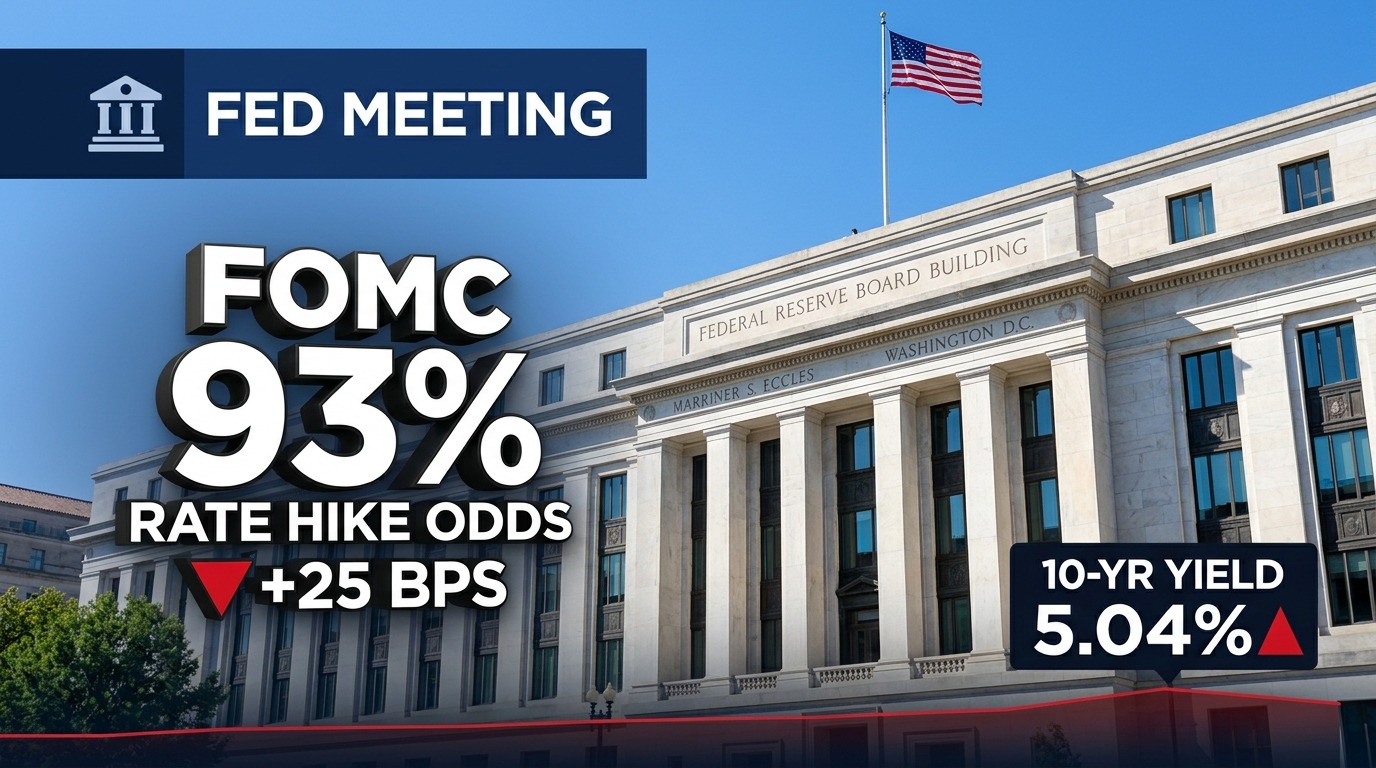
The Federal Open Market Committee convened its September meeting on Tuesday with market pricing indicating a near-certain 25-basis-point rate increase when the decision is released Wednesday afternoon. CME FedWatch data showed roughly 93% probability of a hike that would lift the target range to 3.75%–4.00%, reversing more than three years of policy accommodation under the current leadership. The shift in expectations has been driven by a combination of firmer inflation data and the sharp rise in energy prices linked to Middle East supply disruptions.
Recent inflation reports have shown limited progress toward the Fed’s 2% target, with energy and housing components remaining elevated. The simultaneous climb in the 10-year Treasury yield above 5% for the first time since 2007 has reinforced the case for tighter financial conditions. Fed officials have described recent price readings as concerning, and markets are now pricing additional tightening over the coming year beyond the expected move this week.
Investors will scrutinize the updated Summary of Economic Projections, commonly referred to as the dot plot, and the post-meeting press conference for guidance on the expected path of rates. Any signal of a more aggressive tightening cycle could further pressure equity valuations, particularly in rate-sensitive sectors such as technology, real estate and consumer discretionary. The meeting occurs amid ongoing geopolitical tensions that continue to elevate energy costs and complicate the inflation outlook, leaving policymakers with limited room for a dovish surprise.
Chair Kevin Warsh, who assumed leadership in a period of rising inflationary pressures, faces the challenge of balancing the need to anchor inflation expectations against potential risks to growth. The current environment features solid labor market conditions in some areas alongside clear evidence of higher input costs for businesses and households. Higher oil prices have already translated into record diesel costs and rising gasoline prices, reducing real disposable income for consumers.
The decision itself is widely anticipated, yet the accompanying communications will be closely parsed for clues about the terminal rate and the pace of subsequent moves. Futures markets have begun to price a series of additional increases over the next twelve months, reflecting concern that inflation may prove more persistent than previously assumed. The global backdrop of rising yields in Europe and Japan adds to the sense that major central banks are shifting toward tighter policy simultaneously.
Equity markets have already shown sensitivity to the evolving rate outlook. Major indexes have declined in five of the past six sessions heading into Tuesday, with technology and semiconductor stocks particularly affected. Higher discount rates reduce the present value of future cash flows, creating headwinds for growth-oriented valuations. Credit markets are also adjusting, with corporate bond yields moving higher in sympathy with Treasuries.
Beyond the rate decision, market participants will monitor any comments on the Fed’s balance sheet policy and its assessment of financial stability risks. The combination of elevated asset valuations and rising interest rates has historically created periods of heightened volatility. Portfolio managers are preparing for potential increases in market swings around the announcement and the subsequent press conference.
Economic data releases later in the week, including retail sales and housing figures, will provide additional context for the policy path. For now, the dominant narrative remains the Fed’s response to an inflation environment complicated by energy supply shocks. The outcome of this meeting is expected to set the tone for financial markets through the remainder of the year as investors recalibrate expectations for growth, inflation and the cost of capital.