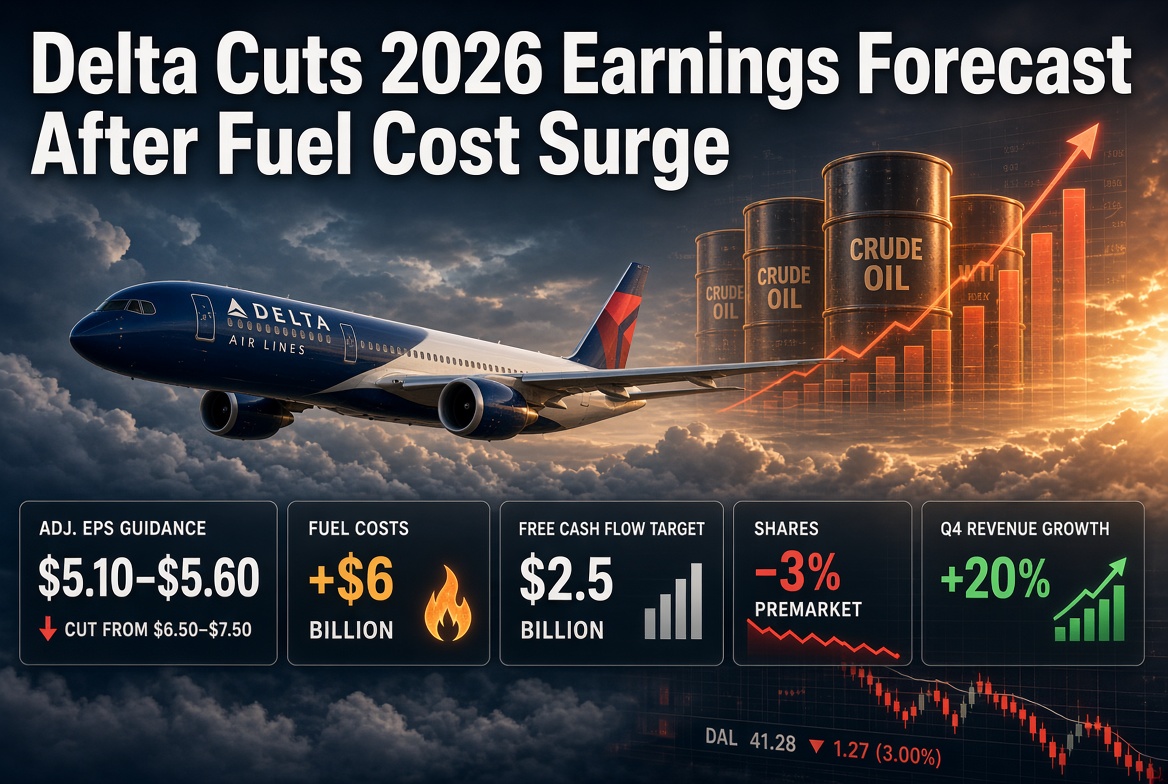
Delta Air Lines lowered its 2026 profit outlook on Friday and missed quarterly earnings estimates for the first time in two years, as elevated fuel costs outweighed strength in premium travel demand. Shares fell about 3% in premarket trading, changing hands near $79.80 at one point as investors digested the revised guidance.
The carrier now expects full-year adjusted earnings of $5.10 to $5.60 per share, down sharply from the $6.50 to $7.50 range it offered in July, when fuel prices were lower. Fourth-quarter earnings guidance also came in below analyst estimates, compounding the disappointment from the third-quarter shortfall.
Cash generation took a hit as well. Delta cut its free cash flow outlook for the year to $2.5 billion, down from as much as $4 billion previously. Management attributed the pressure largely to a roughly $6 billion increase in fuel costs this year, a burden that has persisted as crude prices remain elevated amid tension in the Middle East.
Chief Executive Ed Bastian struck a confident tone on demand in an interview, saying higher fares have not deterred travelers. He said consumer response remains strong across all channels, cabins and geographies, spanning both business and leisure travel. The airline continues to pass along a large share of its fuel cost increase through pricing, and customers keep booking.
That commentary helps explain why Delta still guided to a 20% increase in fourth-quarter revenue from the same period a year earlier, faster than the 16% rise in the third quarter after adjusting for the benefit from its refinery in Trainer, Pennsylvania. The refinery processes crude oil into jet fuel and other products, giving Delta an advantage over rivals that buy fuel entirely on the open market. Bastian acknowledged that volatility in fuel pricing played a role in the cautious profit outlook.
The report arrives against a volatile energy backdrop. West Texas Intermediate crude traded near $90.90 a barrel and Brent near $103.20 on Friday morning after President Donald Trump said the United States would not attack Iran before the November 3 midterm elections. Oil had jumped about 5% on Thursday on signs of Middle East escalation, and analysts note that continued attacks on shipping near the Strait of Hormuz keep a geopolitical premium in prices.
For investors, the split between robust revenue and shrinking profits is the central tension. Strong fares and resilient demand support the top line, but the guidance cut shows how little room airlines have when fuel spikes, even with a refinery in the portfolio. A durable drop in crude would likely help the earnings outlook, while renewed escalation would extend the pressure on margins and cash flow.
Delta's report is an early read on how airlines are coping with the fuel shock heading into the fourth quarter, so it will shape expectations across the sector. Traders will watch whether the lower share price attracts buyers willing to look past fuel volatility, and whether the strong fourth-quarter revenue guidance holds up if oil prices continue to swing with each geopolitical headline.