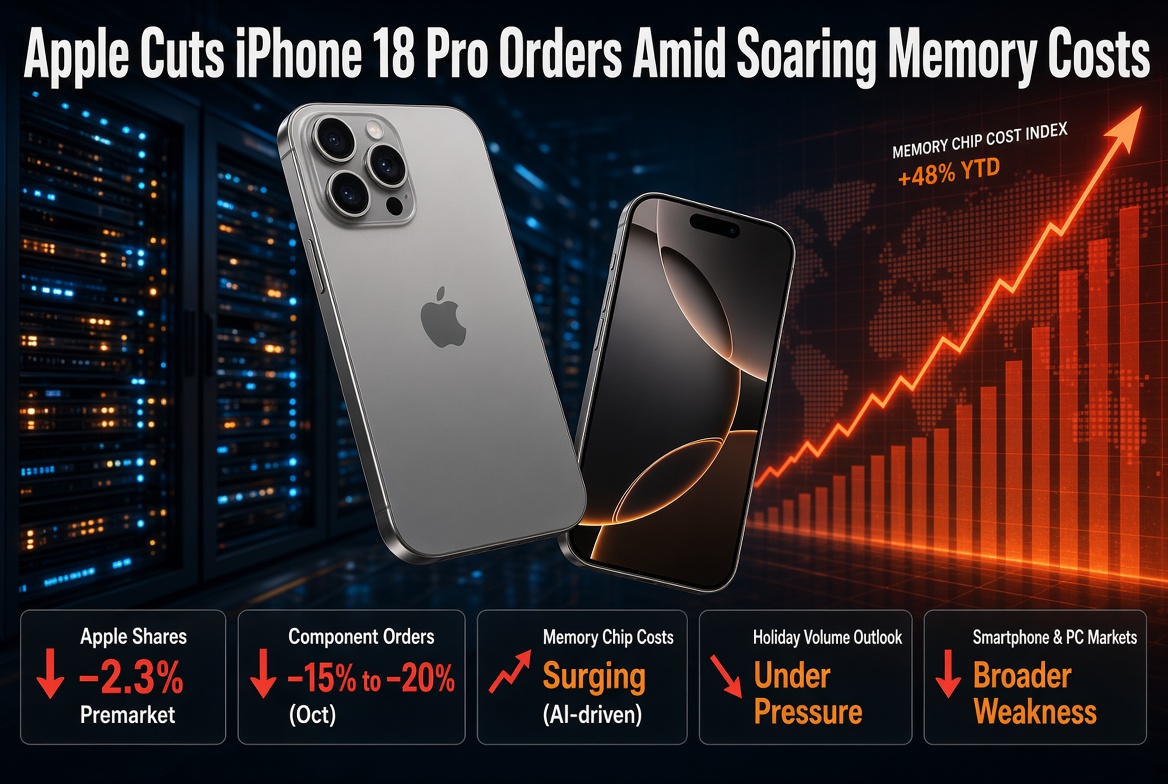
Apple shares slid more than 2% in premarket trading on Friday after Nikkei Asia reported that the company has told suppliers to reduce component orders for its newly launched iPhone 18 Pro and iPhone 18 Pro Max, a signal that demand for the premium models may be softer than planned.
According to the report, Apple has become more conservative about shipments since early September, with component orders for October cut by at least 15% from the levels it originally requested. Other premarket coverage put the reduction in a range of 15% to 20%. The reports cited multiple people familiar with the matter rather than an official company statement.
The cutbacks come as soaring memory chip costs and price increases weigh on consumer demand. Technology companies have been buying up advanced chipmaking capacity and memory chips to power AI data centers, which has contributed to shortages and higher prices across consumer electronics, Reuters reported. Those pressures are expected to shrink both the personal computer and smartphone markets this year.
Apple itself has felt the squeeze. In June, the company raised prices for some iPads and MacBooks, saying it could no longer shield customers from the rising cost of memory and storage chips driven by the AI industry's data center buildout. The latest report suggests the cost pressure is now reaching its flagship product line.
The iPhone is Apple's best-selling product and its largest single source of revenue, which is why even a modest change in build plans draws immediate attention. Demand has been weaker from late August into October, Nikkei said, though some of that softness could be tied to changes in Apple's iPhone launch schedule rather than a lasting loss of consumer interest. That caveat matters: order cuts can reflect timing adjustments as much as underlying weakness.
Investors will want to know how any production trimming flows through to the holiday quarter, when iPhone sales traditionally carry the most weight. Lower component orders can foreshadow lower shipments, but they can also reflect inventory discipline, particularly when supply chain costs are rising. Margins are another variable: higher memory prices can squeeze profitability unless offset by price increases, which in turn can dampen unit volumes.
The Apple move also lands on a day of broader crosscurrents. US stock futures were edging higher as oil eased and technology shares tried to rebound from Thursday's selloff, which was triggered by concerns about the sustainability of AI spending. The Apple report adds a different angle to the AI-hardware debate: the same build-out that lifts chip and component suppliers may be raising costs for the device makers that depend on them.
Traders should watch for confirmation from suppliers, any commentary from Apple itself, and analyst estimate revisions for the December quarter. Until then, the report is a negative sentiment catalyst rather than a confirmed change to earnings, and the stock's behavior in regular trading will show how much of the news was already priced in.