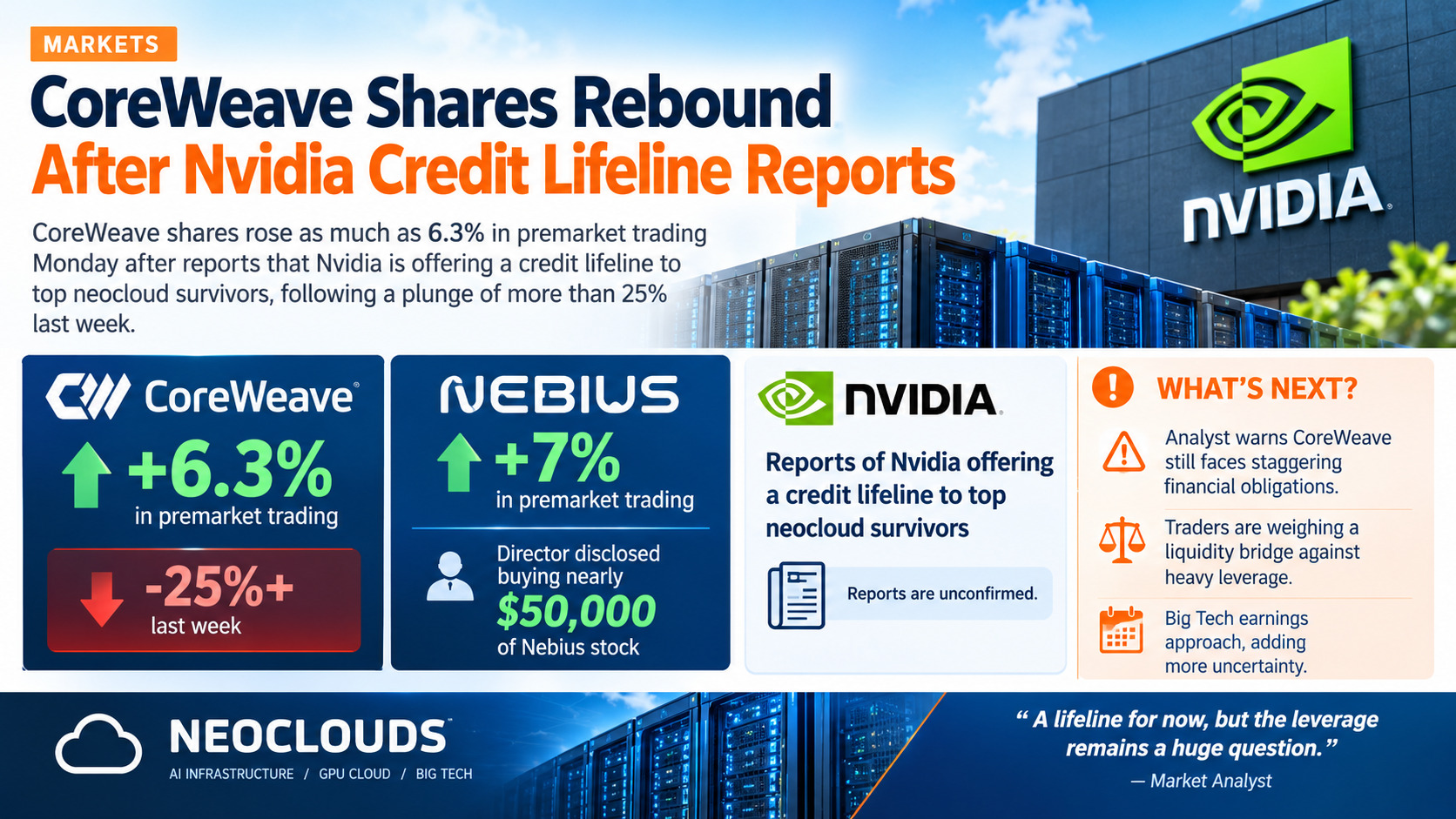
CoreWeave and Nebius shares rebounded in premarket trading on Monday, October 19, after reports that Nvidia is offering a credit lifeline to the strongest surviving neocloud operators. CoreWeave rose 3.4% in Reuters' early premarket tally and as much as 6.3% in later trading, following a plunge of more than 25% last week that made it one of the hardest-hit AI infrastructure names. Nebius gained more than 7% on Stocktwits' trending-ticker board.
Neocloud companies rent out GPU capacity to AI developers and typically fund purchases with large amounts of debt. Last week's selloff, sparked by concerns about AI spending and valuations, hit that model hardest because investors worry about whether revenue growth can service the obligations. A backstop from Nvidia, which supplies the chips and has been an investor in CoreWeave, would reduce near-term funding risk, although the terms of any arrangement have not been confirmed.
Analysts remain divided. One analyst quoted by Stocktwits said CoreWeave is not circling the drain but warned of staggering financial obligations, a reminder that a liquidity bridge does not eliminate leverage risk. Separately, SEC filings show Nebius director Anne Grimme bought shares worth nearly $50,000 last week, a small insider signal that traders noted during the rebound.
The reaction extended to the broader AI chain. Broadcom and Micron added 2.9% and 3.3% in early trading, and Nvidia rose more than 1%, as S&P 500 and Nasdaq 100 futures gained 0.47% and 1.05%. The move suggests investors are treating the neocloud rebound as part of a wider recovery in AI-linked shares rather than a company-specific event.
Neocloud stocks have been among the most volatile parts of the AI trade, and the recent drawdown echoes earlier stretches in which AI-linked shares fell sharply ahead of earnings before stabilizing. Whether this episode follows that pattern depends on credit conditions, customer demand for GPU capacity and Nvidia's willingness to extend support in a form the market considers credible.
What matters for investors is that reports of a credit lifeline address liquidity, not profitability. CoreWeave has historically carried heavy capital expenditure and net losses, and its performance is tightly linked to a handful of large customers and to the availability of financing. If Nvidia's support is formalized, it could stabilize the group; if it proves narrower than reported, last week's volatility could return quickly.
The setup is also event-driven. Big Tech earnings this week from Meta and Tesla, along with commentary on AI capital expenditure, will shape whether the neocloud rebound has follow-through. Momentum traders may look to fade gaps if the cash open fails to confirm premarket strength, while longer-term investors will watch for official confirmation from Nvidia or the borrowers and for any updated financing disclosures.
Risk factors include the unverified nature of the reports, the sector's sensitivity to interest rates and credit spreads, and the possibility that additional equity or debt issuance would dilute shareholders. Premarket prices can reverse sharply, particularly in high-beta names that fell as much as CoreWeave did.
This article is informational only and does not constitute investment advice. Readers should verify developments through company filings and primary announcements before making decisions.