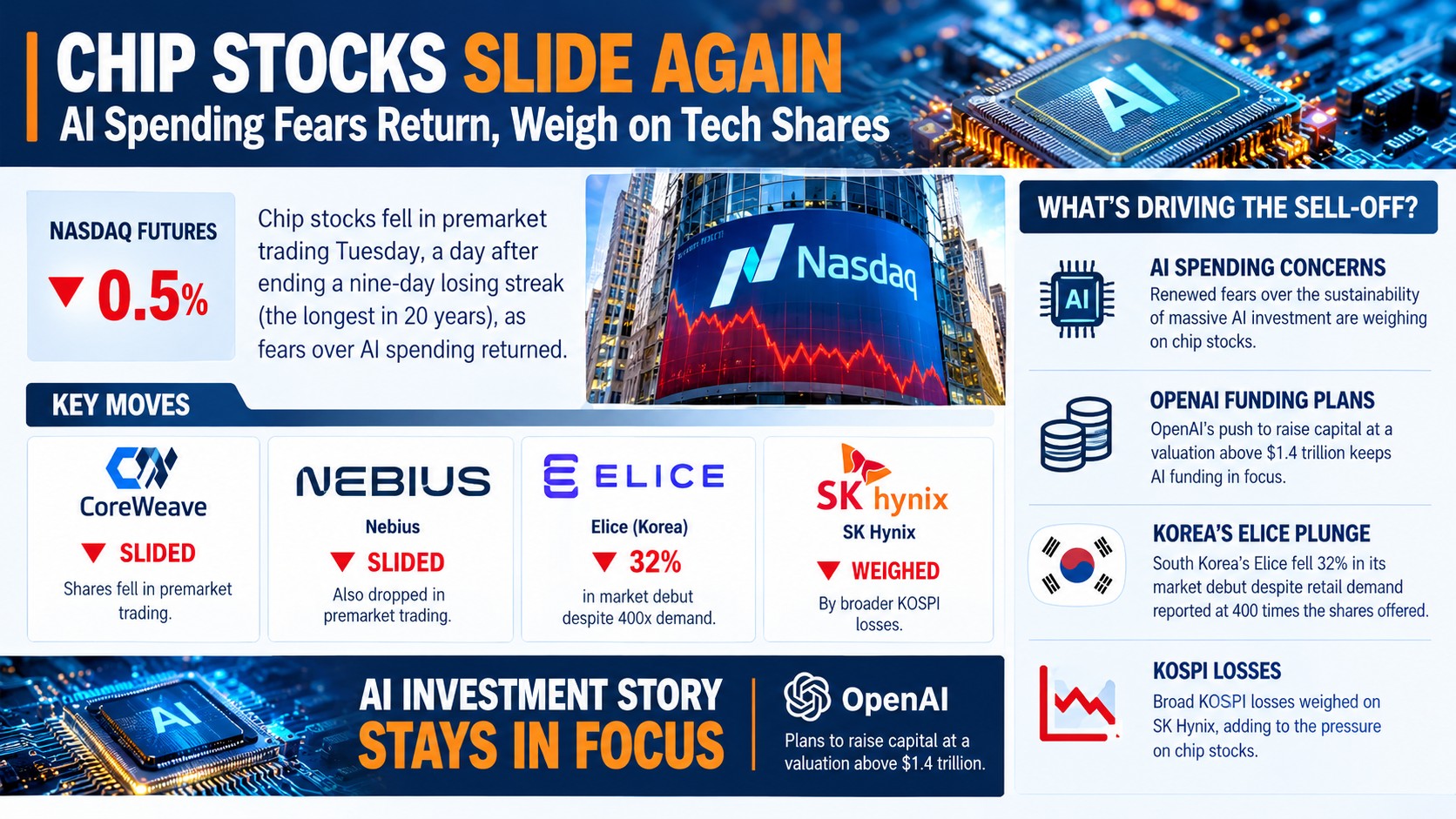
Semiconductor and artificial-intelligence infrastructure shares started Tuesday on the back foot, with Nasdaq futures down about 0.5% in premarket trading while Dow futures edged higher and S&P 500 futures were little changed. The split between a soft technology tape and a steadier broad market captures the mood: investors are not fleeing equities wholesale, but they are questioning how much capital the AI build-out can absorb and who will ultimately fund it.
The pressure follows an unusual streak. Chip stocks snapped a nine-day losing run on Monday, the longest in 20 years, helping the Nasdaq Composite gain 1.11% to 26,430.89, according to Investrade's morning report. That relief proved short-lived. Declines returned premarket across semiconductor names and in AI data center and so-called neocloud providers such as CoreWeave and Nebius, which rent computing capacity to AI developers and tend to move sharply whenever sentiment on spending shifts. The speed of the reversal shows how crowded the trade has become.
Overseas trading set the tone. South Korean data center infrastructure company Elice fell 32% in its market debut, according to Reuters, even though retail demand for the offering was reported at 400 times the shares available. Weakness in South Korea's KOSPI, which dropped more than 3.5% in Tuesday's session, dragged SK Hynix lower, while Japan's Nikkei 225 lost more than 1% and Hong Kong's Hang Seng fell about 1.3%. A heavily oversubscribed offering that still tumbles on day one is the kind of signal that makes traders reassess how much enthusiasm is already priced in.
Funding is the other pressure point. Reuters reported, citing two people familiar with the matter, that OpenAI is racing to secure investor commitments before rival Anthropic's expected public market debut in mid-November, in a fundraising that could value the ChatGPT maker at more than $1.4 trillion. Neither company's shares trade publicly today, but the scale of capital being sought, and the prospect of a major AI listing arriving within weeks, may leave public investors weighing a wave of new supply against their existing holdings.
Corporate commitments to the theme have not slowed. A major US cloud provider announced plans to invest more than 16 billion euros in Germany in 2027, spanning jobs, technology and infrastructure, and a large software company unveiled a collaboration with a drugmaker to explore how AI and real-world data can help identify eligible patients for clinical trials. Those announcements reinforce that demand for AI capacity is real even as valuations and financing structures are debated.
Rates matter as much as sentiment. The 10-year Treasury yield is near 5.12%, the VIX sits around 19, and Nordfx reports the Federal Reserve is expected to hold at its October 27 to 28 meeting with a December hike heavily priced in. Brent crude near $110 adds to inflation worries. Long-duration growth stocks, including many AI infrastructure names, are the most exposed to that combination because higher discount rates reduce the present value of distant cash flows.
Investors should also watch whether Korean memory-chip weakness spreads to US semiconductor shares during regular trading, since premarket moves can reverse once the opening bell rings. Several large-cap earnings reports after the close may redirect attention. For a paper portfolio, a disciplined approach favors smaller position sizes and defined-risk entries until volatility settles, because unless chip shares stabilize, rallies in AI-linked names may keep meeting sellers.