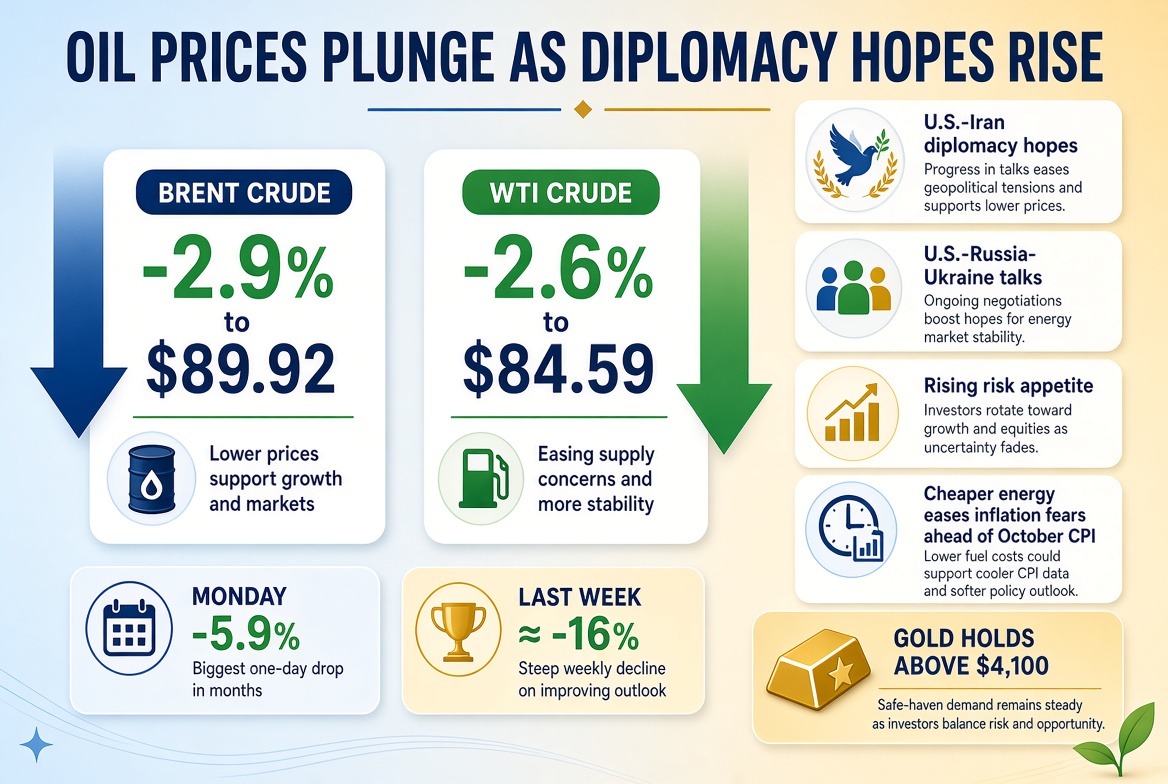
Crude oil extended its slide on Tuesday, giving equity bulls another tailwind ahead of the October inflation report. Brent futures, the international benchmark, fell 2.86% to $89.92 a barrel in early trading, while West Texas Intermediate dropped 2.60% to $84.59, according to TipRanks.
The decline builds on a dramatic few sessions. Brent tumbled about 5.85% on Monday and roughly 16% over the prior week, Investrade reported, as trilateral talks among the United States, Russia and Ukraine took place and hopes for U.S.-Iran diplomacy improved. Saxo Markets noted that Middle East peace hopes coincided with a return of risk appetite, with global equities rebounding sharply from last week’s selloff.
Energy prices matter for markets this week because they feed directly into headline inflation. Economists expect the October Consumer Price Index, due at 8:30 a.m. Eastern, to show a 0.3% monthly increase, down from 0.6% in September, with easing retail gasoline prices cited as a key reason for the cooling. Core CPI is forecast at 0.2%. If oil stays lower, the energy contribution to headline inflation should continue to fade in the November data as well.
Other markets reflected the shift in tone. Gold held its gains above $4,100 an ounce, trading near $4,122 in one market summary, as lower oil eased inflation worries. The S&P 500 closed Monday at 7,549.94 after a 2.35% surge, its strongest session since April, and the VIX dropped 22% to 19.92. The 10-year Treasury yield stood at 4.89%, and the U.S. dollar index was near 101.65.
The relationship between oil and the Federal Reserve is central to the story. Markets are pricing a meaningful chance of a quarter-point rate hike on December 9, with estimates ranging from about 65% to 80%, and Governor Christopher Waller struck a hawkish tone ahead of CPI. Cheaper crude lowers the risk that energy-driven price increases seep into underlying inflation, which would reduce the pressure on policymakers. But core inflation, not oil, is the number that will likely decide whether hike odds rise or fall after the release.
Sector effects are straightforward. Energy producers typically lag when crude falls sharply, while transportation, airlines and consumer-sensitive industries benefit from lower fuel costs and lighter inflation pressure. Lower oil also supports consumer spending power, which helps retail and discretionary names that have been squeezed by high gasoline prices.
There are risks to the trade. Diplomatic progress can reverse quickly, and headline-driven swings in crude have been large in recent weeks. A breakdown in talks could send prices sharply higher and revive the inflation concerns that helped drive last week’s equity selloff. Traders should also remember that a 16% weekly drop in Brent leaves energy positioning stretched in both directions, raising the odds of sharp counter-trend bounces.
For paper-trading purposes, oil is a useful real-time gauge of risk sentiment today. A continued decline alongside an in-line CPI print would favor the relief-rally scenario, while a rebound in crude combined with a hot core reading would be the more dangerous combination for stocks. This article is informational and not investment advice.