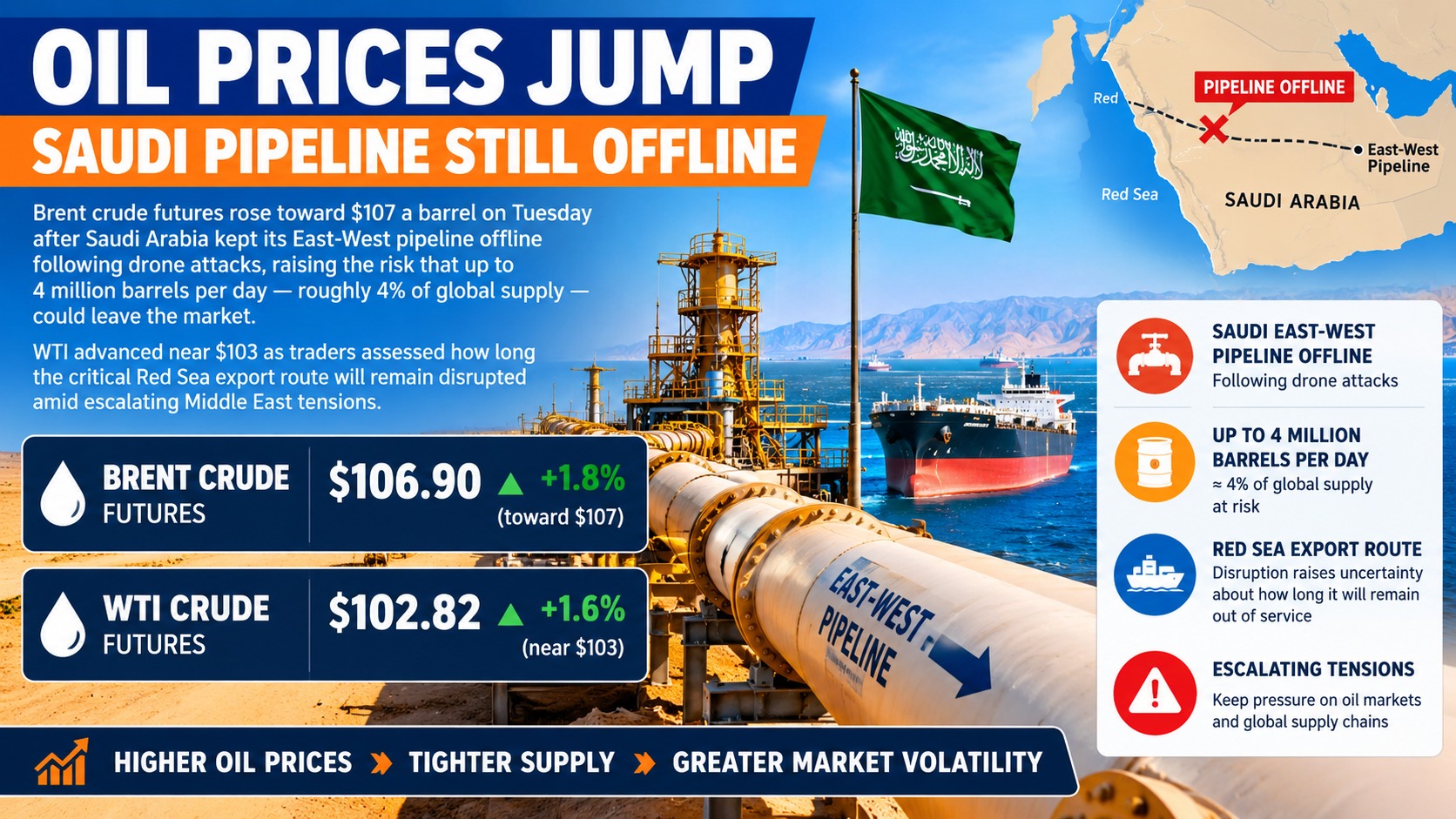
Brent crude futures advanced toward $107 a barrel on Tuesday while U.S. West Texas Intermediate traded near $103, extending gains as concerns over Saudi Arabian supply disruptions intensified. The kingdom’s East-West pipeline, which can move as much as 4 million to 7 million barrels per day to the Red Sea port of Yanbu and bypass the Strait of Hormuz, remained shuttered after recent drone attacks that Saudi authorities blamed on Iran-backed fighters operating from Iraq.
Saudi buyers and traders indicated the country could exhaust available export inventories within days unless operations resume. Current stockpiles at Yanbu are estimated to provide a cushion of only five to seven days under normal withdrawal rates. Repair timelines range from several days to as long as eight weeks depending on the severity of damage to pumping stations and related infrastructure. Analysts at Goldman Sachs and other institutions have warned that a multi-week outage could drive Brent toward $130 in the absence of demand destruction or significantly greater flows through the Strait of Hormuz.
The pipeline shutdown compounds existing constraints from the broader Middle East conflict, which has already reduced tanker traffic and pushed diesel prices in the United States to record highs near $6.27 per gallon. Average gasoline prices have climbed to approximately $4.33 per gallon nationwide, up sharply from levels seen earlier in the year. Elevated energy costs are feeding directly into inflation readings and reinforcing expectations for a Federal Reserve rate hike this week.
Energy equities and related commodity markets are reacting to the heightened supply risk, while broader equity indexes remain under pressure from the inflationary implications. Market participants continue to monitor official updates from Saudi authorities on restoration efforts. Vessel tracking data showed commodity traffic through the Strait of Hormuz falling to very low levels in recent sessions, further tightening the physical market.
The East-West pipeline has served as a critical safety valve for global oil flows since the conflict disrupted normal shipping patterns through the Persian Gulf. Its prolonged absence removes a major alternative route precisely when regional tensions remain elevated. Houthi activity in the Red Sea has added another layer of complexity, with fresh attacks reported in recent days that have kept insurance costs and freight rates elevated.
Commodity strategists note that the market is already pricing in a significant risk premium. Brent has gained more than 18% during September alone, while WTI has advanced more than 25% over the past month. Inventories in key consuming regions are being watched closely for signs of drawdowns that could accelerate the upward move in prices. Any confirmation that Saudi export capacity remains impaired for weeks rather than days would likely trigger another leg higher in the complex.
Beyond the immediate price impact, the disruption is contributing to broader macroeconomic pressures. Higher fuel costs reduce consumer purchasing power and raise input expenses for manufacturers and transportation firms. These dynamics support the case for tighter monetary policy even as growth concerns linger in some sectors. The simultaneous rise in oil and Treasury yields has created a particularly challenging environment for risk assets.
Traders are also assessing secondary effects on refined products and natural gas markets. Diesel has been especially tight, with U.S. prices setting successive records. Jet fuel and other middle distillates face similar constraints. The situation underscores the vulnerability of global energy supply chains to geopolitical shocks and the limited spare capacity available to offset sudden outages.
Looking ahead, the pace of repairs to the East-West pipeline will remain a key variable. Saudi officials have provided limited public detail on the extent of damage, leaving markets to rely on industry estimates and satellite observations. Until clearer information emerges, oil prices are likely to remain supported and volatile, with upside risks dominating the near-term outlook.