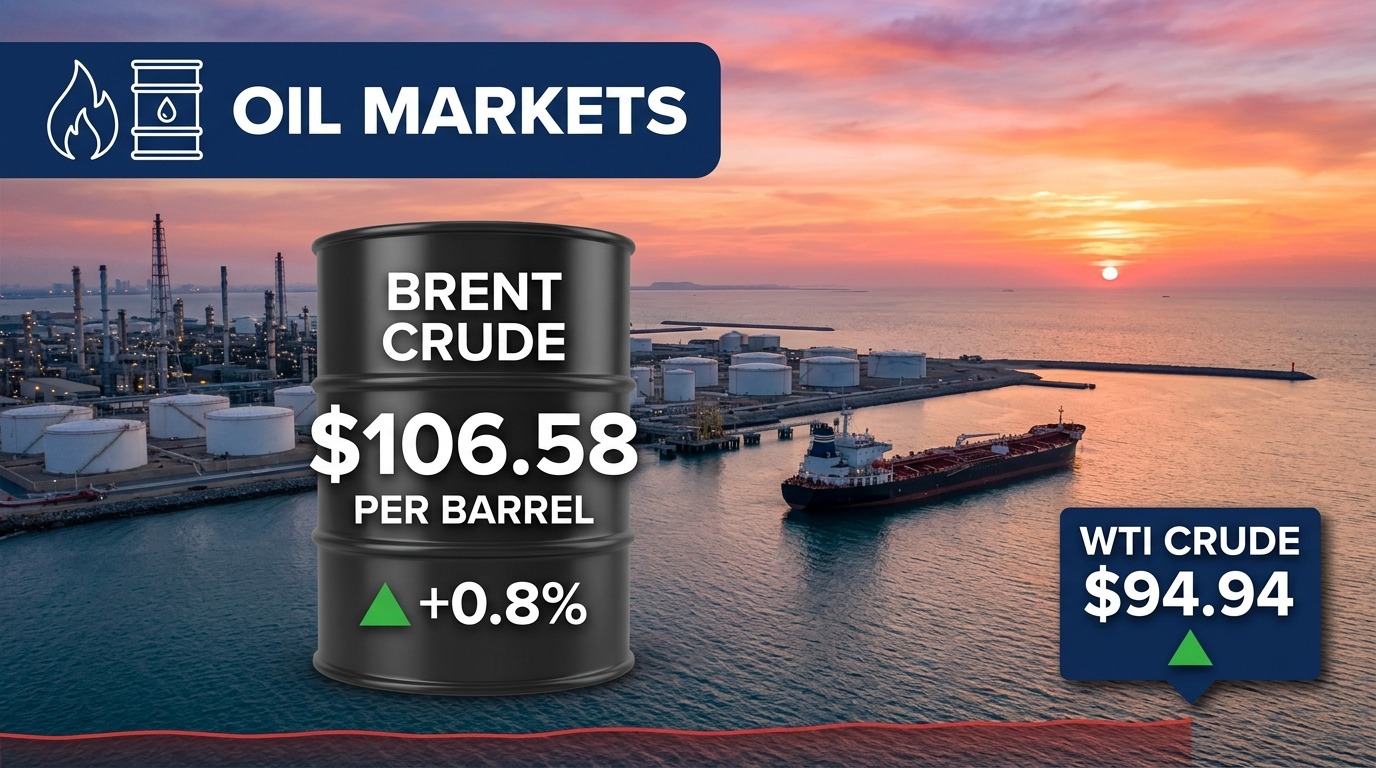
Crude oil prices extended gains on Wednesday after fresh Houthi attacks on Saudi Arabia revived concerns about the security of Gulf energy infrastructure. Brent crude futures rose 89 cents, or 0.8%, to $106.58 a barrel by 0030 GMT, while U.S. West Texas Intermediate climbed 80 cents, or 0.9%, to $94.94, according to reports citing Reuters.
Saudi Arabia's energy ministry said an attack struck an administrative building belonging to Saudi Aramco in Dhahran, causing a limited fire. The strike followed what CNBC described as a deadly attack by Iran-backed Houthis on Riyadh's main airport, after which the Saudi-led coalition hit Houthi energy terminals and fuel reserves in Yemen. The Houthis have vowed to keep targeting a Saudi airport as fighting intensifies, according to TheStreet.
Hiroyuki Kikukawa, chief strategist at Nissan Securities Investment, told Reuters that supply concerns stemming from the conflict between the Houthis and Saudi Arabia are driving prices higher. Expected increases in Russian diesel exports could ease global tightness somewhat, he said, potentially curbing sharp spikes.
Saudi officials have sought to reassure markets. Energy Minister Prince Abdulaziz bin Salman said earlier this month that flows through the East-West pipeline had rebounded to 5.8 million barrels a day, and Vitol estimates roughly 12 million barrels of crude and 2 million barrels of fuels are leaving the Persian Gulf daily. Even so, analysts at OilPrice.com noted that upside risk persists for as long as fighting continues, regardless of export volumes.
On Wall Street, billionaire investor Paul Tudor Jones said on CNBC that oil could rise another $20 to $25 because of the conflict surrounding Iran and that he holds a long position in crude. President Donald Trump has accused the Houthis of trying to push prices higher ahead of the November 3 midterm elections.
The timing compounds the inflation problem for policymakers. The Bureau of Labor Statistics reported Wednesday that consumer prices rose 3.7% in September from a year earlier, with gasoline up 9.1% and responsible for about half of the monthly increase. Short-dated Treasury yields climbed, stocks fell, and investors raised bets that the Federal Reserve will keep lifting rates. Gold fell 0.31% to $4,164 an ounce in early trading, while silver slipped 1.13% to $58.85.
For equity investors, higher crude is a sector-rotation signal. Energy producers and oil-services firms typically benefit when Brent holds above $100, while airlines, transportation companies and consumer discretionary retailers face higher fuel costs and squeezed household budgets. Utilities and defense contractors may also draw interest if Middle East tensions persist, though broad indexes remain vulnerable to an inflation-driven rise in yields. The S&P 500 closed Tuesday 0.2% below its October 6 record at 7,805.
Traders will watch for further strikes on Saudi energy infrastructure, any disruption to tanker traffic near the Strait of Hormuz, and the outcome of the Federal Reserve's October 27-28 meeting. A sustained break above $110 for Brent would likely intensify the inflation debate, while credible de-escalation or confirmed Russian diesel shipments could pull prices back toward $100.