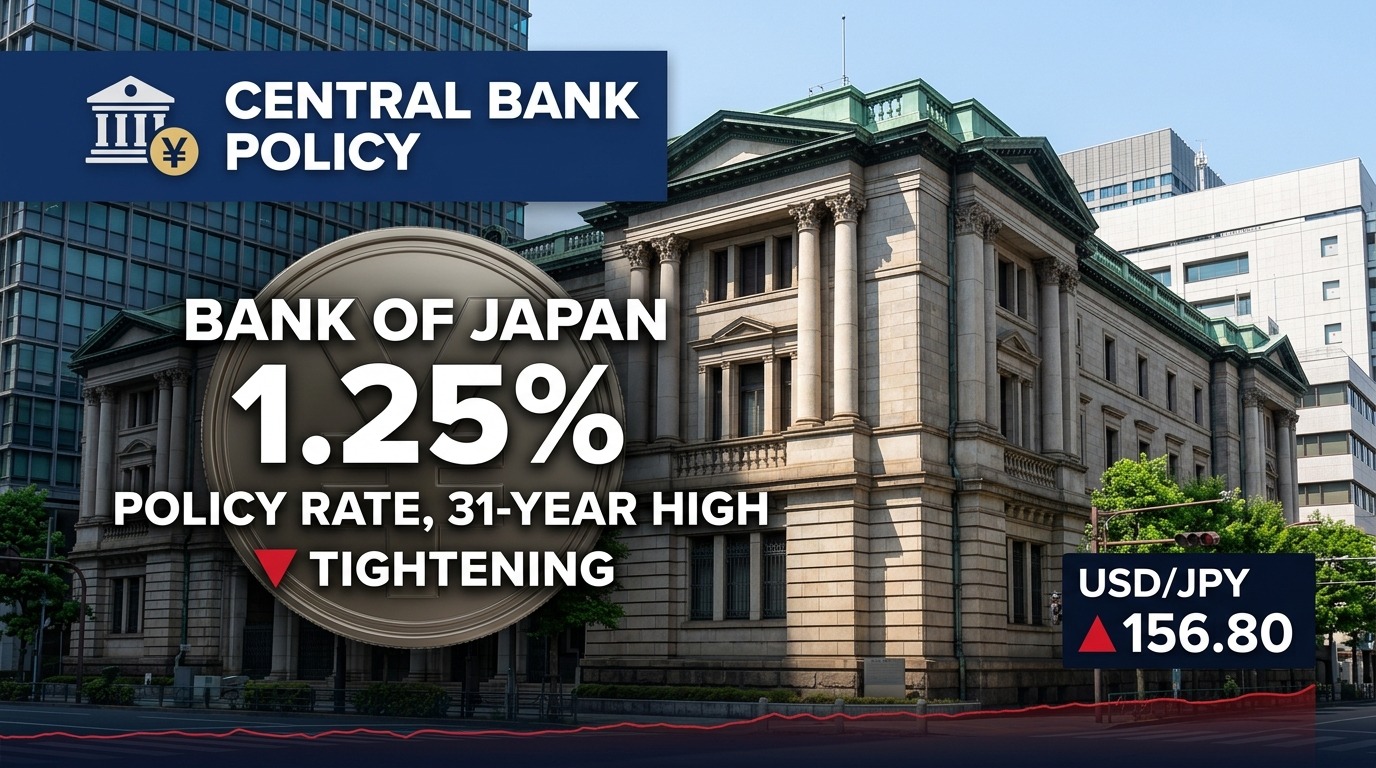
The Bank of Japan raised its uncollateralized overnight call rate target by 0.25 percentage point to around 1.25 percent on Friday, the highest level in approximately 31 years. The decision was reached in a 7-2 vote at the conclusion of a two-day policy board meeting, with board members Toichiro Asada and Ayano Sato dissenting. The new rate is scheduled to take effect next Thursday following a string of national holidays in Japan. The last time the policy rate stood at 1.25 percent was in April 1995.
Governor Kazuo Ueda told a post-meeting news conference that with underlying inflation approaching the 2 percent target, the central bank's policy focus has shifted. "If risks of underlying inflation overshooting 2 percent materialise, that could have a negative impact on Japan's economy," Ueda said. "It's important to stabilise underlying inflation at 2 percent. Our policy phase has changed." The remarks were widely interpreted as the strongest signal yet that the BOJ is prepared to continue raising rates if price pressures remain elevated. The hike was the first in three months and marks an acceleration from the roughly six-month intervals that had characterized earlier steps in the normalization process.
The move was widely expected by markets and economists and followed recent rate increases by the Federal Reserve and the European Central Bank. Japan has been grappling with inflation driven by elevated energy costs linked to Middle East tensions, rising wages amid a shrinking labor force, and a persistently weak yen that increases the cost of imported goods. Core consumer price inflation has held near the 2 percent target in recent months as companies continued to pass higher costs through to consumers across a broad range of food and grocery items.
Despite the rate increase, the yen initially weakened after the announcement, trading beyond 156 to 157 per dollar at one point. Market participants focused on the relatively measured 25-basis-point size of the hike and the presence of two dissenting votes arguing for greater patience, which tempered expectations of a more aggressive tightening path in the near term. Japanese government bond yields rose across the curve in response to the decision. Global fixed-income and currency markets registered the synchronized nature of the latest tightening cycle among major central banks.
The BOJ's action adds to the restrictive monetary backdrop facing risk assets following the Federal Reserve's first rate hike in three years earlier in the week. U.S. Treasury yields firmed modestly on Friday as investors digested the implications for global capital flows and the relative attractiveness of different funding currencies. Equity futures in the United States showed mixed reactions, with some support from the broader narrative of central banks remaining vigilant against inflation, offset by concerns that higher global rates could pressure valuations and growth-sensitive sectors.
Ueda left open the possibility of further rate increases should inflation risks materialize more forcefully. Analysts noted that the BOJ is moving closer to levels it considers neutral for the economy, continuing the multi-year exit from the ultra-low and negative rate policies that had long made the yen a preferred funding currency for carry trades. The combination of the Fed's hawkish signal and the BOJ's accelerated normalization reinforces the view that the global policy cycle has turned more restrictive, a development that is likely to remain a key driver of asset prices in the weeks ahead as investors reassess growth and inflation trajectories across major economies.