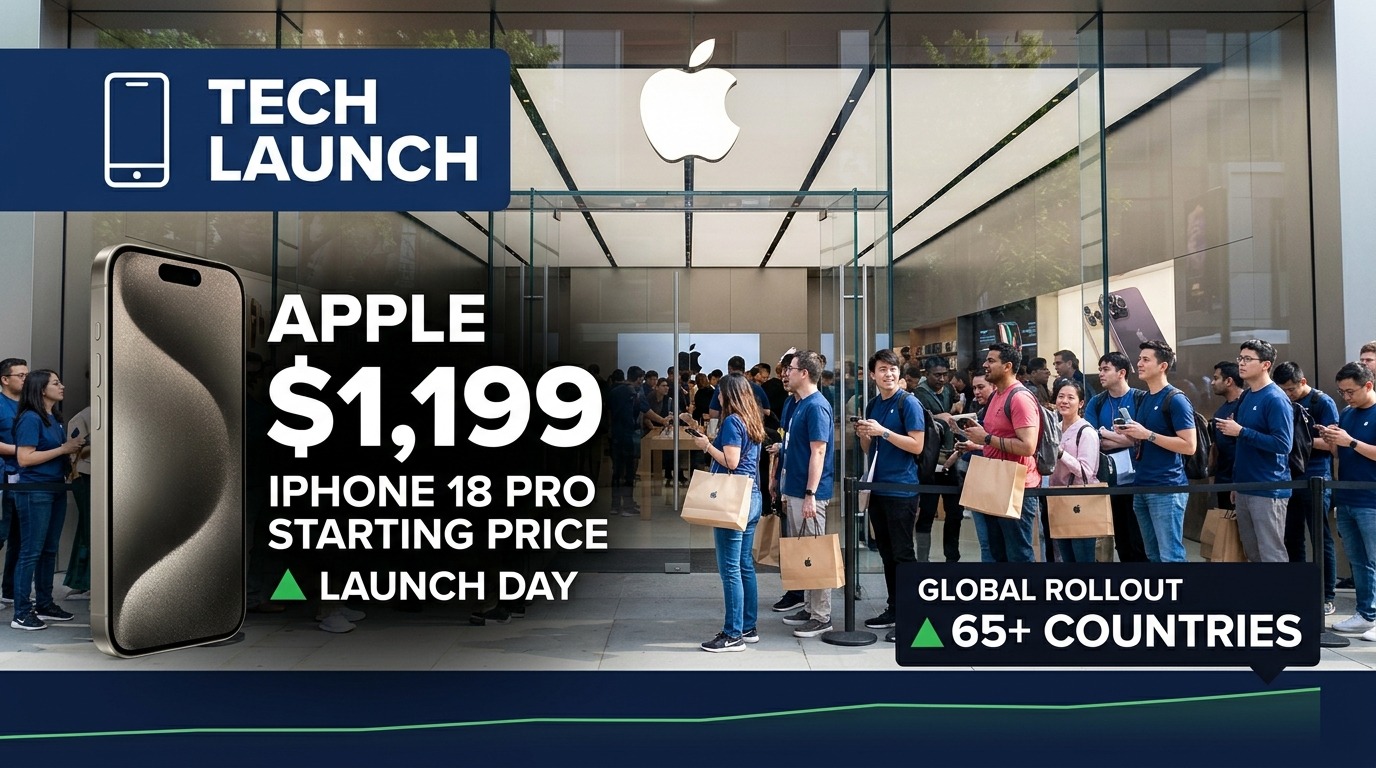
Apple Inc. commenced sales of the iPhone 18 Pro and iPhone 18 Pro Max on Friday, September 18, across more than 65 countries and regions including the United States, China, Japan, the United Kingdom, Germany, India, and Australia. The devices carry starting prices of $1,199 for the iPhone 18 Pro and $1,299 for the larger Pro Max in 256GB configurations, a $100 increase from the prior generation that company executives and analysts have attributed in part to elevated memory component costs. Storage options range up to a new 2TB tier. Pre-orders had opened on September 12 at 5 a.m. Pacific Time, and a second wave of approximately 20 additional countries is scheduled for availability on September 25.
The new Pro models emphasize advances in the camera system, including a 48-megapixel Fusion Main camera now equipped with variable aperture settings that give users greater creative control, along with enhanced Pro controls inside the Camera app. Apple also highlighted meaningful gains in battery life and overall performance relative to the iPhone 17 Pro series. Companion products released the same day include the Apple Watch Series 12, Apple Watch Ultra 4, and AirPods 5. In-store queues formed at many Apple Retail locations, though early online delivery estimates already indicated delays into the first half of October for certain popular Pro Max configurations, while in-store pickup remained available for a wider range of models and colors on launch day itself.
Carrier promotions in the United States, including trade-in credits and installment offers that can effectively reduce the upfront cost by as much as $1,200 at major providers, are expected to support volume. Analysts and early channel checks described initial demand as softer than some previous flagship launches, with shipping windows not stretched as aggressively as in peak years. Availability of specific color and storage combinations varied by location, with some higher-capacity variants showing better immediate pickup options than the base 256GB models in certain colors.
The product launch occurs against a mixed macroeconomic backdrop of higher interest rates following the Federal Reserve's recent hike, elevated energy prices that continue to pressure consumer budgets, and a technology sector that has shown resilience in the days since the policy decision. Apple shares have been closely watched for any launch-related momentum, particularly given the company's heavy weighting in major equity indexes and the historical importance of the iPhone cycle to fiscal-year revenue and margin trends. Investors will look to early sell-through data, channel inventory levels, and any upward or downward revisions to delivery estimates in the coming days for the first concrete read on demand strength.
Historically, the first-weekend and first-week sales figures have provided important signals about the health of each new iPhone generation and the broader consumer electronics spending environment. This year's higher starting price and the competitive landscape for premium smartphones add incremental uncertainty. At the same time, Apple's ecosystem lock-in, services revenue growth, and the installed base of existing devices eligible for upgrades continue to provide structural support. Market participants will also monitor whether the new camera and battery improvements prove sufficiently compelling to drive upgrade rates among owners of older Pro models.
Broader implications for the semiconductor and component supply chain are also relevant, as strong or weak iPhone demand tends to ripple through memory, display, and chip suppliers. For now, the launch represents a key near-term catalyst for Apple and the consumer technology complex as investors weigh the durability of high-end hardware spending under a more restrictive monetary policy regime. Subsequent quarterly guidance and unit shipment commentary will ultimately determine how the cycle is scored, but Friday's availability marks the formal start of the measurement period.