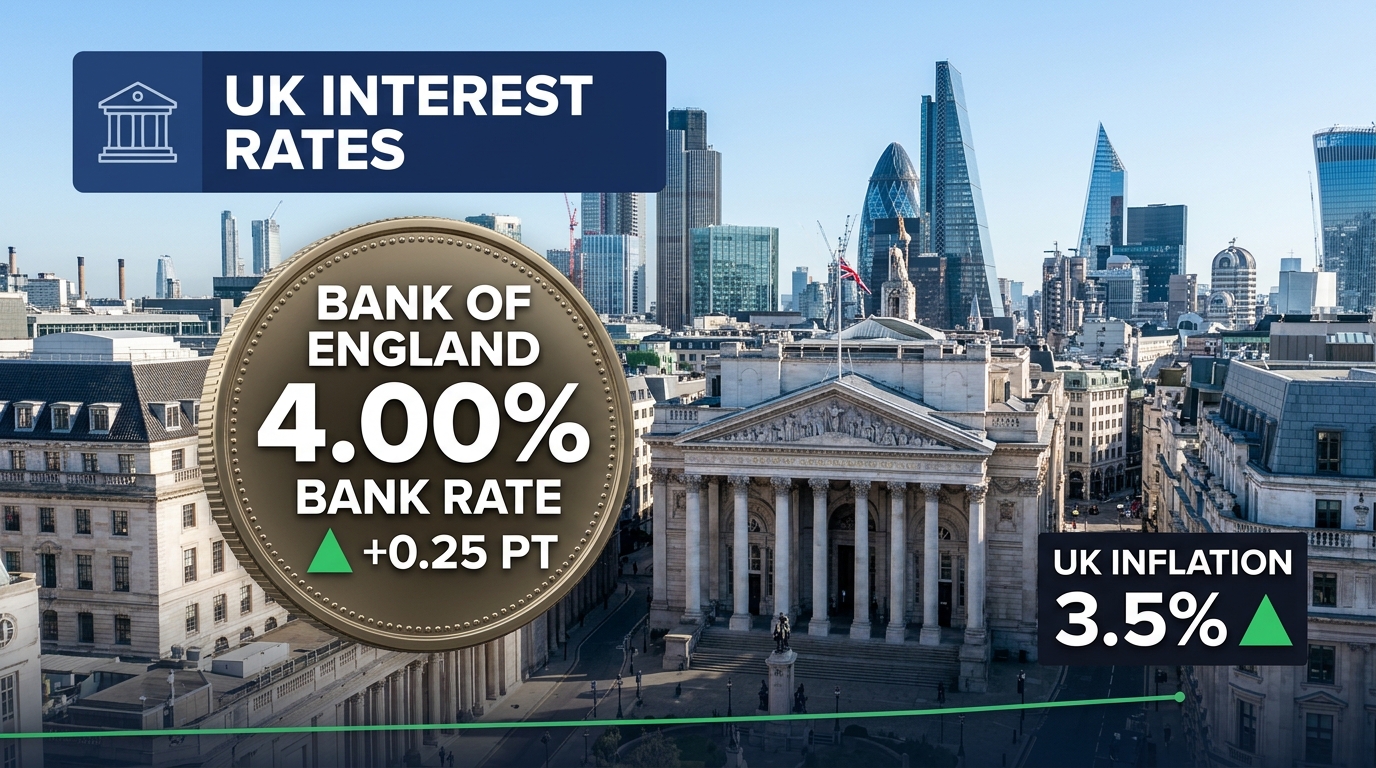
The Bank of England raised its main interest rate by a quarter point to 4% from 3.75% on Thursday, its first increase in more than three years, as it moved to contain an inflation shock stoked by the Iran war, the Associated Press reported.
The case for tightening rested largely on energy. The sharp rise in fuel costs this year, driven by the conflict and the ensuing bottlenecks in the Strait of Hormuz that have squeezed global oil and gas supplies, has pushed UK inflation higher. Economists polled by Reuters had expected Bank Rate to rise to 4%, which would be the first hike since August 2023, and Eastern Eye reported that inflation reached 3.5% in September, above the central bank's forecast.
The decision marks a reversal in the policy path. UK interest rates had been trending downward from a 15-year high of 5.25% until the United States and Israel attacked Iran in late February. In September the Bank held rates at 3.75% but warned that it could raise them if the war continued, and it projected inflation could climb to slightly above 4% in early 2027, more than double its 2% target. Markets have been betting on several more increases next year.
For US investors, the move is a reminder that the energy shock is global and that central banks are choosing between supporting growth and containing prices. US policymakers face a similar trade-off. Oil has fallen for four sessions on hopes that the Iran conflict could be resolved after the US midterm elections, and the 10-year Treasury yield eased to about 4.89% on Thursday, but a durable decline in energy costs is still unproven.
The immediate market read-through is mixed. Higher UK borrowing costs typically pressure interest-rate-sensitive parts of the market such as property and consumer credit, while supporting the pound. Investors who want a liquid way to track UK equities often use the iShares MSCI United Kingdom ETF (EWU), which is the most relevant listed proxy for this story on US exchanges.
A stronger pound can also weigh on UK-listed exporters, while US multinationals with sterling revenue can see translation gains when the currency rises. Those effects tend to be gradual, but they matter for portfolios with international exposure, especially when central banks diverge.
Attention now turns to the details: the committee's vote split, the Bank's updated economic projections and Governor Andrew Bailey's press conference, which will show how many further increases policymakers consider necessary. Traders will also watch whether a decline in oil prices, if it persists, lets the Bank slow the pace of tightening before inflation peaks early next year. Friday's US employment report will then test whether the global hawkish tilt reaches the Federal Reserve debate.