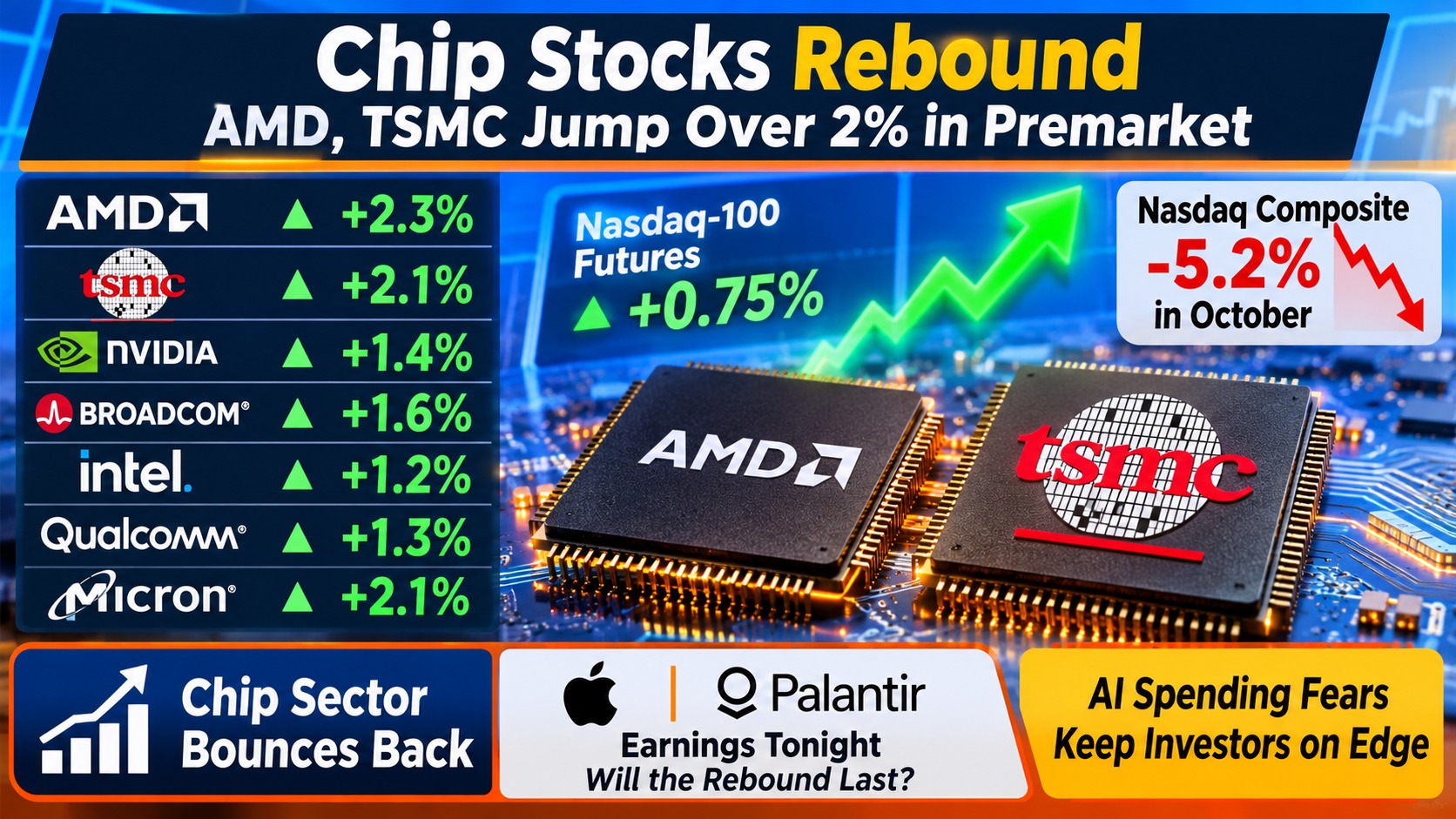
Semiconductor and memory stocks bounced in premarket trading on Monday, helping Nasdaq-100 futures gain about 0.75% after the index briefly slipped into correction territory last week. Among AI chip names, AMD and Taiwan Semiconductor were up more than 2%, while Nvidia, Broadcom, Intel and Qualcomm each rose more than 1%. Memory names also firmed, with Micron Technology up more than 2% and South Korea's leading memory makers advancing as much as 4%.
The rebound follows a punishing stretch for technology. The Nasdaq Composite lost 5.2% during October, and Friday's session saw the index fall 2.86% as disappointing earnings and concerns about the cost of AI infrastructure spending hit sentiment. Yahoo Finance reported that roughly $5 trillion of value had been wiped from AI-linked stocks during the selloff, though strategists noted that November through April has historically been one of the stronger stretches for US equities in midterm-election years.
Individual earnings reactions drove the damage. Alphabet fell 13% after missing on both revenue and profit, with management saying search revenue was growing but not keeping pace as AI changes monetization. Intel lost roughly a quarter of its value after a weaker fourth-quarter outlook, with the company pointing to soft PC demand tied to higher memory costs. Intel shares rose 0.8% in premarket trading on Monday as buyers returned.
Analysts framed the sell-off as a reset in expectations rather than a collapse in fundamentals. Barron's associate editor Al Root said the results were not terrible but failed to satisfy investors who entered earnings season on edge. In a separate note, Deutsche Bank reversed a recent downgrade of the technology sector, according to market news summaries, adding to the sense that the group may be stabilizing.
Supply-chain signals from Asia were supportive. MediaTek's chief executive flagged strong AI-driven chip demand, and Tokyo Electron's shares jumped more than 5% on strong results, suggesting capital equipment orders tied to advanced chips remain healthy. Those datapoints matter for US names exposed to data-center buildouts, even as investors question how quickly AI spending can convert into cash flow.
The test comes later today. Apple and Palantir report after the closing bell, and AMD is due later this week, giving the market fresh read-throughs on consumer hardware demand, enterprise AI adoption and data-center spending. Investors will also watch ISM manufacturing data and a falling oil price for clues on inflation and rates, since the 10-year Treasury yield near 4.93% remains a headwind for long-duration growth stocks.
For traders, the bounce is a relief move inside a damaged trend rather than a confirmed reversal. The Nasdaq-100 came within reach of a correction, volatility remains elevated and a binary election risk arrives on Tuesday. Leadership among chip designers and memory suppliers suggests where buyers are stepping in first, but follow-through will depend on whether tonight's earnings and this week's jobs data calm the AI-capex debate.