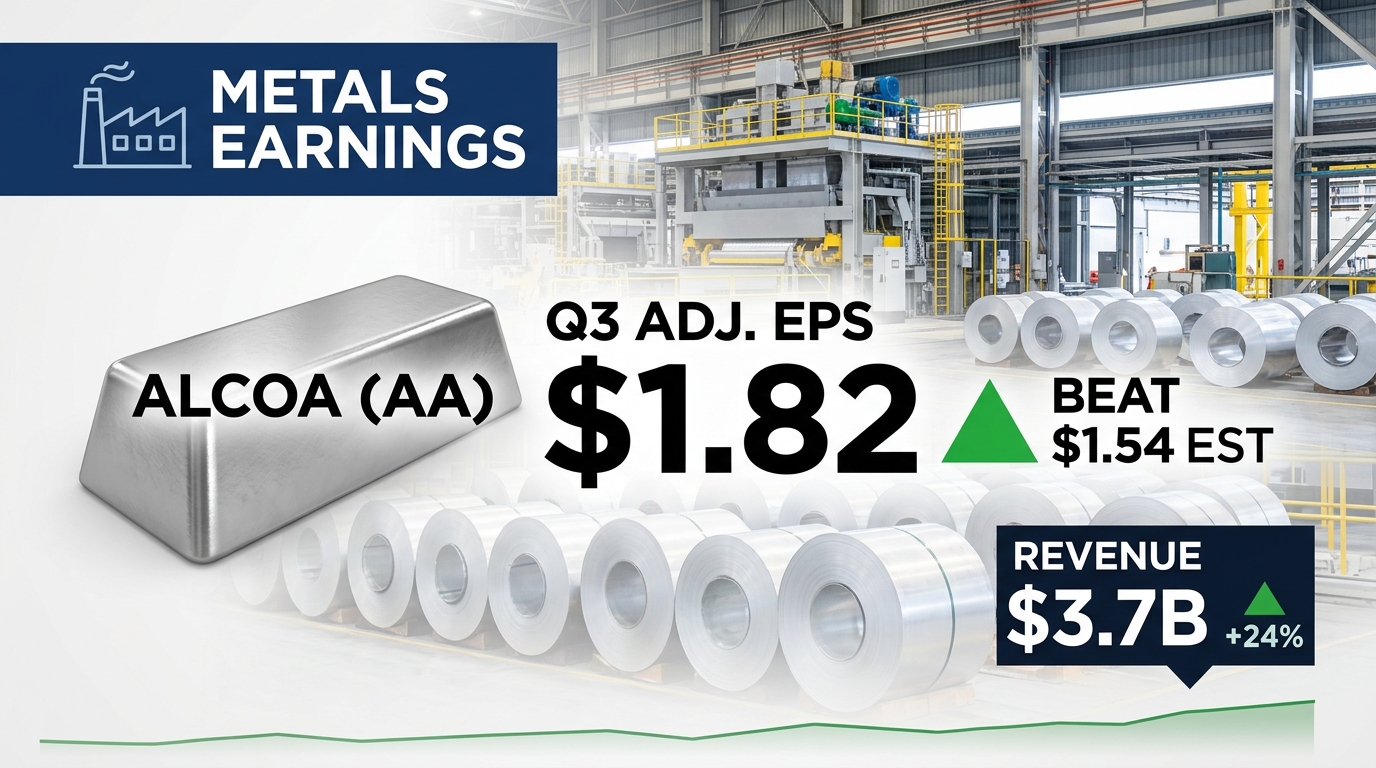
Alcoa reported third-quarter 2026 results that topped profit expectations, with adjusted earnings of $1.82 per share versus analyst forecasts of roughly $1.54, and its shares rose about 2.5% in premarket trading on Friday.
Revenue totaled $3.7 billion, slightly below forecasts but up 24% from the same period a year earlier. Free cash flow rose to $472 million, and adjusted EBITDA reached $789 million, reflecting improved production throughput and operational performance.
The earnings beat of roughly 18% was the central driver of the stock's reaction. Shares had gained more than 2% in after-hours trading following the release, and the move extended into the premarket session, suggesting investors are prioritizing profit and cash generation over the modest revenue shortfall.
The quarter's strength in cash flow and EBITDA is notable given the cost environment. Aluminum smelting is energy-intensive, and energy prices have been elevated, with Brent crude near $105 a barrel and September consumer energy prices up 5.2% on the month. The ability to improve throughput and operations while expanding profitability will be a key focus for analysts as they update their models.
Industrial metals markets were firm on Friday, with copper futures up about 1.3% near $6.64 a pound. Investors will also watch the September industrial production report due later in the day, where consensus calls for a 0.4% increase, for signs of how manufacturing demand is holding up under high borrowing costs.
The broader market backdrop remains cautious. The 10-year Treasury yield is near 5.09%, S&P 500 futures were up about 0.2%, and the Nasdaq Composite is on pace for a weekly decline of more than 2% even as the Dow Jones Industrial Average heads for a gain of about 1%. That rotation toward cyclical and value-oriented sectors has favored industrial and materials names, and Alcoa's results fit that pattern.
For traders, the question is whether the post-earnings gap can hold. Earnings beats driven by operations and cash flow often draw follow-through buying, but a revenue miss and a rate-sensitive macro environment argue for caution. Key levels will matter, along with management's commentary on pricing, input costs and demand trends, which investors will parse for guidance on the coming quarters.
Longer-term investors should weigh the cyclical nature of aluminum demand, exposure to energy and raw-material costs, and the sensitivity of industrial end markets to interest rates. Free cash flow of $472 million provides flexibility, but the sustainability of margins will depend on input prices and global demand.
Events later today, including Fed Chair Kevin Warsh's speech, could shift yields and sentiment toward cyclical stocks, so traders should expect volatility around those catalysts.