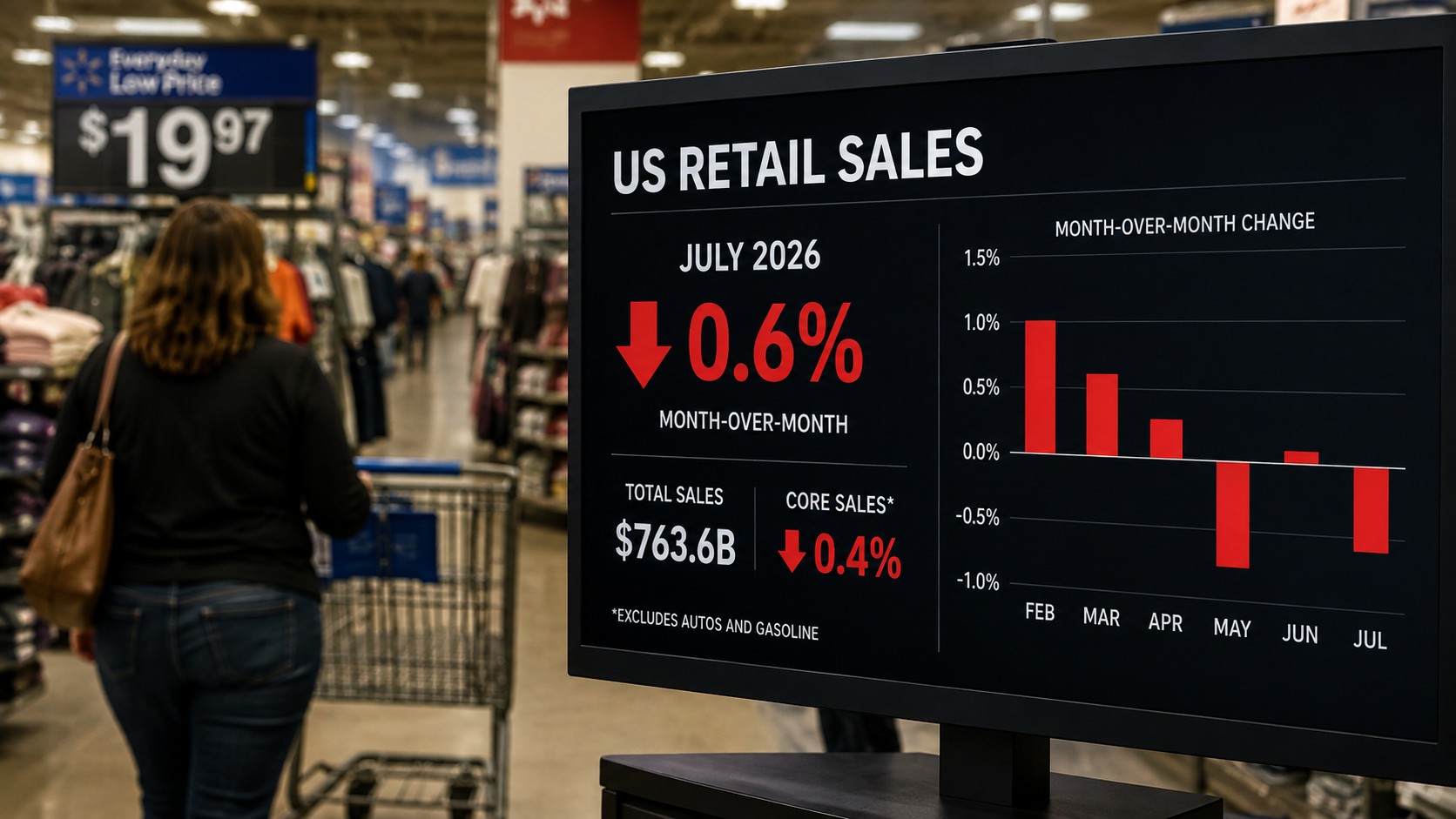
US retail and food services sales fell 0.6% in July to a seasonally adjusted $763.6 billion, the Commerce Department’s Census Bureau reported, marking the largest monthly decline since May 2025 and a clear miss versus the 0.1% gain economists had forecast. The drop reversed June’s modest 0.2% advance and came as higher energy prices linked to Middle East tensions continued to pressure household budgets.
Sales excluding motor vehicles and gasoline declined 0.2%, while the control group most closely tied to GDP consumer-spending calculations also weakened. Online and auto-dealer categories were among the softer areas. Despite the monthly setback, July sales remained 5.0% higher than a year earlier, and the May–July period was up 6.3% year-over-year.
The weaker reading arrives after a stretch of resilient consumer spending supported by large tax refunds earlier in the year. With the labor market showing signs of cooling and gasoline prices elevated, the data suggest households are becoming more selective. Markets digested the report against a backdrop of mixed equity futures and rising Treasury yields, keeping investors focused on whether the Federal Reserve can still hold rates steady in September.
Retailers and consumer-discretionary names face heightened scrutiny in the near term as the data reinforce concerns that the post-tax-refund spending impulse is fading. Energy-sensitive categories and big-ticket items may remain under pressure if oil prices stay elevated. At the same time, the still-positive year-over-year trend leaves room for a rebound if wage growth holds and geopolitical tensions ease.
Investors will watch subsequent consumer-confidence readings and the next retail-sales print for confirmation of whether July’s pullback was a one-month anomaly or the start of a broader slowdown. For now, the miss adds a cautionary note to an otherwise record-setting equity market environment.