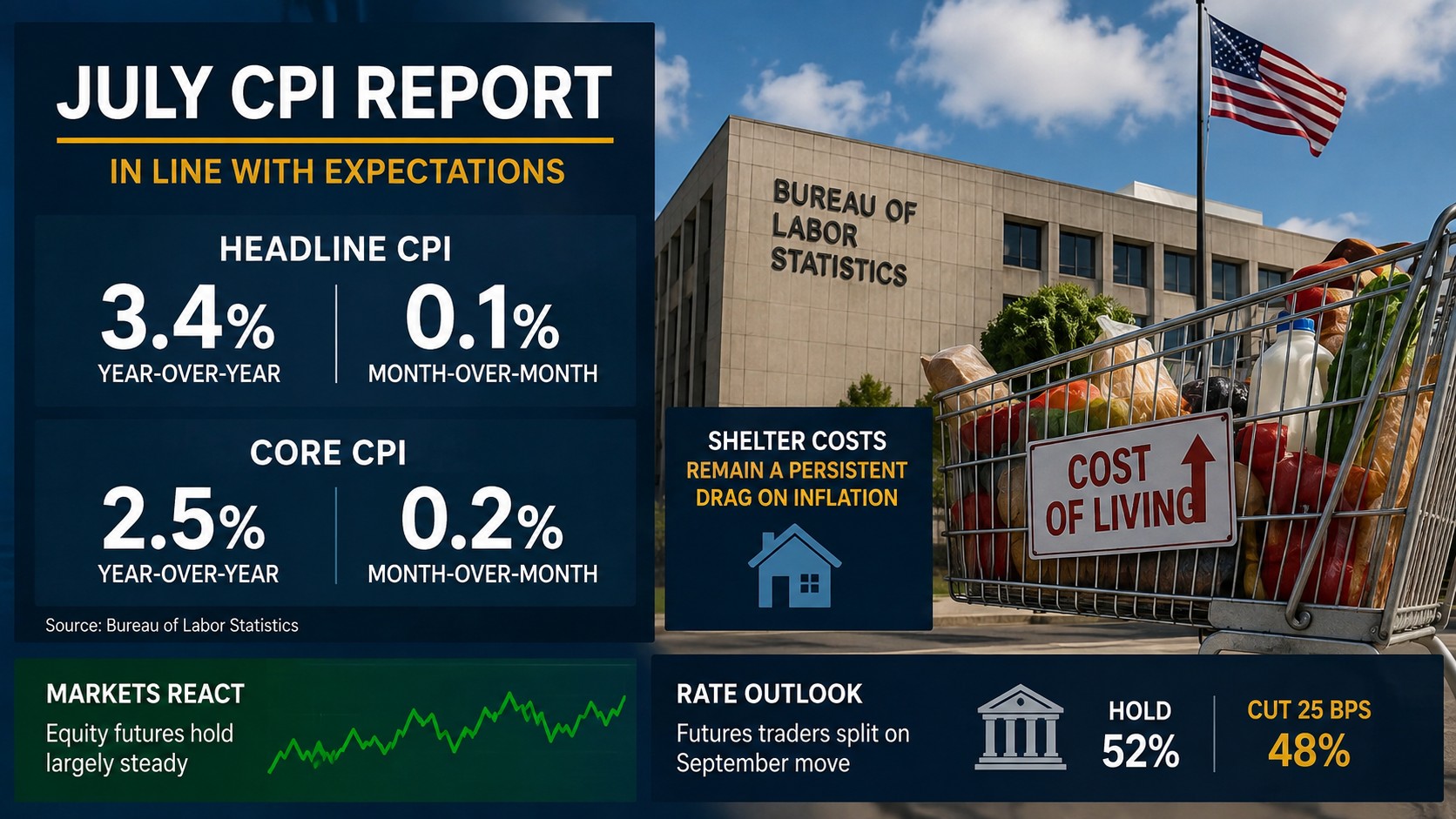
The Bureau of Labor Statistics released its July 2026 Consumer Price Index report Wednesday morning, showing headline inflation rose 3.4% year-over-year and 0.1% on a monthly basis, precisely matching the consensus estimates compiled by Dow Jones. Core CPI, which strips out volatile food and energy costs, increased 0.2% month-over-month and 2.5% annually, also landing exactly where economists had projected heading into the release.
The in-line print represented a modest cooling from June's 3.5% annual headline reading, offering the Federal Reserve a data point that neither strengthens the case for aggressive easing nor forces policymakers into a more hawkish posture ahead of the September Federal Open Market Committee meeting. Futures markets tracked by CME Group's FedWatch tool showed traders roughly split on whether the central bank will hold rates steady or deliver a quarter-point cut next month, with the report doing little to resolve that uncertainty.
Shelter costs, which carry the heaviest weight in the CPI basket, remained a persistent contributor to the elevated reading, and analysts said the housing component will stay under close scrutiny in coming months. Economists have also flagged the possibility that tariff-related price pressures could feed through into goods categories later in the year, complicating the Fed's read on whether disinflation is durable or merely a pause.
Equity futures showed limited reaction in the minutes following the 8:30 a.m. ET release, with the S&P 500 and Nasdaq 100 holding largely steady as traders digested the numbers alongside a separate wave of corporate earnings and rising oil prices tied to ongoing tension over the Strait of Hormuz. Treasury yields were little changed, suggesting bond markets had already priced in an in-line outcome.
The report lands at a politically sensitive moment for the Fed, which has faced public pressure over the pace of policy normalization even as inflation has hovered persistently above the central bank's 2% target for years. Some economists have warned that a failure to reach a durable resolution on Middle East shipping disruptions could push energy costs high enough to reverse recent disinflationary progress by year-end, a risk that Wednesday's backward-looking data does not yet capture.
Wall Street strategists broadly characterized the report as a 'goldilocks' outcome for markets in the near term: not hot enough to revive fears of renewed rate hikes, but not soft enough to guarantee a September cut is a lock. That ambiguity is likely to keep volatility elevated around upcoming Fed speeches and the release of the August jobs report, both of which will carry outsized weight in shaping the committee's next move. For now, investors are left parsing a report that confirmed expectations without settling the debate over where rates go next, leaving portfolio positioning largely unchanged heading into the next several weeks of data.