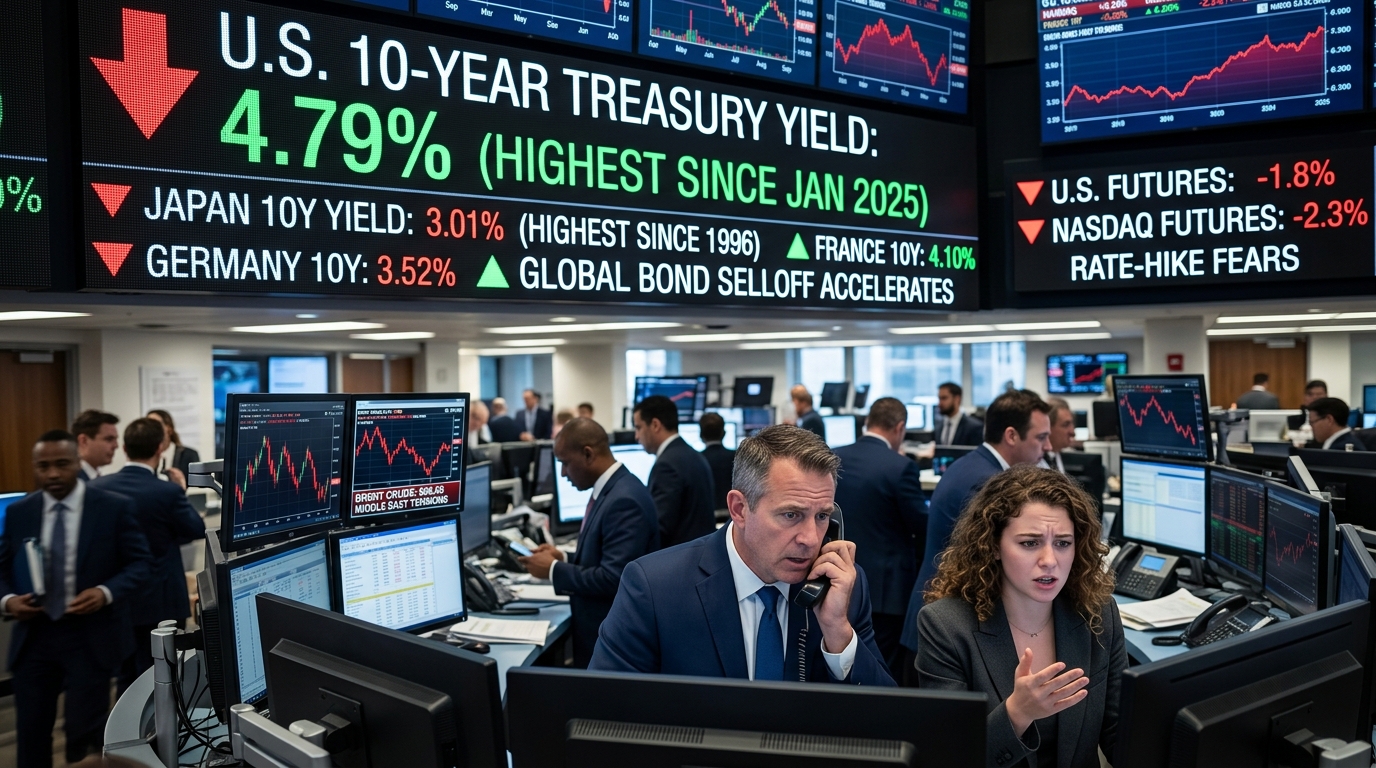
The U.S. 10-year Treasury yield rose to 4.79% on Tuesday, marking its highest level since January 2025, as a global government-bond selloff intensified at the start of September. Japan’s 10-year yield climbed to 3%, the highest since 1996, after comments from U.S. Treasury officials raised the possibility of Bank of Japan rate increases. Yields in Germany and France also reached multiyear highs, pushing up borrowing costs for governments worldwide.
U.S. equity futures pointed lower, with Nasdaq-100 contracts leading the declines as higher yields pressured growth and technology valuations. The selloff has been fueled by a combination of factors: Federal Reserve Chair Kevin Warsh’s recent emphasis that inflation remains sticky and the central bank still has “work to do,” renewed U.S.-Iran military exchanges that are supporting elevated oil prices, and structural concerns over swelling fiscal deficits and competition for capital from corporate borrowers.
Market participants noted that rate-hike odds for the September FOMC meeting have risen, with futures now assigning a substantial probability to a 25-basis-point increase. The 30-year Treasury yield also advanced, trading near 5.27%. Asian markets closed lower, and European equities faced pressure in early trading.
The economic calendar includes the July JOLTS job-openings report and the August ISM manufacturing PMI, both due at 10 a.m. ET. These data points will be scrutinized for clues on labor-market resilience and industrial activity ahead of Friday’s nonfarm-payrolls release. Energy stocks were relatively supported by higher crude prices, while rate-sensitive sectors lagged.
Analysts cautioned that September has historically been a weak month for equities, and the combination of rising real yields, geopolitical risk premium in oil, and reduced forward guidance from the Fed creates a challenging backdrop for risk assets. Positioning into the jobs data and the mid-month FOMC meeting is expected to remain cautious until clearer signals emerge on the inflation and policy path.