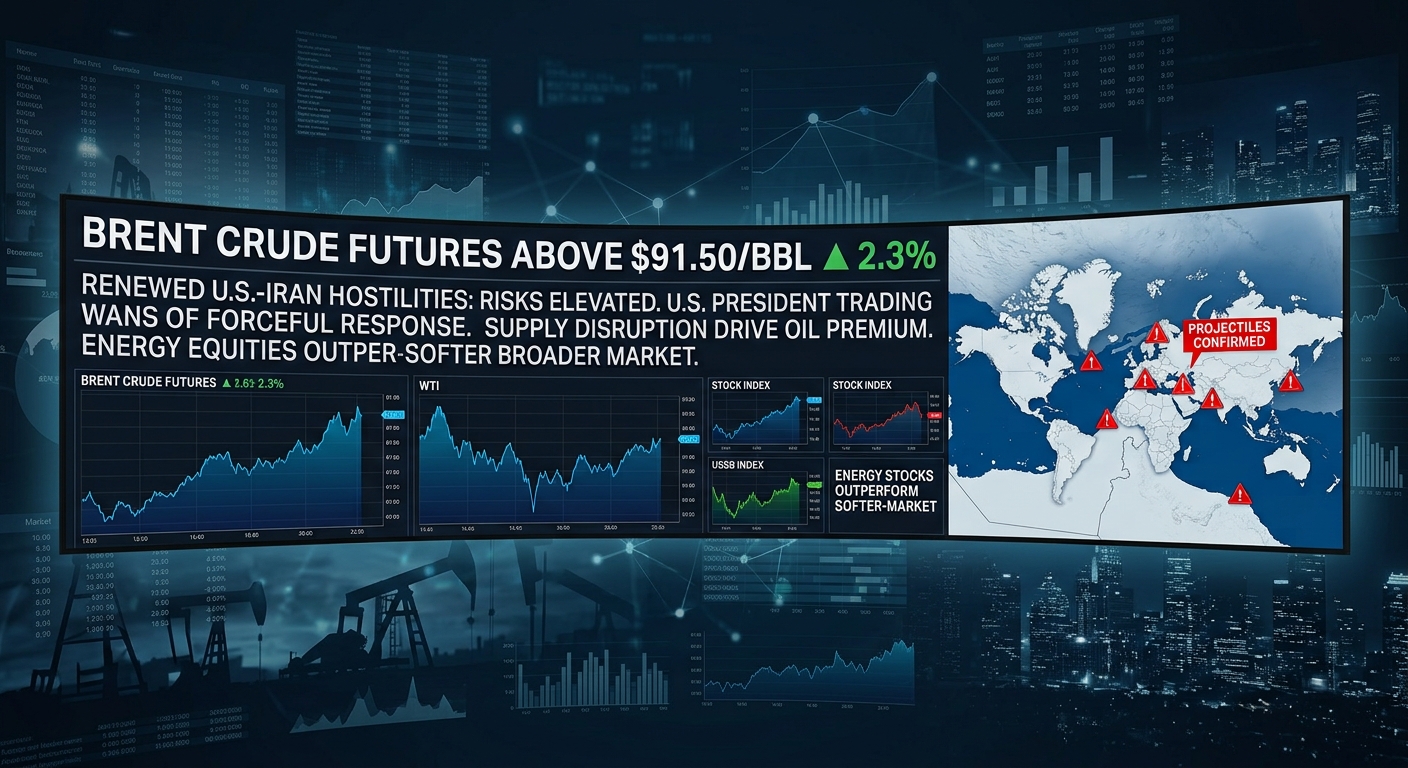
Brent crude futures held above $91 a barrel on Tuesday while West Texas Intermediate traded in the high $80s, extending gains driven by persistent military exchanges between the United States and Iran. Market reports indicated that tankers had been struck by projectiles in the Strait of Hormuz, and President Trump stated that the U.S. would respond forcefully to Iranian actions against American personnel and assets.
The latest developments follow weekend U.S. strikes on Iranian rocket launchers near the strait and subsequent Iranian claims of attacks on U.S. bases in Jordan. These events have reversed earlier hopes for a sustained de-escalation and kept a geopolitical risk premium embedded in energy prices. Shipping data continued to show caution among operators transiting the critical waterway.
Higher oil prices supported energy producers and refiners in premarket trading even as broader equity futures declined under the weight of rising Treasury yields. Analysts noted that sustained elevated crude levels could feed into inflation readings and reinforce the Federal Reserve’s focus on price stability, potentially complicating the path for monetary policy.
Investors will monitor further developments in the Middle East alongside domestic economic data for signs of whether the oil spike remains contained or broadens into a more persistent supply shock. Refining margins and inventory data later in the week may provide additional near-term direction for the complex.
Overall, the combination of geopolitical risk and higher yields has created a bifurcated market in which energy names find support while rate-sensitive and growth-oriented sectors face headwinds at the start of a historically challenging month for equities.