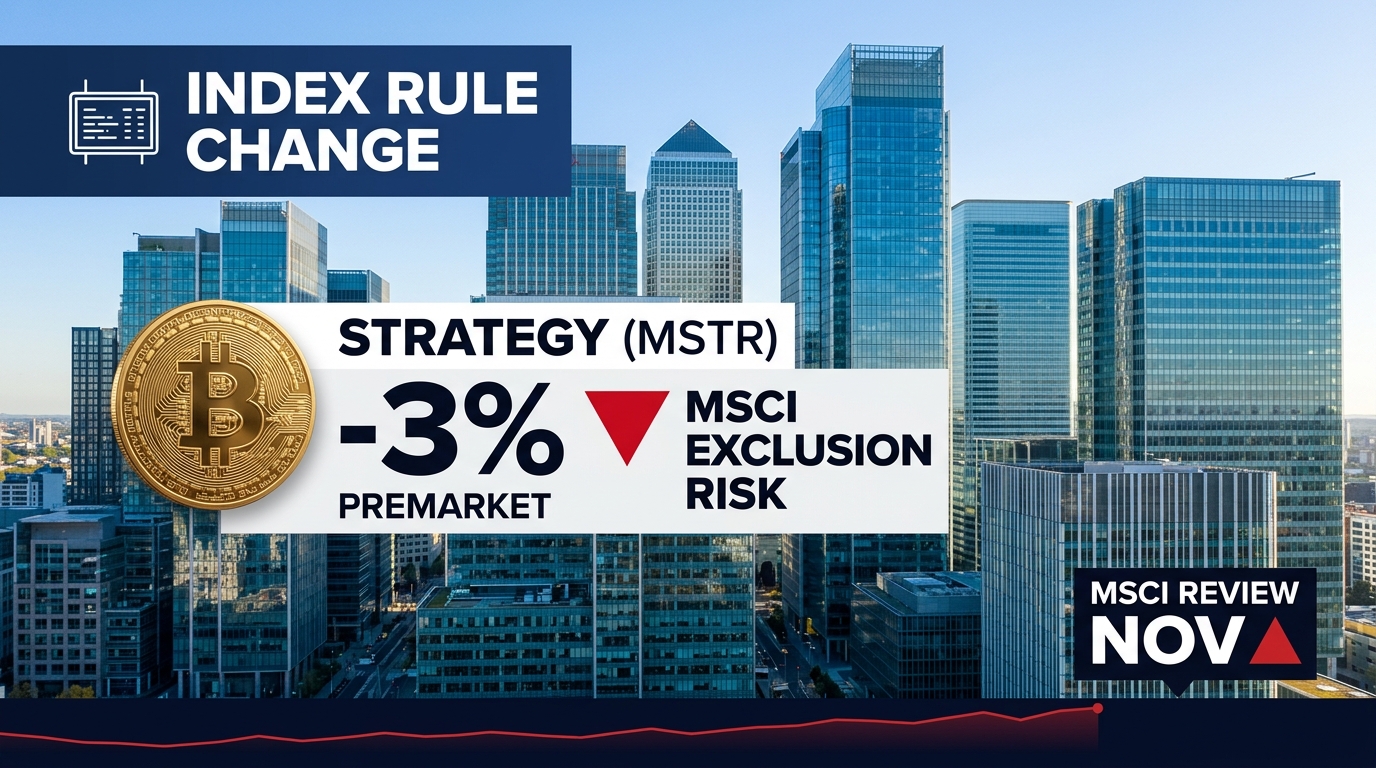
Strategy shares fell about 3% in premarket trading on Friday after index provider MSCI announced new rules that could result in the company being excluded from its indexes.
The decision followed a consultation on the eligibility of non-operating companies and is scheduled to take effect with the November index review. Under the new methodology, MSCI will assess companies using screens for operating assets and five financial ratios. The framework replaces interim restrictions that had targeted firms whose digital asset holdings accounted for at least 50% of total assets.
Strategy's substantial digital asset exposure has made it a focal point in the debate over index eligibility. Moving from a single asset-based threshold to a broader set of tests makes the outcome harder to predict, and the review process through November will determine whether the company remains a constituent.
Index membership matters because funds that track MSCI benchmarks generally must hold the constituents, so a removal can force selling by passive vehicles regardless of fundamentals. At the same time, the information available does not indicate that MSCI has made a final determination on Strategy specifically, which leaves the stock exposed to headline risk until the review concludes.
Market conditions add to the pressure. S&P 500 futures were up about 0.2% in early trading, but the 10-year Treasury yield near 5.09% and a technology-led selloff earlier in the week have kept speculative and long-duration assets under scrutiny. Digital asset prices were firmer, with Bitcoin near $82,000 and up about 1.6%, which offered some support to sentiment around companies that hold them.
Several questions will shape the stock's path. Investors want to know how Strategy reads the five-ratio test, whether other companies with large non-operating asset bases face similar scrutiny, and how index-tracking funds position ahead of the November review. Any commentary from Strategy's management on the rule change, or on steps it could take to improve its standing under the new screens, would be closely watched.
For traders, the setup favors defined-risk approaches. The stock can swing sharply on index-related headlines in either direction, and a roughly 3% premarket decline may understate the potential move if passive selling becomes a more concrete prospect. Those with longer horizons should weigh forced-selling risk against the value of the underlying holdings and the company's funding costs in a high-rate environment.
More broadly, the episode shows how index providers' classification choices can influence valuations for companies with unconventional balance sheets, and it may prompt similar reviews of how benchmark rules treat firms whose main assets are not operating businesses.
Investors should also keep an eye on the Fed Chair's speech later Friday and the day's inflation-related data, since a move higher in yields would add to pressure on assets that do not generate cash flow.