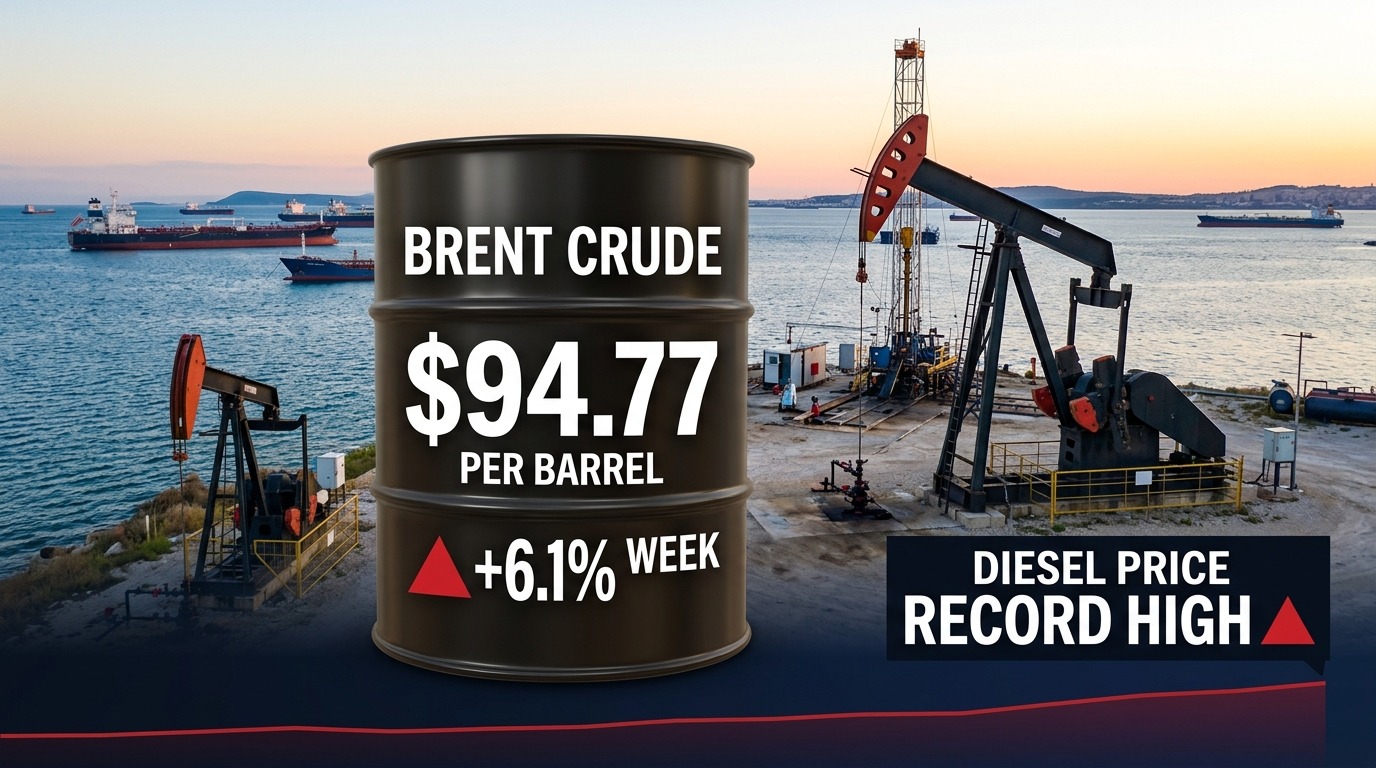
Crude oil was on pace for its steepest weekly gain in weeks as renewed fighting between the United States and Iran entered its seventh month, reigniting fears over disruptions to energy flows through the Strait of Hormuz. Brent crude futures were up 6.1% for the week, trading near $94.77 a barrel, while U.S. West Texas Intermediate futures had climbed 8.3% for the week to around $90.35, even as both benchmarks eased slightly on the day.
Perhaps more striking than the crude move was the surge in refined products. U.S. diesel prices climbed to a record high during the week, a development analysts say is beginning to ripple across the broader economy given diesel's central role in trucking, shipping, agriculture, and industrial activity. Unlike gasoline, which is more directly tied to consumer sentiment, diesel costs feed into the price of nearly every good that moves through the supply chain, making the record level a more troubling inflation signal for policymakers.
The latest flare-up follows a pattern that has defined markets for much of 2026: renewed U.S. strikes on Iranian targets have repeatedly been met with Iranian retaliation against American interests and allied nations in the region, keeping a persistent risk premium embedded in oil prices even during periods of relative calm. Earlier in the week, the U.S. conducted another round of strikes on Iran, with Iran responding against Jordan, Bahrain, and Kuwait, countries that host American military forces. Energy analysts have described the conflict as stuck in a recurring cycle of hostilities tied to control over the Hormuz shipping corridor, a chokepoint through which a significant share of global crude exports pass.
The combination of rising oil and even steeper increases in diesel has intensified warnings that the global economy could face a harder landing than previously expected. Higher fuel costs act as a tax on both consumers and businesses, and the persistence of the conflict has made it difficult for markets to price in a durable de-escalation, even after previous rounds of fighting were followed by brief ceasefires.
For U.S. investors, the energy story is colliding directly with this week's other major macro event: a stronger-than-expected August jobs report that has already scrambled expectations for the Federal Reserve's September policy meeting. Elevated energy costs complicate the inflation picture the Fed must weigh alongside labor market strength, with some officials having already dissented in favor of raising rates specifically to counter tariff- and energy-driven price pressure. Should diesel and crude prices continue climbing into next week's Consumer Price Index and Producer Price Index releases, analysts say it could tilt the Fed's decision further toward a hike rather than a hold.
Energy-sector equities have been among the few consistent beneficiaries of the conflict, with the sector's exchange-traded funds outperforming the broader market over the trailing month as crude and refined product prices have climbed. Whether that outperformance continues is likely to hinge on how the Hormuz conflict evolves over the long Labor Day weekend, with U.S. markets closed Monday.