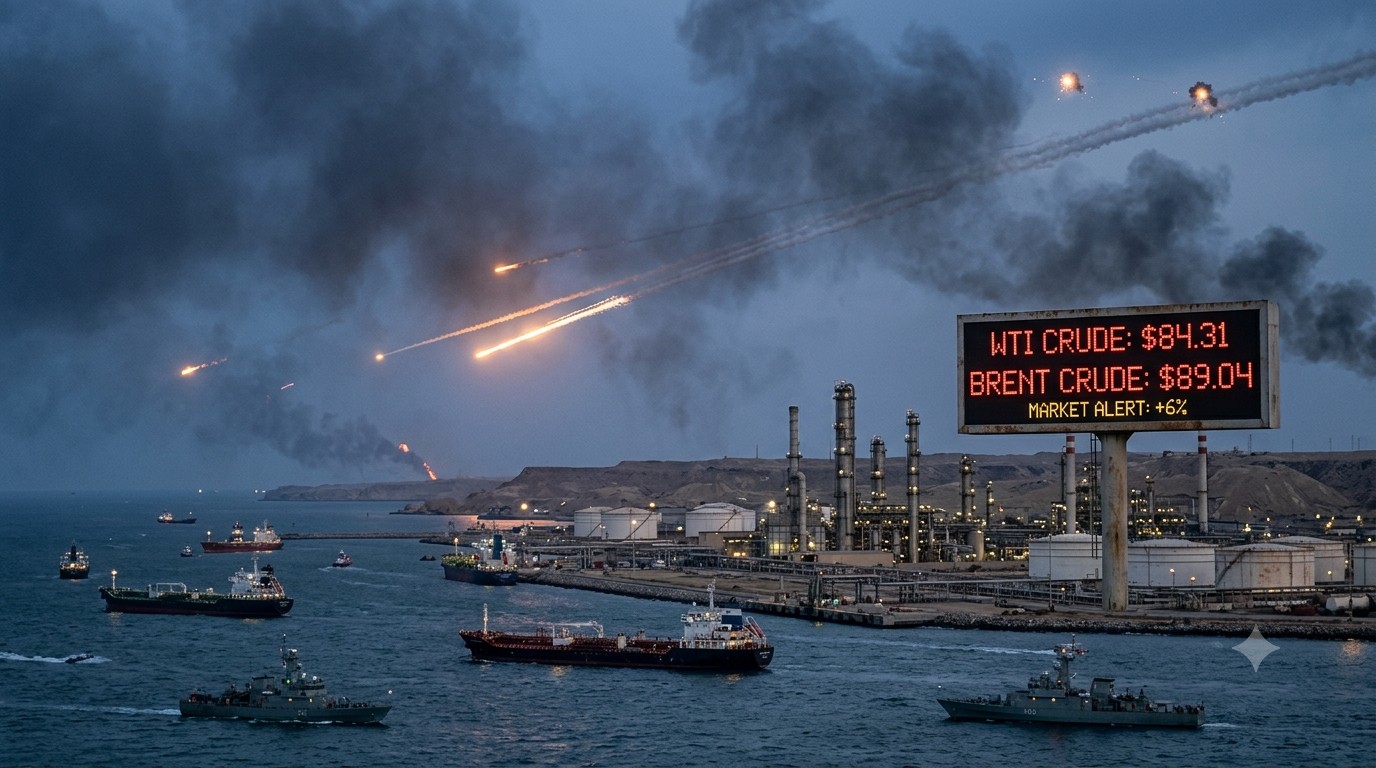
Oil prices surged Wednesday after Iran launched a barrage of ballistic missiles at US forces stationed in the Middle East, an attack US Central Command described as an attempted surprise strike. All of the missiles were intercepted, according to the US military, but the episode sharply escalated tensions just a day after President Trump had said Washington was pausing strikes on Iran.
West Texas Intermediate crude futures rose as much as 6.4% to $84.31 a barrel following the attack, while Brent crude, the international benchmark, gained more than 6% to trade above $89 a barrel. The moves reversed a decline from earlier in the week, when prices had eased on reports that Iran was discussing Strait of Hormuz shipping arrangements with Saudi Arabia and Oman.
Central Command said separately that US and Saudi Arabian forces conducted joint strikes against Iran-aligned groups in Iraq in response. The dual escalation came on a day when President Trump met with Israeli Prime Minister Benjamin Netanyahu at the White House, a meeting Netanyahu described afterward in notably warm terms. Trump has said Iran would face consequences for any attacks on US personnel, language that traders are interpreting as a signal that further retaliatory strikes could follow.
The renewed volatility adds to what has already been an unusually turbulent month for oil markets. Crude prices climbed roughly 20% earlier in the year as fighting between the US and Iran intensified, briefly pushing Brent above $100 a barrel for the first time in more than three years before an interim understanding between Washington and Tehran brought a temporary reprieve. US gasoline prices, which had eased back from their highs, are now at risk of climbing again if the current escalation persists, with prices at the pump already near $4 a gallon in parts of the country.
Energy analysts note that the Strait of Hormuz remains the central variable to watch, given that the waterway handles roughly a fifth of global daily crude shipments. Iran has not moved to obstruct traffic through the strait during the current escalation, and its Foreign Ministry has previously signaled openness to negotiations depending on how the conflict develops. Any concrete move to restrict shipping through the strait would likely send oil prices sharply higher and could ripple through broader equity markets, given how sensitive both inflation expectations and Federal Reserve policy have become to energy costs this year.
For equity investors, the immediate read-through is toward energy producers and refiners, which tend to benefit from higher crude prices, while airlines, shippers, and other fuel-intensive industries face margin pressure if the rally holds. The timing is notable given that the Federal Reserve is set to announce its own interest rate decision later today, with policymakers already weighing above-target inflation readings that a sustained oil price increase would only complicate further.
Markets have grown accustomed to gyrations tied to the Iran conflict over the past several months, but the resumption of direct attacks on US forces marks one of the more direct escalations since the interim agreement was reached in June. Traders will be watching for any comment from the Fed on energy-driven inflation risk during today's policy announcement, as well as for signs of further military action that could keep volatility elevated into the end of the week.