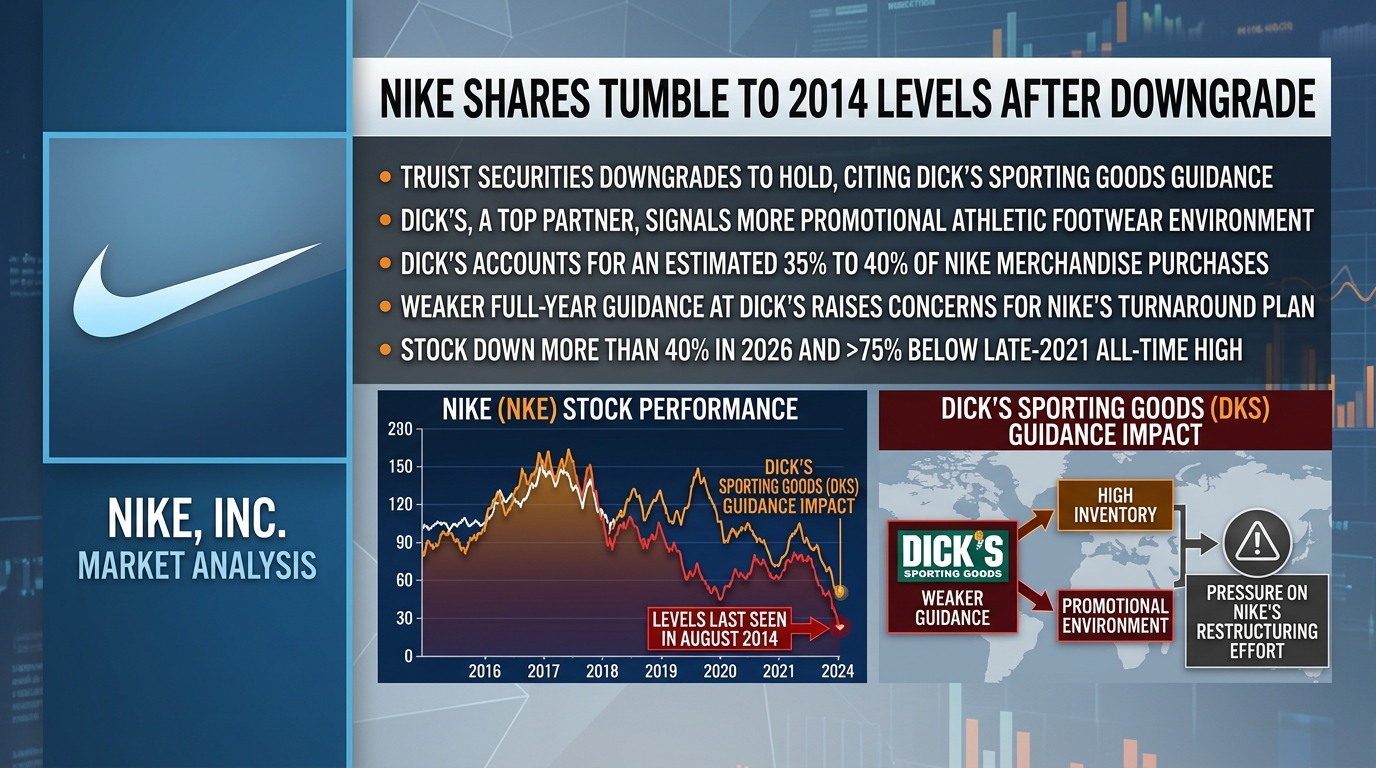
Shares of Nike fell to levels not seen since August 2014 after Truist Securities downgraded the athletic apparel giant to Hold from Buy, citing negative read-through from Dick's Sporting Goods' weaker-than-expected full-year guidance issued earlier this week. Nike's stock was down more than 2% in Wednesday trading and is now off close to 40% for the year, and more than 75% below the all-time high it reached in late 2021.
Truist's downgrade centered on the significance of Dick's Sporting Goods as a Nike customer. According to Truist's analysis, Dick's accounts for roughly 35% to 40% of Nike's total merchandise purchases, making the sporting goods retailer's commentary about an increasingly promotional athletic footwear and apparel environment a meaningful signal for Nike's own demand trends. Dick's this week cut its full-year adjusted earnings guidance well below prior Wall Street estimates, citing challenging conditions across the athletic footwear category, particularly within its recently acquired Foot Locker business.
Nike has been in the midst of a multi-year turnaround effort under Chief Executive Elliott Hill, who took over the company with a mandate to restore its position in performance categories, rebuild relationships with wholesale partners including Dick's and Foot Locker, and address inventory and product-innovation challenges that had built up over recent years. Analysts have said the rebound has taken longer than initially anticipated, with Nike shares continuing to underperform the broader market throughout the turnaround period.
The stock's decline to 12-year lows underscores the scale of investor skepticism that has built around Nike's recovery timeline, even as Hill's team has pointed to early signs of stabilization in certain product categories and geographic markets. Truist's downgrade suggests that at least some analysts believe the promotional pressures flagged by major wholesale partners like Dick's could delay further the earnings recovery Nike has been targeting.
Nike's wholesale relationships remain a critical component of its overall sales strategy despite the company's continued push to grow its direct-to-consumer business through Nike-owned stores and its digital platform. A more promotional selling environment at large partners like Dick's can pressure Nike's wholesale revenue and gross margins simultaneously, since retailers facing weaker demand often request additional markdown support or reduce future order commitments.
Investors will be watching Nike's own upcoming quarterly results for direct confirmation of how the promotional dynamics described by Dick's are affecting the company's wholesale channel specifically, as opposed to the broader athletic footwear market. Until then, Wednesday's downgrade and the stock's continued slide to multi-year lows reflect a market that remains unconvinced the worst of Nike's earnings challenges are behind it, even as the company's long-term brand strength and global scale continue to be cited by bulls as reasons for eventual recovery.