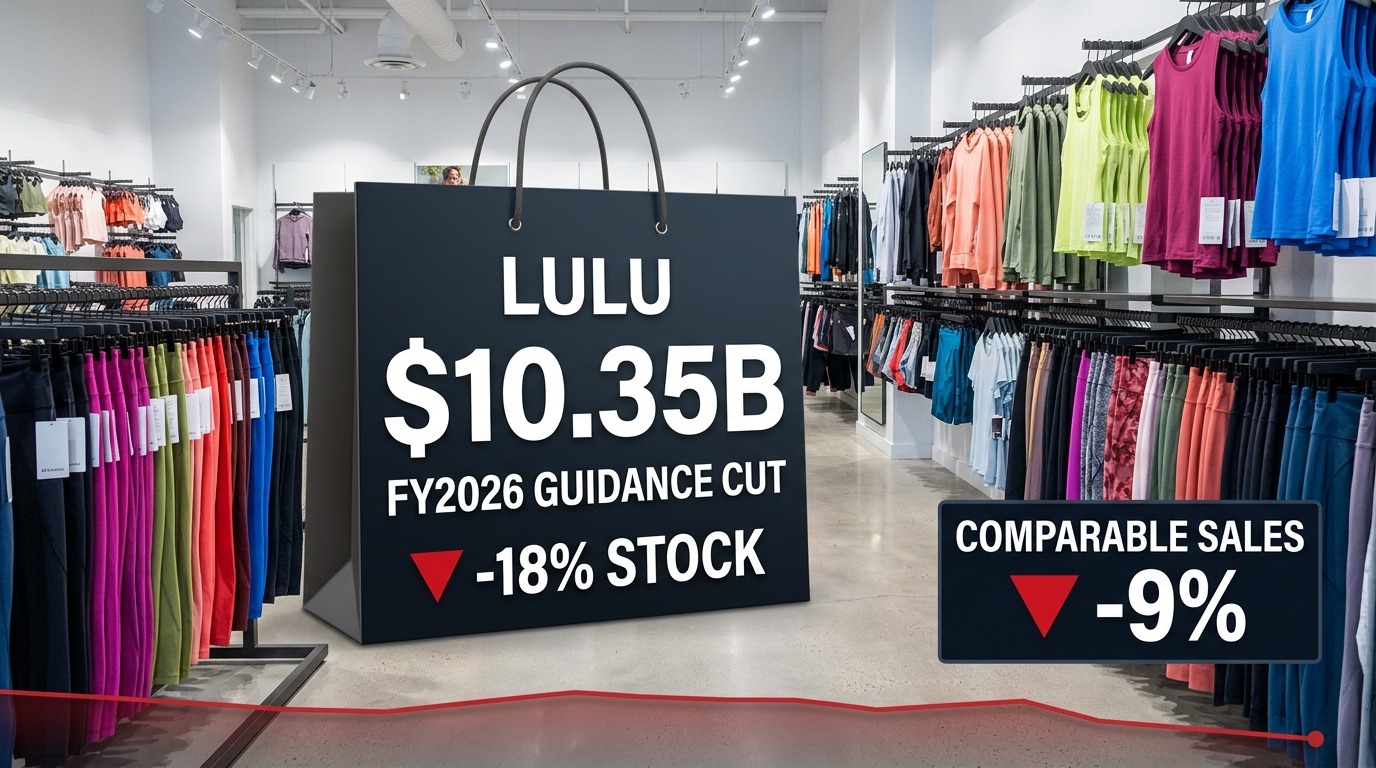
Shares of lululemon athletica (LULU) tumbled as much as 18% after the company reported fiscal second-quarter results that included a revenue miss, deteriorating comparable sales, and a third downward revision to its full-year outlook in 2026 alone. The stock fell to roughly $99.95 in after-hours and pre-market trading, below its prior 52-week low and its weakest level in about eight years, erasing a modest gain from the regular session.
Second-quarter revenue fell 4% year over year to $2.42 billion, missing the roughly $2.46 billion analysts had expected. Comparable sales dropped between 9% and 10% globally, with North America comparable sales down as much as 12% and core women's leggings sales sliding around 20%. Diluted earnings per share of $2.92 beat Wall Street estimates by a wide margin, but investors focused instead on the deteriorating top-line trends and a guidance cut that management attributed partly to negative social media sentiment and a greater-than-expected slowdown in core product categories.
For the full year, Lululemon now expects revenue between $10.35 billion and $10.5 billion, representing a 5% to 7% decline and down sharply from its prior forecast of $11 billion to $11.15 billion issued earlier this year. Earnings guidance was similarly cut to a range of $9.48 to $9.73 per share, versus a prior range of $10.95 to $11.15. The company said the revised outlook includes a boost from tariff refunds, without which the picture would look even weaker. Guidance for the current quarter calls for revenue to fall 10% to 11% year over year, with North America expected to see mid-teens declines.
Interim co-CEO and CFO Meghan Frank said on the earnings call that the company continues to see inconsistent response to new product launches even as some newer styles resonate with shoppers, and pointed to intensifying competition and negative online commentary as headwinds during the quarter. The reset comes just days before incoming CEO Heidi O'Neill is set to officially take the helm, inheriting a turnaround effort that has yet to show results after three consecutive guidance cuts this year.
Wall Street's initial reaction was largely negative. Goldman Sachs had already trimmed its price target on the stock ahead of the report to $111, while Jefferies and Evercore ISI maintained hold-equivalent ratings near $115, reflecting caution heading into the print. The stock is now down roughly 40% to 42% year to date and trades approximately 80% below its all-time high of $511.29, set in December 2023.
Analysts said the persistence of weak North American demand, rising competition from newer athletic-apparel entrants, and China softness leave few near-term catalysts for a rebound, even as the company's valuation has become statistically cheap. With O'Neill inheriting the turnaround mandate just as guidance is cut again, investors are likely to look for early signals from her leadership on product strategy and marketing before revisiting the stock's longer-term prospects.