Lockheed Martin is drawing fresh attention from Wall Street after UBS upgraded the defense contractor to Buy from Neutral on Tuesday, arguing that the company's earnings growth potential remains underappreciated by investors even after a run-up in defense spending tied to escalating global conflicts.
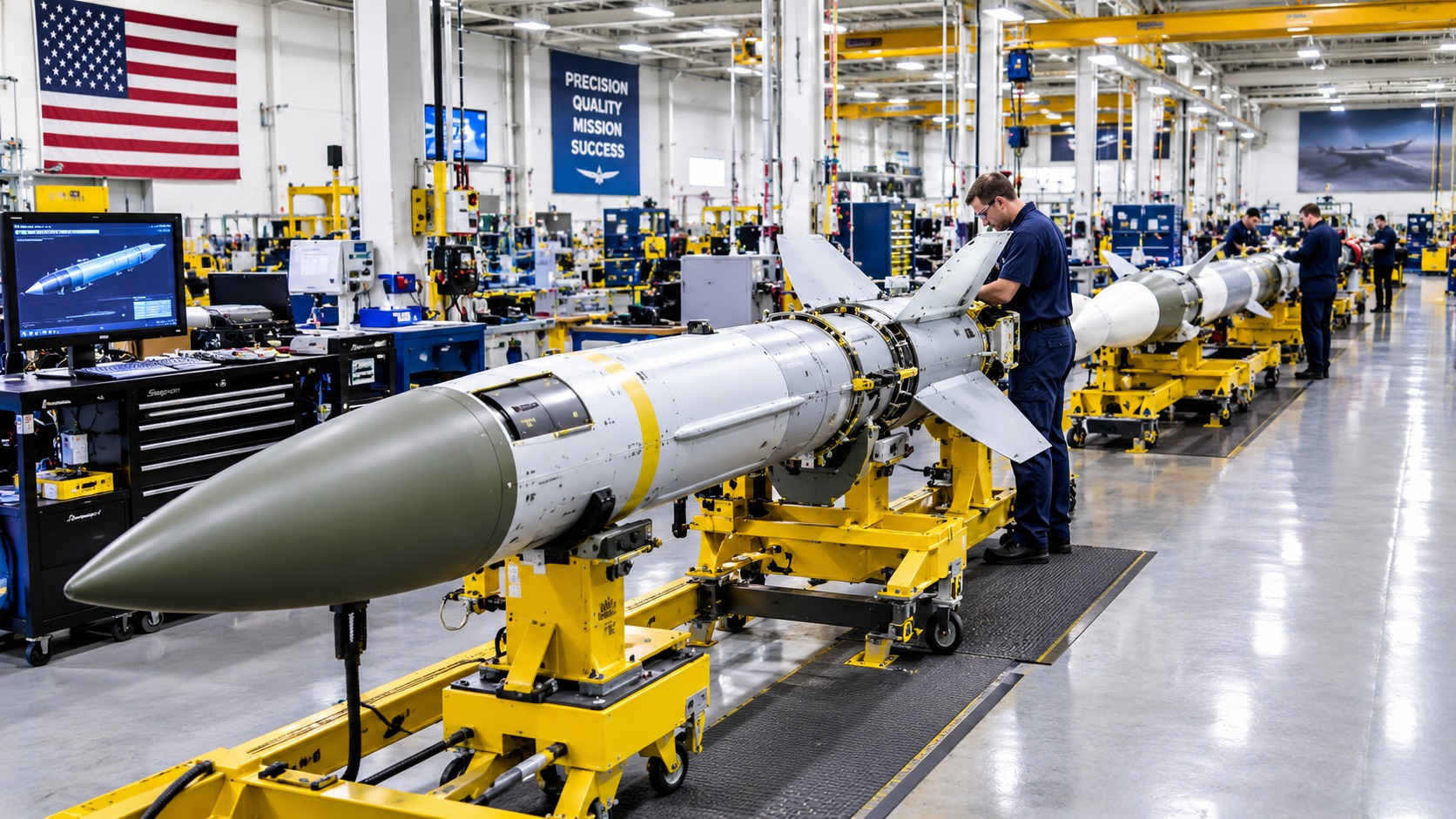
UBS analyst Gavin Parsons raised the firm's 12-month price target on Lockheed to $674 from $581, implying approximately 26% upside from the stock's September 4 closing price of $524.48. The note argues that Lockheed's Missiles and Fire Control segment, which produces systems including PAC-3 interceptors, THAAD, the Precision Strike Missile and the JASSM/LR cruise missile family, is set to deliver roughly 150% revenue growth between 2025 and 2030 based on current multi-year production frameworks with the Pentagon.
Parsons wrote that while investors broadly understand missile and munitions demand is strong, the market has not yet priced in the potential for faster and more sustainable production ramps across Lockheed's portfolio. He pointed to F-35 sustainment revenue, which UBS expects to climb from $5.1 billion in 2025 to $8.8 billion by 2030 as the global F-35 fleet expands and readiness spending increases, as well as growth in the CH-53K helicopter program and the Trident fleet ballistic missile system, which UBS expects to see its budget rise to a proposed $5.2 billion in fiscal 2027.
UBS forecasts Lockheed's total revenue climbing from $75.0 billion in 2025 to $81.0 billion in 2026 and $88.5 billion in subsequent years, a trajectory the firm says is above Street consensus. The bank also expects a meaningful improvement in cash generation once a pension-related drag in 2027 passes, with free cash flow per share rising roughly 50% by 2030 even as capital expenditure climbs to 3.2% of revenue in 2027, its highest level in more than a decade, to fund expanded missile production capacity.
The upgrade lands the same day that oil prices and defense-sector sentiment are being pushed higher by escalating U.S.-Iran hostilities in the Middle East, a backdrop that has fueled institutional rotation into aerospace and defense names as investors hedge against a broader geopolitical shock. Despite the current conflict, UBS noted Lockheed shares are only up modestly in 2026, trading at what the firm characterizes as roughly a 15% discount to the S&P 500 despite superior projected growth.
UBS also flagged that concerns over the fiscal year 2027 defense budget appear overdone, pointing to contract awards flowing at a steady pace and a 17% year-over-year increase in outlays even as 36% of the fiscal 2026 budget remains to be spent. Other Wall Street firms have also grown more constructive on the name in recent months, with at least one major bank maintaining a Buy rating and lifting its price target above $690 in mid-August.
The upgrade also arrives against a backdrop of record backlog growth across the defense sector. Lockheed's most recent quarterly results showed a book-to-bill ratio of roughly 3.2 times, pushing total backlog up nearly 38% year-over-year to a record level equivalent to almost three times annual revenue. That combination of surging orders and improving production throughput is precisely what UBS says the market has yet to fully credit, particularly given the stock's underperformance relative to the S&P 500 even as global defense budgets expand.
Portfolio managers focused on the aerospace and defense sector said Tuesday's upgrade could mark an inflection point in sentiment toward legacy primes, which have lagged newer, more nimble defense-technology names in investor enthusiasm despite controlling the vast majority of large-scale missile and munitions production capacity that governments actually need in the near term. With geopolitical tension elevated across multiple theaters simultaneously, analysts said the durability of demand for Lockheed's core programs looks more assured than at almost any point in the company's recent history, even if near-term stock performance remains sensitive to headline risk and broader market rotation.