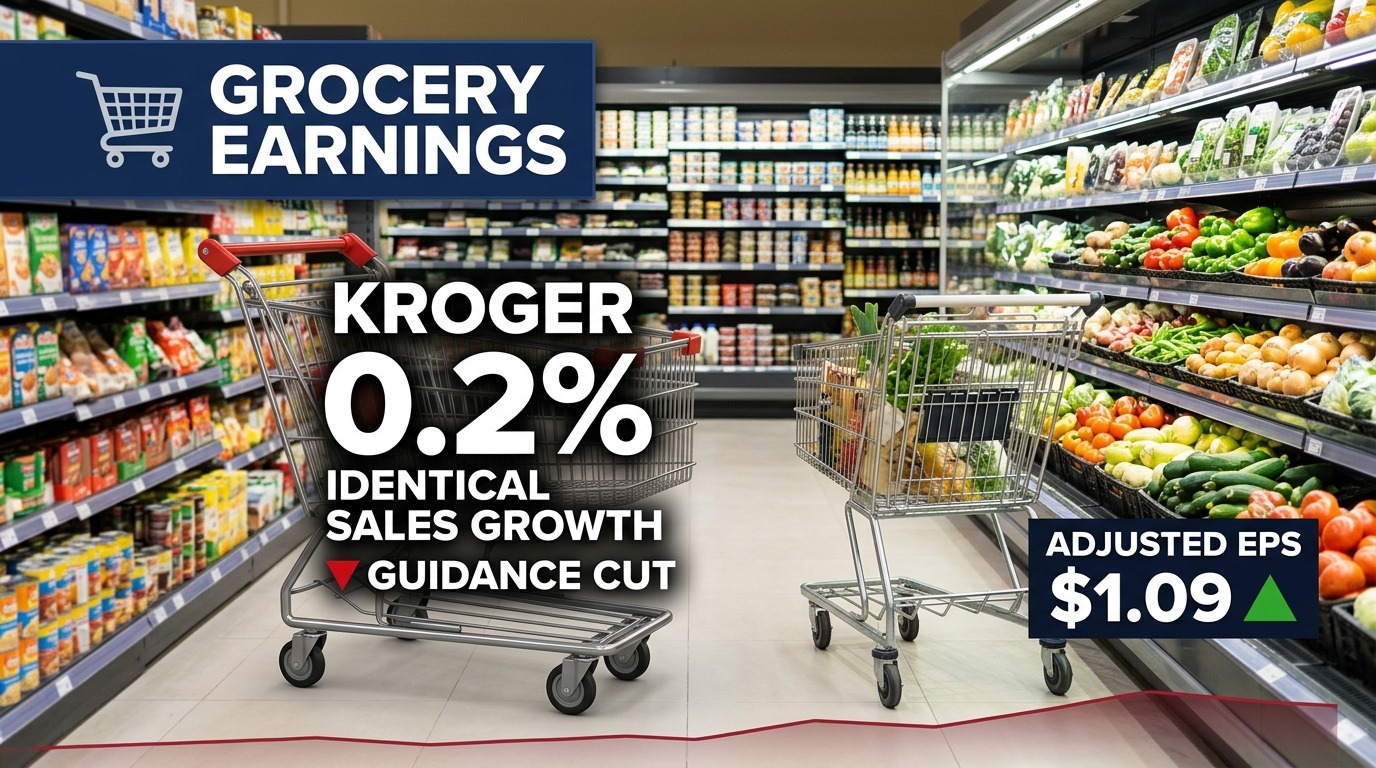
Kroger posted second-quarter adjusted earnings of $1.09 per share, exceeding consensus expectations, on total sales of $34.62 billion. Identical sales excluding fuel increased just 0.2%, reflecting softer consumer spending and an unfavorable impact from the Inflation Reduction Act that weighed on comparable-store performance.
Adjusted e-commerce sales grew 20% and Kroger Precision Marketing profit rose 24%, showing strength in digital and retail-media channels that continue to expand as a percentage of overall results. Operating profit reached $971 million. The company reaffirmed its full-year adjusted EPS range of $5.10 to $5.30 and free-cash-flow guidance while lowering identical-sales expectations to 0.2%–0.8% from the prior 1.0%–2.0% range.
Shares fell in premarket trading as investors focused on the weaker comparable-sales trajectory and the guidance reduction. Management cited ongoing efforts to lower prices to retain price-sensitive shoppers amid elevated living costs. The results arrive after the company’s previously planned merger with Albertsons was blocked and following an announced agreement to acquire Giant Eagle, moves that reflect a strategy of growth through both organic initiatives and selective M&A.
Gross margin held near prior-year levels while operating expenses rose modestly. The net-debt-to-adjusted-EBITDA ratio remained within the company’s target range, supporting continued investment and shareholder returns. The mixed report underscores pressure on traditional grocery operators from both inflation-weary consumers and competitive pricing dynamics that limit the ability to expand margins.
Kroger’s ability to expand digital and media revenue provided a partial offset to soft brick-and-mortar comps. Still, the lowered identical-sales outlook signals that management expects the challenging consumer environment to persist through the balance of the fiscal year, particularly as higher energy and food costs continue to constrain household budgets.
Equity reaction highlighted the market’s prioritization of top-line momentum over earnings beats in the current rate and inflation backdrop, particularly for consumer-staples names. Investors appear willing to look past near-term profitability if volume trends remain under pressure, reflecting concern that prolonged softness could eventually erode pricing power and force further promotional intensity.
Looking forward, the company will need to demonstrate that its price investments and digital initiatives can stabilize and eventually accelerate identical sales. Progress on the Giant Eagle integration and further expansion of high-margin retail-media revenue will also be closely watched as potential offsets to the more challenged core grocery environment.
In the broader context of today’s market, Kroger’s results add to the evidence that consumers remain selective and value-focused, a dynamic that favors operators with strong private-label offerings, efficient cost structures, and growing digital ecosystems. The stock’s premarket decline suggests that the guidance cut outweighed the earnings beat in the eyes of most market participants.
Overall, the quarter reinforces the narrative of a two-speed grocery landscape in which digital and media channels continue to grow rapidly while traditional store comps face headwinds from cautious household spending.