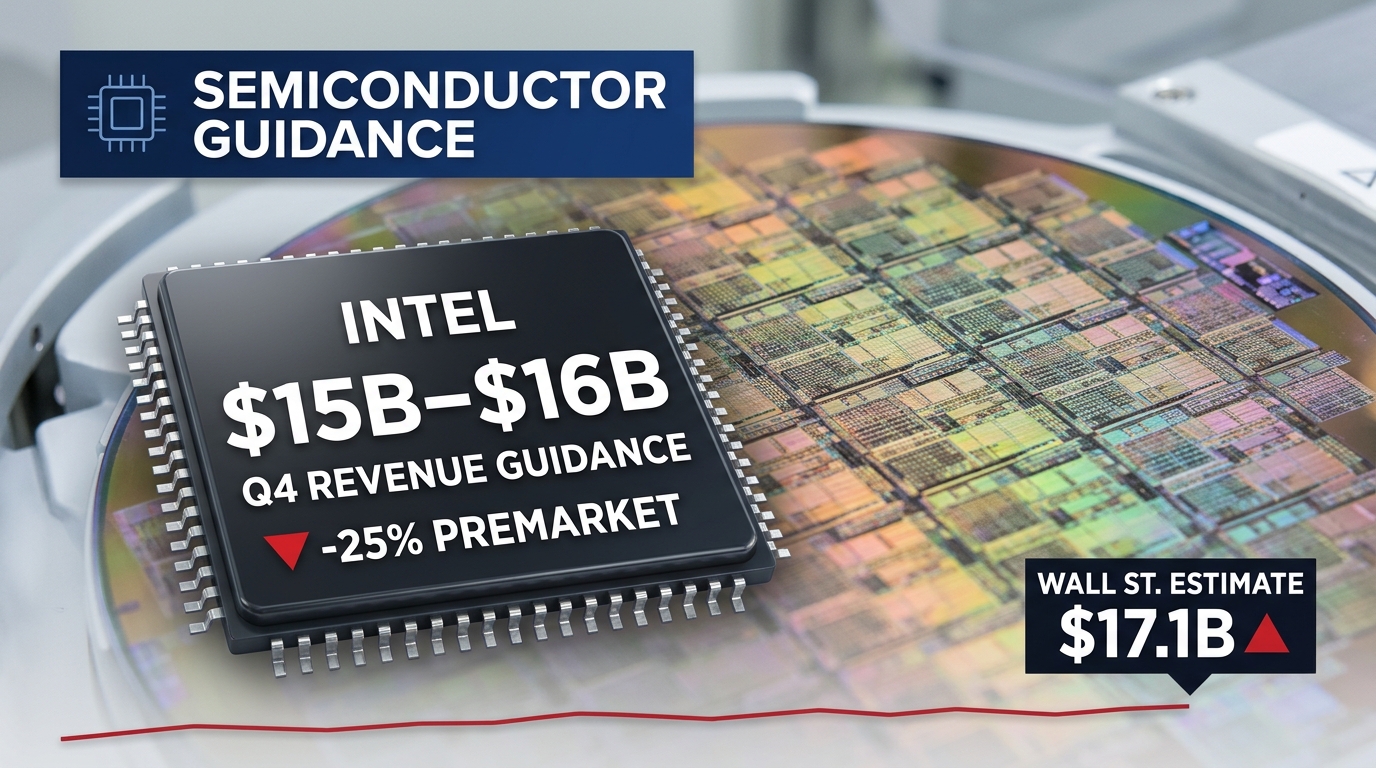
Intel Corp. shares were sharply lower in Friday premarket trading, down roughly 25% to 27% in the high-$60s, after the chipmaker issued a fourth-quarter forecast well below Wall Street expectations. The stock closed Thursday at $92.07 and had risen about 150% year to date before the report, according to CNBC and TradingKey.
For the fourth quarter, Intel guided revenue of $15 billion to $16 billion and adjusted earnings of 25 cents per share. Analysts polled by LSEG had expected about $17.1 billion in revenue and 43 cents per share, while some projections topped $18 billion, according to Bloomberg. Intel also guided an adjusted gross margin of 38%, below analyst estimates, Seeking Alpha reported.
The outlook overshadowed a third quarter that beat on profit. Adjusted earnings were 52 cents per share versus roughly 41 cents expected, and revenue of $16.5 billion rose 21% from a year earlier, essentially in line with consensus. Data center and AI revenue grew 78%, offsetting weakness in the PC business.
Management cited two headwinds. Chief financial officer David Zinsner said the company expects the PC slowdown to continue at least through the first half of next year. Bloomberg reported supply-chain problems with data center components, and Invezz pointed to a disruption at an Israeli plant as an additional drag on the quarter ahead.
Spending plans added to the pressure. Intel said capital expenditures will rise sharply next year and warned it would not generate positive cash flow in 2027, according to TheStreet. The company also acknowledged in its earnings statement that its large, long-term investments in research, development and manufacturing are risky and may not deliver a favorable return. Even so, management described 2027 as a growth year, while cautioning that the first half would remain somewhat constrained.
The reaction extends a volatile stretch. Intel fell about 23% in October ahead of the report as investors questioned the size of the artificial intelligence buildout, and its last four earnings-day moves ranged from a 17% drop to a 23.6% gain, according to 24/7 Wall St. data. The after-hours slide marked the stock's lowest price since April, Forbes noted.
Intel's results landed amid a broader technology rout. Nasdaq-100 futures were down about 2.3% early Friday after several large technology companies posted disappointing results or outlooks, while Thursday's session had already ended a three-day winning streak for the major indexes, according to Zacks.
For portfolio positioning, the setup is two-sided. Bulls point to accelerating server demand and a supply-constrained data center business, while bears note that the guidance midpoint misses by roughly $1.6 billion and cash flow will not turn positive in 2027. TradingKey's analysis flagged downside toward $55. Position sizing matters here, since gap moves of this size can slice through typical stop-loss levels before the opening bell. Traders will watch whether premarket losses hold after the open, how analysts reset price targets, and whether the selloff spreads to other chip and PC-exposed names today.